

What Vets Check for Senior Dog Anxiety
There’s no single test for senior dog anxiety. If my older dog starts pacing, waking at night, or acting fearful, I’d book a vet visit and bring a symptom log, safe home videos, and a list of every medication and calming supplement.
Here’s what I’d expect the vet to review:
- Behavior changes: When episodes start, what triggers them, and how long they last.
- Pain and illness: Joint, dental, urinary, or other health problems that can look like anxiety.
- Hearing, vision, and memory: Sensory loss and patterns of confusion or changed habits.
- Tests and medications: Bloodwork, urinalysis, or other tests when needed, plus checks for side effects and interactions.
- Treatment and follow-up: Care for the cause and the anxiety, home changes, and a date to check progress.
My takeaway: <u>new anxiety isn’t something to dismiss as aging</u>. Collapse, trouble breathing, inability to urinate, or severe pain needs immediate veterinary care - not a routine appointment.
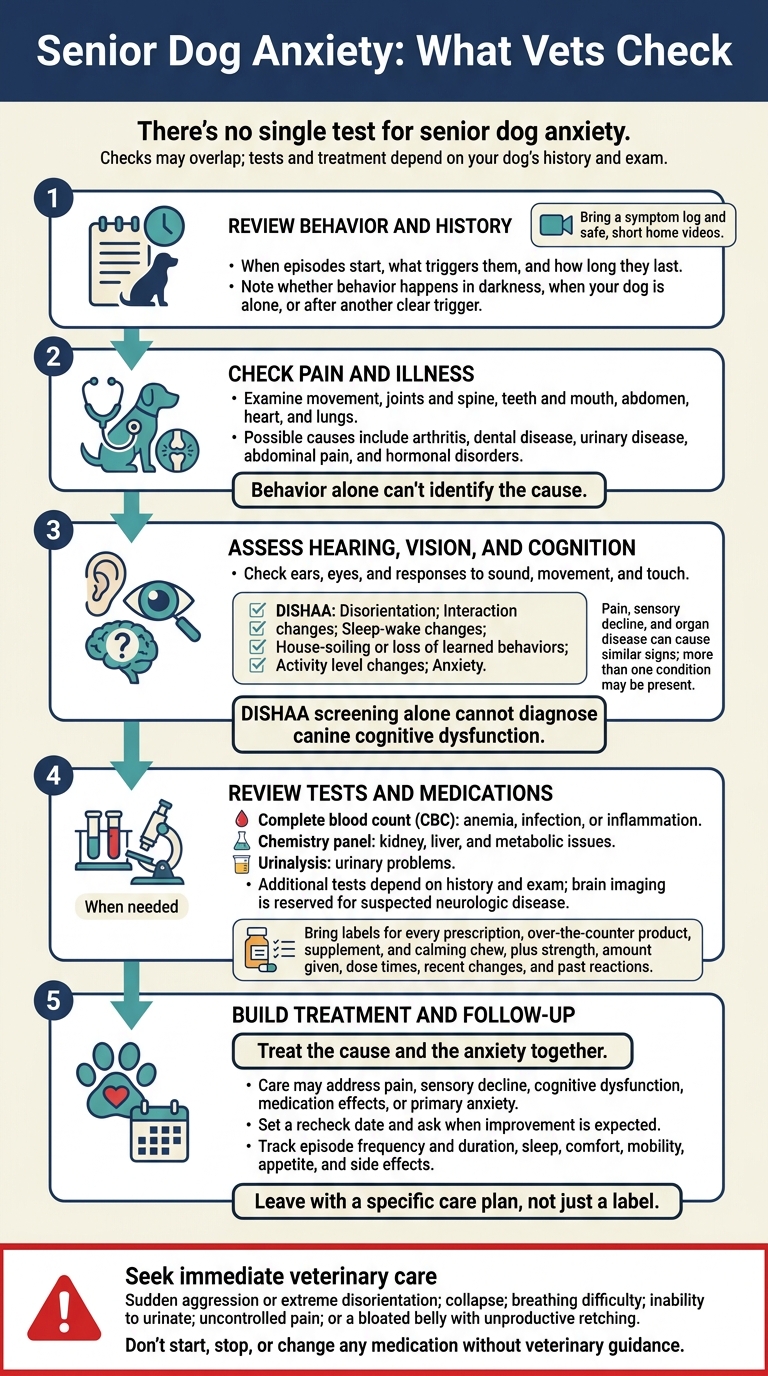
Senior Dog Anxiety: What Vets Check
Cognitive Dysfunction Syndrome in Pets: How to Spot the Warning Signs in Aging Dogs and Cats
sbb-itb-6d7d69d
2. Expect a Physical Exam and Pain Check
Your vet will first check for pain and illness that can look like anxiety. Restlessness, withdrawal, irritability, sensitivity to touch, and new whining often point to pain. The physical exam helps find the cause.
Check Movement, Teeth, and Body Systems
Your vet will watch how your dog walks, stands, and gets up. They may gently feel the joints and spine, then bend the joints to check movement and discomfort. Note any spots where your dog flinches or snaps.
The exam also covers the mouth, abdomen, heart, and lungs. Your vet will check for dental disease, abdominal pain or swelling, and problems with heart function or breathing.
Look for Medical Causes of Behavior Changes
Arthritis, dental disease, urinary disease, abdominal pain, and hormonal disorders can cause pacing, whining, irritability, or panting. Because these signs overlap, behavior alone can't identify the cause.
If the source of pain isn't clear, your vet may prescribe a supervised trial of pain treatment. Don't give your dog ibuprofen, acetaminophen, aspirin, or other human pain medicines without veterinary direction. These medicines can harm dogs or even be fatal.
If pain doesn't explain the behavior, your vet will next check hearing, vision, and cognition.
3. Assess Hearing, Vision, and Cognitive Changes
Check Hearing and Vision
After checking for pain, your vet examines your dog’s ears and eyes and watches their responses to sound, movement, and touch. Vision tests may include the menace response and a cotton-ball drop test.
Hearing and vision loss can change how your dog reacts. A dog with hearing loss may startle when touched suddenly. Vision loss can make it harder to handle someone approaching, navigate in dim light, or move around rearranged furniture. Tell your vet about these patterns and any increased clinginess.
Keep furniture in place and add nightlights along familiar routes. Before petting your dog, let them know you’re there with a gentle touch or floor vibration.
If pain and sensory loss don’t explain the behavior, your vet checks for a pattern of cognitive changes.
Screen for Cognitive Changes With DISHAA
DISHAA tracks six areas: disorientation, interaction changes, sleep-wake changes, house-soiling or loss of learned behaviors, activity level changes, and anxiety. Your vet uses your observations and a questionnaire to check for patterns across these areas.
Report getting stuck behind furniture, withdrawing from family, indoor accidents, or nighttime pacing.
Bring short videos of the behavior. Note whether it happens in darkness, when your dog is alone, or after another clear trigger.
DISHAA screening alone cannot diagnose canine cognitive dysfunction. Sensory decline, pain, and organ disease can cause similar signs, and your dog may have more than one condition. Your vet compares the behavior history with exam findings and test results.
If the pattern is unclear, bloodwork, urinalysis, and a medication review help narrow down the cause.
4. Review Tests, Medications, and Supplements
If the physical exam, hearing check, and cognitive screening don’t fully explain your dog’s behavior, lab tests and a medication review can help narrow down the cause.
Understand Which Tests Your Dog May Need
Bloodwork helps rule out medical causes of anxiety-like behavior. A complete blood count (CBC) checks for anemia, infection, or inflammation. A chemistry panel checks for kidney, liver, and metabolic issues. Urinalysis can reveal urinary problems that may lead to house-soiling or irritability. Together, these tests look for signs of pain, illness, or metabolic problems that can look like anxiety.
Your vet may add thyroid or other hormone tests if your dog’s history and exam suggest hypothyroidism or Cushing’s disease. Blood pressure checks or imaging may follow. Brain imaging is reserved for suspected neurologic disease.
Ask the clinic whether your dog needs to fast before testing. Results also give your vet a baseline for tracking liver and kidney function if your dog needs long-term anxiety medication.
Bring Medication and Supplement Details
Bring containers or clear label photos for every prescription, over-the-counter product, supplement, and calming chew your dog takes. Include each product’s strength, the amount given, dose times, recent changes, and any past reactions. Note any changes in appetite, sleep, drinking, weight, or mobility after starting a product or adjusting its dose.
A medication review can reveal side effects or overlapping ingredients that worsen restlessness, appetite changes, or sleep disruption. Your vet will check for duplicate ingredients and interactions. Liver and kidney test results may also limit which medicines or doses your dog can take.
Don’t start, stop, or change any medication without veterinary guidance. Ask before adding calming supplements. Your vet will use the test results and medication review to guide treatment and set the follow-up schedule.
5. Build a Treatment and Follow-Up Plan
Match Treatment to the Findings
Your vet uses the exam, test results, and medical history to build a treatment plan around the likely causes. Treat the cause and the anxiety together.
The findings guide treatment, changes at home, and follow-up care.
| Finding | Veterinary response | What owners monitor at home |
|---|---|---|
| Pain | Provide pain relief or treat the underlying condition | Comfort when getting up and resting |
| Sensory decline | Treat eye or ear problems when possible; adjust the home | Navigation and startle responses |
| Cognitive dysfunction | Recommend an appropriate diet, supplements, or medication | Sleep and confusion |
| Medication effects | Adjust prescriptions under veterinary guidance | Behavior after each dose |
| Primary anxiety | Use behavior modification and medication when indicated | Episode frequency, duration, and recovery |
The diagnosis guides what comes next. Keep routines predictable and give dogs with noise fears a quiet place to retreat. For separation distress, ask for a gradual behavior plan. Reward calm behavior, and never punish fear or accidents.
Ask Your Veterinarian About Supplement Safety
Review any planned supplements with your vet alongside your dog’s medications. Natural does not mean risk-free, and supplements cannot replace needed medical or behavioral care. Before using a vet-approved calming supplement, check its ingredients, dose, timing, and possible interactions.
For a Vet Treat product, bring the current label to that review. It is not a proven treatment for senior dog anxiety.
Schedule Follow-Up and Track Progress
Set a recheck date. Ask when you should start seeing improvement and which changes call for an earlier check-in. Track episode frequency and duration, sleep, comfort, mobility, appetite, and side effects. If progress stalls or the diagnosis is still unclear, your vet may adjust care or recommend a board-certified veterinary behaviorist.
Most cases move into follow-up care, but some signs need immediate attention.
Know When Your Dog Needs Urgent Care
Seek immediate veterinary care for sudden aggression or extreme disorientation, collapse, breathing difficulty, inability to urinate, uncontrolled pain, or a bloated belly with unproductive retching.
6. What the Vet Visit Should Clarify
After the exam, tests, and medication review, your vet should explain what’s likely driving the behavior. Don’t dismiss new anxiety as normal aging.
Before you leave, confirm the most likely cause, what’s still unclear, and whether any test results are pending. Ask which medications and supplements to continue, stop, or adjust.
Leave with a specific care plan, not just a label. You should know what to do next, when to reassess, and how you and your vet will measure progress.
FAQs
What if my dog seems calm at the vet?
Dogs may seem calm at the clinic even when they’re very anxious at home. Anxiety can come and go or show up only in certain settings. That’s why your vet needs a detailed behavior history to help make a diagnosis.
Keep a record of triggers and symptoms, including pacing, panting, or destructive behavior. Your vet will also perform a physical exam and lab work to check for underlying pain or cognitive issues that could explain the behavior.
Can my dog have both anxiety and dementia?
Yes, dogs can have both anxiety and dementia. Dementia can change a dog’s behavior and lead to new fears. The two conditions can share symptoms, including restlessness, house soiling, and vocalization, so a thorough veterinary evaluation matters.
Your veterinarian can assess your dog for both conditions and recommend a care plan. Depending on your dog’s needs, that plan may include supplements, such as those offered by Vet Treat, medication, or changes to help manage behavior.
How soon should anxiety treatment help?
Timing depends on the treatment your veterinarian prescribes. Situational medications like trazodone can work within hours. Daily medications like fluoxetine or clomipramine generally take several weeks to reach full effect. Daily calming supplements typically need 2 to 4 weeks of consistent use.
Each dog responds differently, and results also depend on the treatment plan. Track your dog’s progress and review the care plan with your veterinarian after 4 to 8 weeks.