

When Senior Dogs Need Joint Support: Q&A
My first step when a senior dog gets stiff or slows down: schedule a vet exam, not just buy joint chews. Supplements may help some dogs, but they don’t replace pain treatment.
Here’s the approach I recommend:
- Check the cause first. Trouble standing, limping, or avoiding stairs deserves an exam. Sudden weakness, severe pain, or inability to bear weight needs prompt care.
- Review labels with your vet. Check for duplicate ingredients, medication interactions, and added calories.
- Set a trial and review date. Your vet may suggest 4–12 weeks, with a check-in around weeks 6–8. Track walking time, stair use, and getting up.
- Know the limits. Omega-3s have stronger support for canine arthritis than glucosamine and chondroitin. Some dogs won’t improve.
- Support daily movement. Pair treatment with weight control, gentle activity, nonslip flooring, and vet-guided rehabilitation.
My rule: <u>don’t leave pain untreated while waiting for a chew to work</u>. Stop a suspected supplement if side effects appear, contact your vet, and seek care sooner if mobility worsens. Natural doesn’t mean safe.
When to Start Joint Support
Start joint support when your dog seems stiff or moves more slowly, after your veterinarian has ruled out a condition that needs targeted treatment. Arthritis, hip dysplasia, and injuries each need a condition-specific treatment plan.
Mobility Changes to Watch
Watch for muscle loss, changes in posture, trouble lying down, or pain when touched. Write down when each change started and how often it happens. Bring a short video of your dog walking to the appointment.
Signs That Need Prompt Veterinary Care
Skip joint chews and contact your veterinarian promptly if your dog cannot bear weight, has severe swelling or pain, develops sudden weakness, wobbliness, or loss of coordination, or has a fever or marked lethargy. These signs call for medical attention - not a supplement trial.
If your dog has none of these urgent signs, discuss joint-chew options with your veterinarian.
Choosing Joint Chews
Before picking a product, review your dog's medical history and any prescriptions with your veterinarian. Be sure to mention kidney or liver disease, diabetes, and clotting disorders. Bring the current product label so your veterinarian can check ingredient amounts and whether the chew is suitable for your dog.
Vet Treat Glucosamine + Chondroitin for Dogs, Hip & Joint chews are one option to discuss with your veterinarian.
Once you start a chew, track the same movement changes for the next 4 to 6 weeks.
sbb-itb-6d7d69d
How Long Joint Supplements May Take to Help
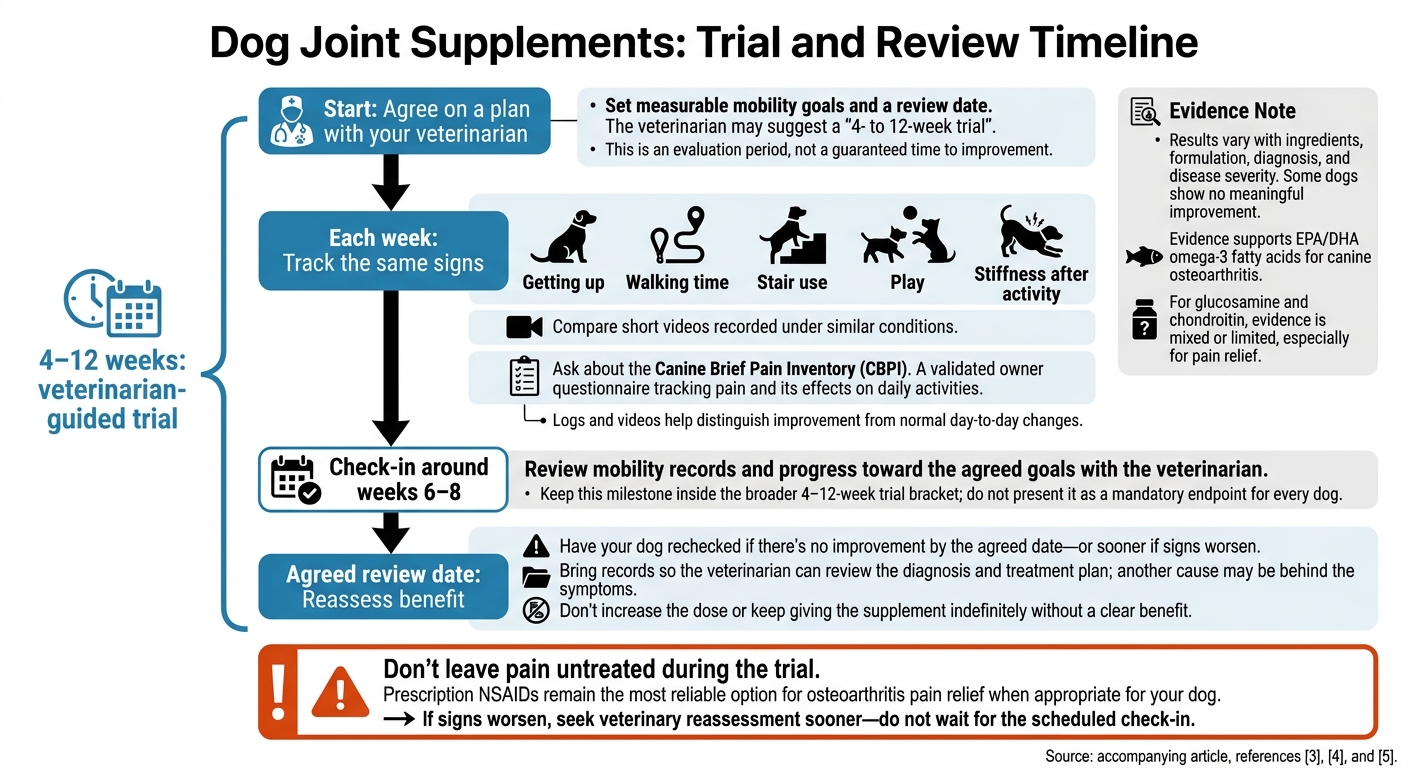
Dog Joint Supplements: Trial and Review Timeline
If you’ve started your dog on a joint chew, your veterinarian may suggest a 4- to 12-week trial, with a check-in around weeks 6–8, to see whether it helps. Don’t leave pain untreated during the trial. Prescription NSAIDs remain the most reliable option for osteoarthritis pain relief when appropriate for your dog.
Results vary with the ingredients, formulation, diagnosis, and disease severity. Some dogs show no meaningful improvement. Evidence supports EPA/DHA omega-3 fatty acids for canine osteoarthritis. For glucosamine and chondroitin, the evidence is mixed or limited, especially for pain relief.
Tracking Mobility Progress
Track the same signs each week: getting up, walking time, stair use, play, and stiffness after activity. Compare short videos recorded under similar conditions. Work with your veterinarian to set measurable goals and a review date.
Ask about the Canine Brief Pain Inventory (CBPI), a validated owner questionnaire that tracks pain and how it affects daily activities. Your logs and videos can help distinguish improvement from normal day-to-day changes.
When Mobility Does Not Improve
Have your dog rechecked if there’s no improvement by the agreed date - or sooner if signs worsen. Bring your records so your veterinarian can review the diagnosis and treatment plan. Another cause may be behind the symptoms. Don’t increase the dose or keep giving the supplement indefinitely without a clear benefit.
Using Joint Chews With Other Wellness Products
Joint chews belong in your dog’s full mobility plan, not on their own. Before adding another supplement, give your veterinarian a complete list of your dog’s foods, treats, supplements, medications, and doses, along with their current weight.
Add only one new supplement at a time so you can track what helps and what causes side effects. Follow label directions and your veterinarian’s dosing guidance. Count calories from chews and fish oils toward your dog’s daily food allowance - extra weight puts more stress on joints.
Use the checklist below to check for overlap before combining products.
Ingredient Overlap and Treatment Interactions
If your dog takes the Vet Treat Dog Multivitamin 15 in 1 Daily Supplement, ask your veterinarian to review its current label before you add joint chews. Check for duplicate glucosamine, chondroitin, MSM, omega-3s, vitamins, and minerals.
| Product or treatment | Overlap or interaction risks | Veterinary supervision |
|---|---|---|
| Joint chews | Duplicate ingredients in foods or multivitamins; added calories | Review total daily doses. |
| Omega-3 products | Duplicate omega-3s, added calories, and possible clotting effects | Review doses, medications, and surgery timing. |
| Multivitamins | Duplicate joint ingredients and other nutrients | Check labels against the full diet. |
| Prescription therapies | Possible supplement interactions or increased stomach upset | Review combinations; don’t change prescriptions on your own. |
| Rehabilitation | Activity that doesn’t suit the dog’s condition | Follow a veterinarian-guided plan. |
Side Effects to Watch
Even carefully chosen supplements can cause reactions. Watch for vomiting, diarrhea, appetite changes, or new behavioral symptoms. Stop the suspected supplement and contact your veterinarian. Breathing difficulty, facial swelling, or collapse need urgent care.
Natural doesn’t mean safe. Some ingredients affect clotting, and human supplements may contain xylitol, which is toxic to dogs. Keep chews out of reach to prevent accidental overuse.
Other Ways to Support Mobility
Help your dog maintain a healthy body condition and use controlled, low-impact activity. Place nonslip mats along paths your dog uses often, provide easy-to-reach resting areas, and add ramps where appropriate.
Ask your veterinarian whether rehabilitation could help maintain muscle and make movement more comfortable. Before committing to a long-term plan, have them confirm the product and treatment combination.
Veterinary Review Points
Ask your veterinarian to review product labels, duplicate ingredients, and dose limits. They should also check medication compatibility and surgery precautions, review gait videos, and explain which warning signs need urgent care.
Conclusion: Review Changes and Track Progress
If your dog hesitates on stairs, takes shorter walks, or gets up slowly, schedule a veterinary exam rather than assuming it’s just aging. Choose joint support that fits your dog’s needs, and check labels for ingredients that overlap with other supplements or medications.
After starting a joint chew, track walk length and the time it takes your dog to stand up each week. Ask your veterinarian about the Canine Brief Pain Inventory to keep scoring consistent. If mobility hasn’t improved after 6 to 8 weeks, follow up with your veterinarian.
Joint chews can support your dog’s care, but they don’t replace pain treatment. Don’t wait for that follow-up if symptoms worsen: new limping, yelping, or avoiding normal activities calls for a veterinary evaluation.