

Senior Dog Joint Pain: Home Care Guide
My first step for a senior dog with joint pain is a vet exam - not a supplement. Once the cause is clear, I’d follow the vet’s pain-treatment plan and focus on short, gentle walks, rest, nonslip floors, and measured meals.
Here’s the home-care plan I’d use:
- Keep movement gentle: Follow your dog’s pace and cut back if limping or stiffness gets worse.
- Make home safer: Add secure runners, supportive bedding, and ramps where needed.
- Check weight and supplements with your vet: Count treats and chews toward daily calories. Supplements are optional add-ons, not replacements for pain relief.
- Track comfort daily: Review your notes weekly and set a vet recheck after treatment changes.
<u>Sudden severe pain or an inability to stand needs emergency care.</u> My goal would be better comfort and easier movement - not a cure for arthritis.
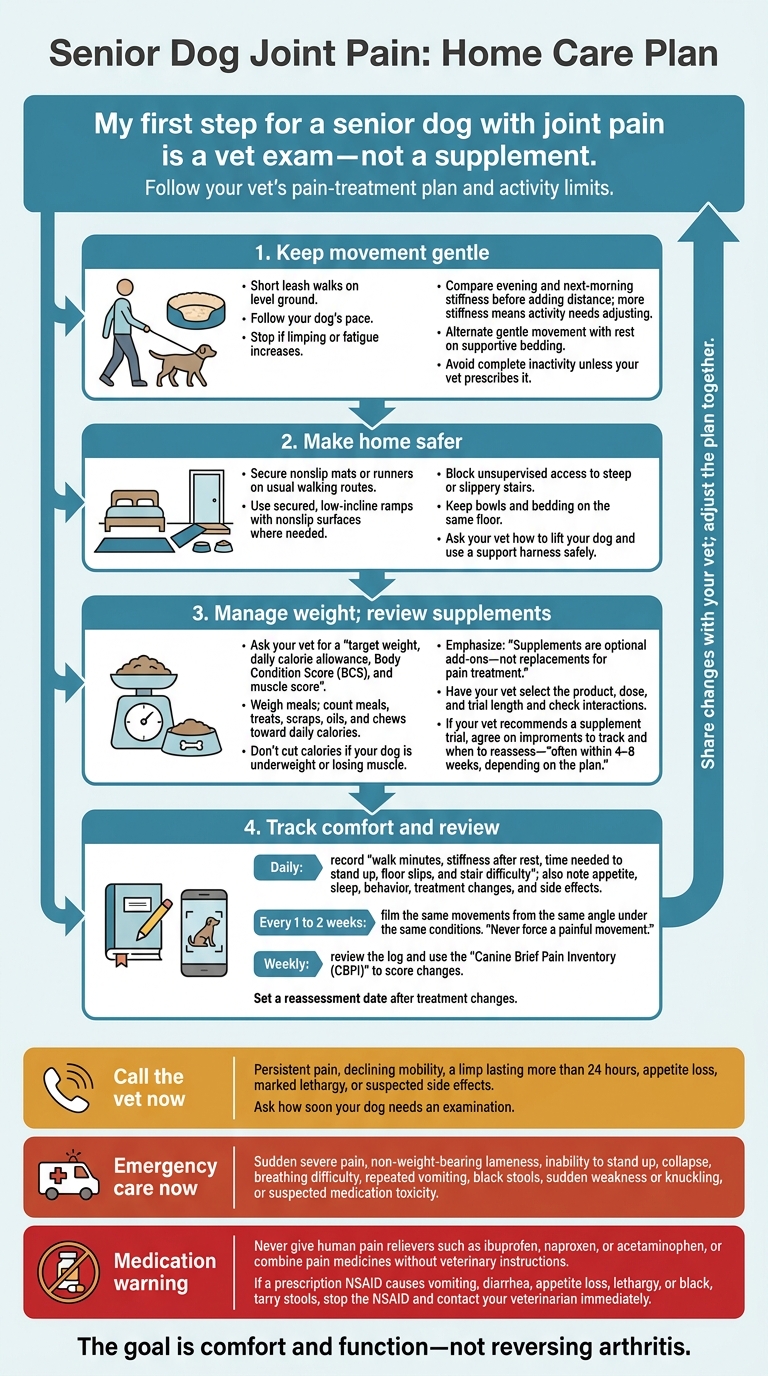
Senior Dog Joint Pain: Home Care Plan
Plan Gentle Exercise, Rest, and a Safer Home
Keep Walks Short and Start Slowly
Set today’s walk length using the baseline you logged at the vet visit. Stick to short leash walks on level ground, follow your dog’s pace, and stay within your vet’s limits.
Let your dog’s response guide you. Turn back if they lag behind or try to head home early. Stop if limping or fatigue increases. If stiffness eases after a few minutes, end the walk there rather than extending it. Before adding distance, compare evening and next-morning stiffness with your log. More stiffness means the activity needs adjusting.
| Activity | Joint stress | Veterinary guidance |
|---|---|---|
| Controlled leash walks with close supervision | Low to moderate | Match duration to diagnosis and tolerance |
| Gentle indoor movement with light supervision | Low | Follow prescribed activity limits |
| Swimming or underwater treadmill with close, trained supervision | Very low | Requires vet or rehabilitation approval; not suitable for every dog |
| Fetch, jumping, and sharp turns with close supervision | High | Generally discouraged for arthritic dogs |
Balance Movement With Rest
Alternate gentle movement with rest on a supportive bed in a quiet, warm spot. Avoid complete inactivity unless your vet prescribes it. Muscle loss can make joints less stable.
Limit repeated jumps, sharp turns, fetch, and strenuous weekend outings after inactive weekdays. During a flare-up, cut back on activity and follow your vet’s plan.
Make Floors, Stairs, and Access Safer
Reduce slipping and jumping so walks, rest breaks, and bathroom trips take less effort. Create a secure route between your dog’s bed, bowls, and potty area. Keep daily supplies on one floor, with bowls on the same floor as the bed. Check floors for slippery spots, keep nails trimmed, and trim the hair between paw pads to help with grip.
| Check | Home change | Purpose and placement |
|---|---|---|
| ☐ | Nonslip mats or runners | Cover slick hallways, feeding areas, and usual walking routes; secure them against sliding |
| ☐ | Secured, low-incline ramps | Reduce jumping at cars or furniture; choose a nonslip surface |
| ☐ | Stair barriers | Block unsupervised access at the top and bottom of steep or slippery stairs |
| ☐ | Supportive bedding | Place in a quiet, draft-free area; choose a bed that cushions joints without bottoming out |
| ☐ | Properly fitted support harness | Help with rising and balance; keep handy near the door for assisted outings |
Ask your vet to show you how to lift your dog and use a support harness safely, especially if your dog is heavy. Give only as much help as needed. Keep their feet on the ground when they can still walk, and avoid pulling them upward or straining your back.
sbb-itb-6d7d69d
Support a Healthy Weight and Review Joint Supplements
Once movement is safer, managing your dog’s weight is the next step toward reducing joint load.
Set a Weight Goal and Measure Meals
Ask your vet for a target weight, daily calorie allowance, Body Condition Score (BCS), and muscle score. Don’t cut calories if your dog is underweight or losing muscle. Dogs with kidney disease, heart disease, or diabetes need nutrition adjustments that account for those conditions.
Weigh meals on a kitchen scale, and count everything toward daily calories: meals, treats, scraps, oils, and chews. If a chew’s label doesn’t list calories, ask the manufacturer before adding it. Your vet can help you cut calories while keeping protein and micronutrients balanced, so your dog carries less weight without losing muscle.
Review Supplement Evidence and Safety
If weight and activity are being managed but pain persists, talk with your vet about supplements.
Supplements are optional add-ons - not replacements for pain treatment. Bring product labels and a full medication list. Ask your vet to select the product, dose, and trial length, and check for overlapping ingredients, product testing, and interactions. Never give human pain relievers such as ibuprofen, naproxen, or acetaminophen, or combine pain medicines without veterinary instructions.
| Supplement | Evidence for canine osteoarthritis | Safety questions and vet discussion |
|---|---|---|
| EPA/DHA omega-3s | Stronger support for benefit than glucosamine/chondroitin. | Confirm actual EPA/DHA amounts, added calories, contaminant testing, and compatibility with the existing diet. |
| Glucosamine/chondroitin | Inconsistent evidence; controlled canine studies have not shown reliable pain relief. | Review ingredient amounts, chew calories, and whether a trial is worthwhile. |
| Combination formulas | Depends on the specific formula and its testing. | Ask about studies on the finished formula - not just individual ingredients. |
Ask Your Veterinarian About Vet Treat Chews
Use the same label and safety checks when considering a chew product such as Vet Treat. For its Glucosamine + Chondroitin for Dogs, Hip & Joint chews, ask your vet whether the finished product suits your dog.
Natural ingredients don’t guarantee safety. If your vet recommends a trial, agree on which improvements to track and when to reassess - often within 4–8 weeks, depending on the plan. Use the same log to track your dog’s response, and contact your vet sooner if side effects appear or pain worsens. Keep prescribed pain treatment in place unless your vet changes it.
Track Comfort and Plan Vet Follow-Ups
Log Symptoms Daily and Review Weekly
Keep using your home-plan log to record walk minutes, stiffness after rest, time needed to stand up, floor slips, and stair difficulty each day. Note appetite, sleep, play, grooming, and bathroom posture, too. Include joint licking, sensitivity to touch, pulling away from family interaction, and any treatment changes or side effects.
Every 1 to 2 weeks, film the same movements from the same angle under the same conditions. Never force a painful movement.
Review the log weekly. Look for shorter walks, slower recovery, disrupted sleep, or more slips, and use the Canine Brief Pain Inventory (CBPI) to score changes. These records help you and your vet assess whether exercise, rest, home changes, weight control, and joint supplements are easing pain and improving mobility.
Know When to Contact Your Vet
Persistent pain calls for a veterinary review - not more exercise or supplements. Your vet may need to revisit the diagnosis because neurological problems and other diseases can look like joint pain. Don’t wait if your dog loses their appetite, becomes unusually lethargic, or seems to have a treatment reaction.
Use your log to help your vet decide whether the plan is working or treatment needs to change.
| Timing | What to watch for or arrange |
|---|---|
| Planned recheck | Set a reassessment date after treatment changes. Long-term NSAID treatment requires periodic bloodwork to check liver and kidney function. |
| Call the vet now | Call for persistent pain, declining mobility, a limp lasting more than 24 hours, appetite loss, marked lethargy, or suspected side effects. Ask how soon your dog needs an examination. |
| Emergency care now | Seek emergency care for sudden severe pain, non-weight-bearing lameness, inability to stand up, collapse, breathing difficulty, repeated vomiting, black stools, sudden weakness or knuckling, or suspected medication toxicity. |
Medication side effects shouldn’t wait for a routine recheck. If a prescription NSAID causes vomiting, diarrhea, appetite loss, lethargy, or black, tarry stools, stop the NSAID and contact your veterinarian immediately. Black stools or repeated vomiting warrant emergency care.
Conclusion: Keep a Daily Routine and Review Weekly
Follow your vet’s plan for supplements and pain control. The goal is comfort and function - not reversing arthritis.
Use the same log and stick to the same limits at home each day:
- Morning: Check how easily your dog gets up, serve a measured meal, give medications as directed, and take a short leash walk at your dog’s pace.
- Daytime: Alternate gentle movement with rest on supportive bedding. Keep runners secure and walking routes slip-free.
- Evening: Serve dinner within the day’s calorie plan, give prescribed medications, offer a brief walk if your dog is comfortable, and log symptoms.
- Weekly: Review the daily log and check body condition. You should be able to feel your dog’s ribs easily and see a waist from above. Report worsening signs to your vet rather than waiting for the next recheck.
FAQs
How can I tell joint pain from normal aging?
Aging can cause a slight dip in energy, but lasting changes in movement or behavior may point to joint pain. Watch for stiffness after rest, hesitation to use stairs or go for walks, irritability when touched, trouble jumping, or excessive licking of a joint.
If you spot these signs, schedule a veterinary exam rather than chalking them up to age. Keep a log or take short videos of the changes to help your veterinarian diagnose and treat the problem.
How do I know when to increase my dog’s walks?
If your dog stays comfortable for several weeks, add a little time to walks and watch for flare-ups. Don’t increase exercise if your dog feels stiff, limps, or seems lethargic the next day.
Keep walks short, consistent, and low-impact. Each week, track your dog’s energy, how they handle stairs, and how fast they move. Check with your veterinarian before making major changes.
How can I tell if a joint supplement is helping?
Results typically take 4–8 weeks of daily use. Every two weeks, take short videos of your dog getting up from rest, walking, and using stairs. Keep the conditions similar so you can compare changes over time.
Each week, log how long your dog takes to stand, how far they walk, how they use stairs, and any stiffness after activity.
The Canine Brief Pain Inventory questionnaire can help you track these observations consistently. If you haven’t seen improvement by your vet’s review date, ask them to reassess the plan.