

Senior Dog Anxiety: 7 Common Causes
New anxiety in an older dog deserves a vet visit - not a “just aging” label. I’d start by noting when it happens, recording a short video, and scheduling an exam if the behavior is new, lasts, or gets worse.
This article covers 7 possible causes, which can overlap:
- Pain and discomfort: Trouble moving or getting comfortable.
- Hearing loss: Missing cues and startling at unexpected touch.
- Vision loss: Hesitating in dim light or unfamiliar places.
- Memory loss and cognitive dysfunction: Confusion, wandering, or forgotten routines.
- Routine or household changes: Stress after changes to schedules, people, or pets.
- Sleep problems: Nighttime waking, pacing, or trouble settling.
- Separation stress: Distress when you leave or move out of sight.
My starting point: keep routines steady, make floors and resting spots easier to use, and avoid punishment or unapproved medications. <u>Sudden vision loss, trouble breathing, or a swollen belly with unsuccessful attempts to vomit needs immediate veterinary care.</u>
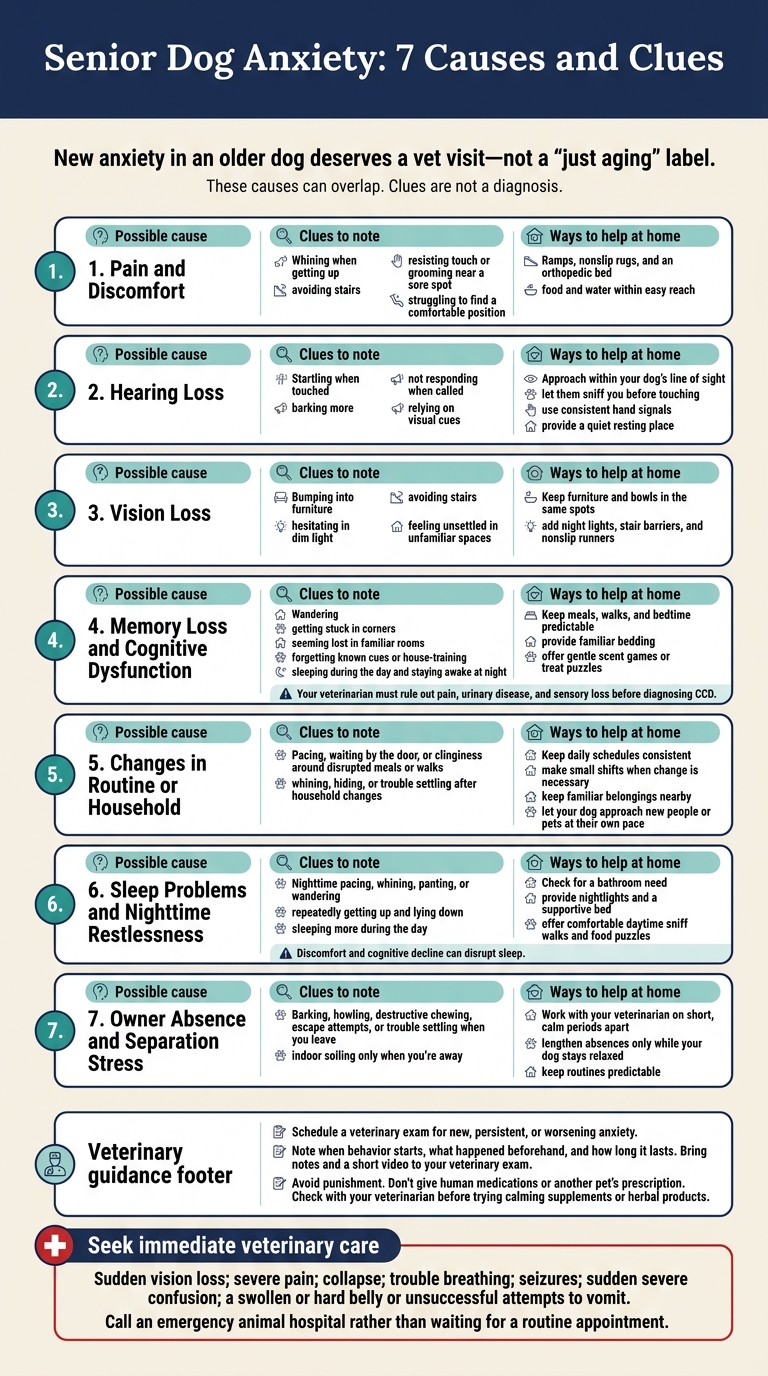
Senior Dog Anxiety: 7 Causes and Clues
Old Dog Anxiety: The 5 Common Causes and Solutions
sbb-itb-6d7d69d
Signs of Anxiety in Senior Dogs
Pacing, restlessness, and trouble settling down can point to anxiety. So can panting at rest when your dog isn’t hot or recovering from exercise. But frequent position changes often suggest pain - not just anxiety.
Some dogs become clingier and follow their owners from room to room. Others hide, pull away from petting, or act irritable around family members or other pets. You may also notice more whining, barking, or howling, especially at night or when your dog is alone.
New indoor accidents in a house-trained dog may stem from anxiety, urinary disease, or canine cognitive dysfunction (CCD). Watch for increased thirst or straining to urinate, too.
Keep track of nighttime waking, nap length, trouble getting up, and reluctance to use stairs. Also note what happens while you’re away, including barking, howling, chewing at doors, or indoor soiling. These patterns help your veterinarian tell separation stress apart from pain, sensory loss, or cognitive decline.
If the signs happen during movement or while your dog tries to settle down, check for pain and discomfort first.
1. Pain and Discomfort
Pain is one of the most common reasons a senior dog may suddenly seem anxious.
Why Anxiety Develops
Arthritis, dental disease, and neurological pain can leave older dogs more reactive, irritable, and fearful.
Signs at Home
Watch for whining when getting up, avoiding stairs, or resisting touch or grooming near a sore spot. Your dog may also struggle to get in and out of the car or seek comfort without finding a position that feels comfortable.
If these signs happen during movement or touch, reduce strain while you arrange a veterinary exam.
Ways to Help at Home
Ramps, nonslip rugs, and an orthopedic bed can ease strain while you wait for your veterinarian to assess the cause. Place food and water within easy reach. Keeping your dog at a healthy weight can also reduce stress on their joints.
When to See Your Veterinarian
Call your veterinarian if the behavior is new, persists, or gets worse - especially alongside limping, confusion, or increased thirst.
Seek emergency care immediately if your dog is pacing with a swollen or hard belly, or trying to vomit without bringing anything up. Never give human pain relievers, such as ibuprofen or aspirin, unless your veterinarian specifically tells you to.
2. Hearing Loss
If your dog startles when touched or responds slowly, hearing loss may be part of the problem.
Why Anxiety Develops
Hearing loss takes away sounds that warn your dog someone is nearby. Without those cues, people can seem to appear out of nowhere. Unexpected touch may cause your dog to startle or react to protect themselves. With partial hearing loss, the sounds they still hear may feel abrupt or unsettling.
Signs at Home
Your dog may bark more, stop responding when called, or follow you closely because they depend on visual cues. They might respond only when they see movement or feel a vibration. A sudden approach may startle them into barking or snapping.
This can look like stubbornness, but it reflects missing cues - not defiance.
Ways to Help at Home
Approach within your dog’s line of sight, and let them sniff you before you touch them. Use consistent hand signals and provide a quiet resting place away from foot traffic. Never punish your dog for missing a cue. It adds fear.
Ear disease can also affect hearing, so lasting changes need a veterinary exam.
When to See Your Veterinarian
Schedule an exam if hearing loss is new or getting worse, especially if your dog also seems disoriented. Your veterinarian can check for ear infections and other conditions that may contribute to the behavior. Don’t assume it’s just aging.
3. Vision Loss
Why Anxiety Develops
As their sight fades, senior dogs rely more on routine and memory. Moving furniture or entering unfamiliar spaces takes away the landmarks they use to feel safe. That can make them more anxious.
Signs at Home
Your dog may bump into furniture, hesitate in dim light, avoid stairs, or startle when touched unexpectedly. Unfamiliar spaces may leave them unsettled, too.
If they also seem confused or struggle to navigate familiar spaces, cognitive decline may be another cause.
Ways to Help at Home
Keep furniture, food bowls, and water dishes in the same spots. Place night lights along the paths to your dog’s bed, water, and door. Use stair barriers to block access to stairs, and add non-slip runners or textured mats on slick floors. You can also support their comfort with dog calming chews during the transition.
When to See Your Veterinarian
Schedule an exam if your dog’s vision loss is new or getting worse. Sudden vision loss needs immediate veterinary care. Note when you notice trouble seeing - for example, after dark.
When vision changes come with confusion, sight loss may not be the only cause.
4. Memory Loss and Cognitive Dysfunction
Why Anxiety Develops
Canine cognitive dysfunction (CCD) involves age-related brain changes that affect memory, learning, and awareness. Familiar routines may no longer make sense, leaving your dog confused and anxious. If your senior dog also has hearing or vision loss, CCD can add to that confusion.
Signs at Home
Your dog may wander, get stuck in corners, seem lost in familiar rooms, or forget known cues or house-training. They may also sleep during the day and stay awake at night. These changes can look like anxiety, but they may also point to cognitive decline.
Ways to Help at Home
Keep meals, walks, and bedtime predictable. Give your dog a quiet place to rest with familiar bedding. Gentle scent games or treat puzzles can provide mental activity.
Never punish indoor accidents or nighttime vocalizing. Punishment adds fear when your dog is already confused.
When to See Your Veterinarian
Schedule an exam if confusion, anxiety, or indoor accidents begin or get worse. Your veterinarian must rule out pain, urinary disease, and sensory loss before diagnosing CCD. Bring videos and a symptom log to help your veterinarian tell CCD apart from pain or sensory loss.
5. Changes in Routine or Household
Why Anxiety Develops
Even a healthy senior dog can feel anxious when daily life becomes less predictable. Change may be harder to handle when pain, hearing loss, vision loss, or cognitive decline already makes it difficult to know what to expect.
Missed walks, late meals, a new caregiver, or a changed work schedule can trigger stress. So can moving, someone new joining the household, or losing a housemate or pet.
Signs at Home
Anxiety often shows up around the disrupted meal, walk, or bedtime. Your dog may pace, wait by the door, or cling to you when a usual walk or meal doesn’t happen on time.
After a household change, you might also notice whining, hiding, or trouble settling at familiar times. Note when each behavior starts and what changed beforehand.
Ways to Help at Home
Keep feeding, potty breaks, medication, and bedtime on a consistent schedule. If the schedule has to change, make small shifts rather than changing everything at once.
After a move, keep familiar belongings within reach and avoid furniture changes that aren’t needed. Let your dog approach new people or pets at their own pace, without pressure.
When to See Your Veterinarian
Don’t assume a routine change explains every symptom. Schedule an exam if your dog’s distress continues despite a steadier routine, gets worse, or occurs alongside increased thirst, sudden weight changes, or difficulty walking. A disruption may bring an underlying medical problem to light.
6. Sleep Problems and Nighttime Restlessness
Why Anxiety Develops
Pain can interrupt sleep, and poor sleep can make anxiety worse. Sore joints may keep your dog from settling comfortably. Canine cognitive dysfunction (CCD) can also disrupt the sleep-wake cycle, leaving dogs confused, anxious, and unable to rest at night. At home, you may notice restlessness after bedtime.
Signs at Home
Watch for nighttime pacing, whining, panting, or wandering from room to room. Your dog may wake family members repeatedly, then sleep more during the day.
Getting up and lying back down repeatedly can point to discomfort as well as anxiety. These patterns help your veterinarian assess whether pain or cognitive decline is affecting your dog’s sleep.
Ways to Help at Home
First, check whether your dog needs a bathroom break. If they seem disoriented at night, try nightlights, and provide a supportive orthopedic bed. During the day, offer short sniff walks and food puzzles that stay within your dog’s comfort level.
When to See Your Veterinarian
Book a veterinary exam if nighttime restlessness continues, especially if your dog pants at rest, keeps changing positions, or doesn’t improve after changes at home.
Seek immediate care if restlessness comes with a swollen belly, unsuccessful attempts to vomit, or trouble breathing.
If restlessness happens mainly when you leave, separation stress may be the cause.
7. Owner Absence and Separation Stress
Why Anxiety Develops
If your dog becomes distressed mainly when you leave or while you’re away, separation stress may be the cause. Hearing or vision loss, cognitive decline, and schedule changes can make your dog feel less secure without you.
Signs at Home
Watch for barking, howling, destructive chewing, escape attempts, or trouble settling when you leave or step out of sight. Indoor soiling only when you’re away can also be a sign.
Record your departures and note when distress begins. Share the footage with your veterinarian to help rule out medical causes.
Ways to Help at Home
Work with your veterinarian to practice short, calm periods apart. Gradually lengthen your absences as your dog stays relaxed. Keep daily routines predictable and provide a resting spot your dog can easily reach.
When to See Your Veterinarian
Schedule an exam for new or worsening separation distress, especially if you also notice confusion, increased thirst, or changes in mobility. Seek prompt care for injuries from escape attempts or if your dog can’t settle for hours. Your veterinarian can check for illness and guide treatment.
When to Call Your Veterinarian
Anxiety in senior dogs can have several overlapping causes. Schedule a veterinary exam for new, persistent, or worsening anxiety, especially if your dog also has trouble sleeping, difficulty walking, or new house-soiling. Don’t brush off these changes as aging.
Your veterinarian may check for pain, hearing or vision loss, and canine cognitive dysfunction (CCD). They may also run bloodwork and urinalysis to look for internal illness and review your dog’s medications for side effects.
Seek immediate veterinary care for sudden vision loss, severe pain, collapse, trouble breathing, seizures, or sudden severe confusion. Call an emergency animal hospital rather than waiting for a routine appointment.
While waiting for a nonurgent visit, leave furniture in place, add night-lights, use nonslip surfaces, and give your dog extra bathroom breaks.
Don’t give your dog human medications or another pet’s prescription. Check with your veterinarian before trying calming supplements or herbal products. These may interact with medications or mask the cause of your dog’s symptoms.
Conclusion: Find the Cause of Your Dog’s Anxiety
These causes often overlap, so the same behavior may have more than one cause.
Note when your dog’s anxious behavior starts, what happened just before it, and how long it lasts. Bring those notes and a short video of the behavior to your veterinary exam.
Your veterinarian can use these details to guide diagnosis and treatment. Anxiety is a sign to investigate, not dismiss as “just aging.”
FAQs
Can my senior dog’s anxiety improve with treatment?
Yes, senior dog anxiety often improves with the right treatment plan. Your veterinarian will first look for and treat underlying problems, such as pain, sensory loss, or metabolic disorders.
Treatment may include prescription medications, specialized diets, or behavior changes. Some medications work within hours, while daily supplements or mood-stabilizing medications may take 2 to 4 weeks to work. Work with your veterinarian to choose treatment that fits your dog’s needs and check that any supplements are safe.
What if my dog has several anxiety triggers?
Senior dogs often have more than one anxiety trigger. Your veterinarian can assess your dog’s anxiety and check for medical issues, such as pain or cognitive decline, that may make stress harder to handle.
Based on your dog’s needs, your veterinarian may suggest a personalized care plan. This could include behavior changes, medication, or supplements, such as those offered by Vet Treat, to support overall wellness.
How can I tell if anxiety treatment is working?
Watch for fewer, milder, and shorter episodes, faster recovery, better sleep, and less trouble settling. Track episode frequency and duration, sleep, comfort, mobility, appetite, and side effects. Review your notes with your vet at scheduled check-ins.
Results take time: situational medications may help within hours, while daily medications often take several weeks. Daily calming supplements typically need 2 to 4 weeks. Reassess after 4 to 8 weeks.