

Prescription vs Natural Anxiety Relief for Dogs
Struggling to calm your anxious dog? Whether your pup trembles during storms or panics when left alone, there are two main approaches to help: prescription medications and natural remedies. Here's a quick breakdown:
- Prescription Medications: Fast-acting solutions like alprazolam for acute stress or long-term options like fluoxetine for chronic anxiety. These adjust brain chemistry but may cause side effects like sedation or appetite changes. Costs range from $80–$200/month.
- Natural Remedies: Options like CBD oil, valerian root, or calming wraps gently ease stress with fewer side effects. These are ideal for mild-to-moderate anxiety and cost $27–$50/month.
Key takeaway: Severe anxiety often requires prescriptions, while natural remedies work well for milder cases. Pairing either with behavioral training leads to better results. Always consult your vet to tailor the best plan for your dog.
Maddie's Insights: Treatment Options for Canine Fears and Anxiety - webcast
sbb-itb-6d7d69d
How Prescription Medications Work for Dog Anxiety
Prescription medications work by adjusting the levels of key neurotransmitters - such as serotonin, norepinephrine, dopamine, and GABA - to help regulate mood and ease anxiety.
SSRIs like fluoxetine prevent serotonin from being reabsorbed, keeping levels higher to improve mood stability. TCAs such as clomipramine boost both serotonin and norepinephrine to balance emotions. Benzodiazepines like alprazolam enhance GABA activity, delivering a fast calming effect. Meanwhile, Alpha-2 agonists like dexmedetomidine reduce stress hormone release, encouraging relaxation.
For long-term use, these medications typically take 4 to 6 weeks of daily administration before their full effects become noticeable. However, short-acting options like alprazolam start working within 30 to 60 minutes, making them ideal for situational anxiety. Among the available options, only three medications - Clomicalm (clomipramine), Reconcile (fluoxetine), and Sileo (dexmedetomidine) - are FDA-approved specifically for dogs. All others are prescribed off-label.
Here’s a closer look at some common prescription options, their uses, and key details.
Common Prescription Medications
| Medication | Drug Class | Primary Use | Onset of Action | Common Side Effects |
|---|---|---|---|---|
| Fluoxetine | SSRI | Separation anxiety, aggression, OCD | 4–6 weeks | Decreased appetite, lethargy, shaking |
| Alprazolam | Benzodiazepine | Thunderstorms, fireworks, travel | 30–60 minutes | Sedation, increased appetite, incoordination |
| Trazodone | SARI | Situational anxiety, post-op confinement | 1–2 hours | Lethargy, sedation, vomiting |
| Clomipramine | TCA | Separation anxiety, compulsive behaviors | 4–8 weeks | Dry mouth, vomiting, diarrhea |
| Dexmedetomidine | Alpha-2 Agonist | Noise phobias (Sileo gel) | 30–60 minutes | Drowsiness, slow heart rate, vomiting |
| Gabapentin | Anticonvulsant | Social anxiety, generalized anxiety | 45 mins–2 hours | Sedation, loss of coordination |
Fluoxetine, commonly known as Prozac, is often used for long-term issues like separation anxiety. Alprazolam (generic Xanax) works quickly to address acute panic situations. Trazodone is versatile, suitable for situational use or as a supplement to other treatments. Clomipramine targets compulsive behaviors and separation anxiety, while Dexmedetomidine (sold as Sileo gel) is applied to the gums to manage noise-related phobias. When using Sileo, it's important to wear waterproof gloves to avoid skin absorption.
Now, let’s explore the benefits and challenges of using these medications.
Benefits of Prescription Medications
Prescription medications are highly effective for managing severe anxiety, offering precise dosing under a veterinarian's guidance. For acute situations, short-acting drugs provide quick relief. For example, alprazolam can calm a panicked dog within an hour, making it especially useful for events like fireworks or vet visits.
"Generally, dog anxiety meds must always be combined with behavioral modification. By reducing anxiety, medications help boost neuroplasticity and enable learning", explains Dr. Amy Casali, Medical Director at Sploot Vets.
Long-term medications help lower a dog’s overall anxiety threshold, creating a stable foundation for behavior training methods like desensitization and counterconditioning.
Drawbacks of Prescription Medications
Like any treatment, prescription medications come with potential downsides. Common side effects include sedation, lethargy, gastrointestinal issues (vomiting or diarrhea), and appetite changes. Occasionally, medications may lead to "disinhibition", where aggressive or undesirable behaviors worsen. Benzodiazepines carry a risk of dependency, and medications like SSRIs and TCAs must be gradually reduced under veterinary supervision to prevent withdrawal or relapse.
For chronic anxiety, treatment often continues for at least two months after symptoms improve. Regular veterinary checkups, including blood work, are essential to monitor your dog’s organ health and ensure the treatment remains effective. Costs vary widely: generic fluoxetine can cost as little as $0.09 per capsule, while branded options like Clomicalm may run around $1.99 per tablet. Administering a "test dose" when your dog is calm can help identify any adverse reactions before a stressful event.
Natural Remedies for Dog Anxiety
Natural remedies can gently help balance your dog's body chemistry, offering relief from anxiety without harsh side effects. CBD oil, for instance, interacts with the endocannabinoid system to help regulate mood, sleep, and stress responses, while also lowering cortisol levels. Another option, valerian root, works by increasing gamma-aminobutyric acid (GABA) in the brain, which helps calm nervous activity. Similarly, L-theanine, an amino acid, promotes a state of "wakeful rest" by enhancing alpha brain waves and stabilizing neurotransmitters like GABA, dopamine, and serotonin.
Adaptogenic herbs such as ashwagandha and rhodiola are known to support adrenal function and regulate cortisol levels over time. For dogs struggling with disrupted sleep or nighttime anxiety, melatonin can help restore sleep cycles and is particularly useful for older dogs experiencing sundowner syndrome. Chamomile, often associated with relaxation, can calm the limbic system and even soothe an upset stomach caused by anxiety.
Pheromone products mimic the comforting scent of a mother dog, helping to ease stress. Meanwhile, pressure wraps like the Thundershirt use gentle, consistent pressure to create a sense of security. Surveys show that roughly 80% of dog owners notice improvements in their pets' anxiety when using these wraps.
Here’s a quick look at some popular natural remedies and their benefits:
Popular Natural Remedies
| Remedy | Onset of Action | Primary Benefit | Best For |
|---|---|---|---|
| CBD Oil | 30–60 minutes | Reduces anxiety significantly | Separation anxiety, noise phobias |
| Thundershirt | Immediate | Provides soothing pressure | Acute stress, thunderstorms |
| L-Theanine | Prompt | Promotes calm without sedation | Training, reactive behaviors |
| Adaptogens | 4–6 weeks | Builds long-term resilience | Chronic/generalized anxiety |
| Valerian Root | 30–60 minutes | Mild sedative effects | Sleep support, travel |
Tips for Using Natural Remedies
If you're introducing CBD to your dog, start with a low dose - about 0.2 mg per pound of body weight - and adjust as needed based on their response. For acute stressors like fireworks or vet visits, giving natural supplements 30–60 minutes in advance can be effective. Calming treats often provide relief for 4 to 8 hours, depending on their ingredients.
Valerian root, while effective, has a strong earthy smell. To make it more appealing, mix it with high-value foods like sardines. Always test a small dose when your dog is calm to check for adverse reactions - some dogs may become hyperactive rather than relaxed. Additionally, never apply pure essential oils directly to your dog's skin; instead, dilute them with a carrier oil or use a diffuser.
Benefits of Natural Remedies
Natural remedies can be a great option for managing mild to moderate anxiety. They tend to have fewer side effects, such as sedation or digestive upset, and are often available over the counter, making them a convenient and affordable choice for many pet owners. These remedies are generally safe for long-term use and work well alongside behavioral training and environmental adjustments.
Drawbacks of Natural Remedies
However, natural remedies may not be enough for severe anxiety cases, such as those involving panic attacks or self-injury. In these situations, prescription medications or professional behavioral therapy might still be necessary.
Another challenge is the inconsistent quality of natural supplements. Since they are classified as pet food and not subject to pre-market FDA approval, their potency can vary between brands and batches. Many herbal remedies also require a "loading period" of 4–6 weeks before showing their full effects, unlike prescription medications that often work faster. For example, compounds like alpha-casozepine need to be given daily for several weeks to achieve noticeable results.
Research on these remedies is mixed. While L-theanine has moderate evidence supporting its use for storm- and noise-related anxiety, evidence for valerian root and chamomile is weaker, often relying on anecdotal reports or studies in other species. If you see no improvement after 60 days of consistent use, consult your veterinarian about other options.
Safety is another important consideration. Some "natural" products may contain harmful ingredients like garlic, which is toxic to dogs. Avoid giving human melatonin or gummies, as they might contain xylitol - a substance toxic to dogs that has been linked to a 230% increase in poisoning cases from 2013 to 2018. Additionally, avoid using valerian root or passionflower in dogs that are pregnant, nursing, or have liver issues.
Prescription vs Natural Remedies: Side-by-Side Comparison
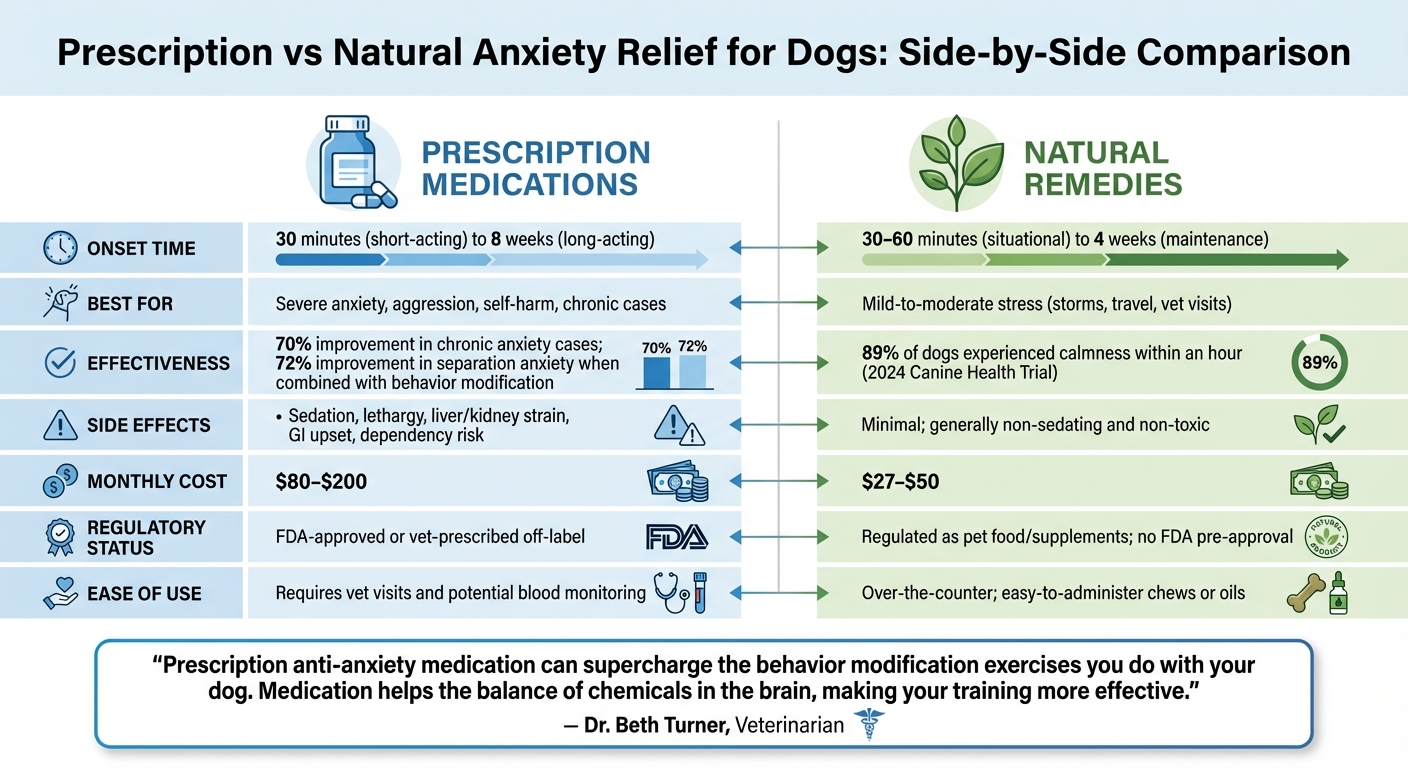
Prescription vs Natural Anxiety Relief for Dogs: Cost, Effectiveness & Side Effects Comparison
When deciding how to manage your dog's anxiety, it's important to weigh the differences between prescription medications and natural remedies. Each option serves a purpose, but they vary in terms of onset time, cost, and the severity of anxiety they address. Here's a breakdown to help clarify their roles.
Prescription medications are typically recommended for severe cases of anxiety, especially when aggression, self-harm, or chronic panic is involved. For example, SSRIs like Prozac have shown around a 70% improvement in chronic anxiety cases. Additionally, when combined with behavior modification, fluoxetine helped reduce separation anxiety in 72% of dogs. However, these medications come with a higher price tag - ranging from $80 to $200 per month - and potential side effects like sedation, liver or kidney strain, and dependency risks.
Natural remedies, on the other hand, are better suited for mild-to-moderate anxiety, such as stress during travel, vet visits, or thunderstorms. These remedies are more affordable, costing about $27 to $50 per month. According to a 2024 Canine Health Trial, 89% of dogs experienced calmness within an hour of taking specific herbal supplements. However, while natural remedies are gentler and have fewer side effects, they may not be effective for severe anxiety or aggressive behavior.
"Prescription anti-anxiety medication can supercharge the behavior modification exercises you do with your dog. Medication helps the balance of chemicals in the brain, making your training more effective." - Dr. Beth Turner, Veterinarian
Comparison Table: Key Factors
| Factor | Prescription Medications | Natural Remedies |
|---|---|---|
| Onset Time | 30 minutes (short-acting) to 8 weeks (long-acting) | 30–60 minutes (situational) to 4 weeks (maintenance) |
| Best For | Severe anxiety, aggression, self-harm, chronic cases | Mild-to-moderate stress (storms, travel, vet visits) |
| Side Effects | Sedation, lethargy, liver/kidney strain, GI upset | Minimal; generally non-sedating and non-toxic |
| Monthly Cost | $80–$200 | $27–$50 |
| Regulatory Status | FDA-approved or vet-prescribed off-label | Regulated as pet food/supplements; no FDA pre-approval |
| Ease of Use | Requires vet visits and potential blood monitoring | Over-the-counter; easy-to-administer chews or oils |
Prescription medications, like Reconcile, Clomicalm, and Sileo, are either FDA-approved for dogs or prescribed off-label under veterinary supervision. In contrast, natural remedies are regulated as pet food and don't need FDA pre-market approval, which means their quality and potency can vary depending on the brand. These distinctions can help you determine which option is the best fit for your dog's needs.
Choosing the Right Approach for Your Dog
After understanding the options, the next step is determining what works best for your dog's specific needs. The choice between prescription medications and natural remedies often depends on how severe your dog's anxiety is.
When to Use Prescription Medications
Prescription medications are essential when anxiety significantly interferes with your dog's daily life. If your dog stops eating, sleeping, or exercising because of fear or panic, natural remedies might not be enough. Dogs that harm themselves, damage property, or show aggression often need prescription solutions.
For sudden triggers like thunderstorms, short-acting medications like Alprazolam or Sileo can be given 30–60 minutes before the event to help manage the situation.
These medications also enhance the effectiveness of behavior modification by stabilizing brain chemistry. For instance, dogs that are too panicked to respond to commands or take treats may struggle with training alone. Studies show that combining Fluoxetine with behavior modification improved separation anxiety in about 72% of dogs, compared to roughly 50% success with training alone.
For dogs with moderate symptoms, however, natural remedies might still be a practical alternative.
When to Use Natural Remedies
Natural remedies are a good starting point for dogs with mild to moderate anxiety, especially when symptoms appear during car rides, vet visits, or short separations. These options are gentle and focus on long-term stress management.
For example, Vet Treat's calming chews - made with natural hemp oil, valerian root, and melatonin - offer a vet-developed solution to promote relaxation without many of the side effects linked to prescription drugs.
It's a good idea to test natural remedies ahead of anticipated stressors, like July 4th fireworks or moving to a new home, to see if they provide the desired results. Keep in mind that many of these products need regular use to build up in your dog's system and may not be strong enough for severe anxiety.
"Sometimes natural remedies are not enough and can leave your pet in a potentially fearful and traumatic situation." - Dr. Dody, DVM, Holistic Vet Blend
Both prescription and natural approaches can help your dog feel calmer, but the right choice depends on how urgent or intense their anxiety is.
The Role of Behavioral Training and Veterinary Guidance
Managing anxiety in dogs effectively requires a combination of approaches, including medication, behavioral training, and adjustments to their environment. Relying solely on medication often falls short of providing a lasting solution. Pairing it with behavior modification is key to achieving long-term improvements. This combination allows treatments to address both the symptoms and the root causes of anxiety.
Medications can help reduce your dog's heightened emotional responses, creating an opportunity for them to learn and adapt through training. Instead of just masking the symptoms, training focuses on reshaping how your dog reacts to triggers.
"These medications lower your dog's emotional reactivity so they can actually learn during your training sessions together. If your dog is experiencing constant panic, they cannot process new information." - Dr. Stefan Novevski, Licensed Veterinarian
As mentioned earlier, blending physical treatments with structured behavioral training is highly effective. Training helps establish routines and encourages calm behavior through positive reinforcement. For instance, teaching your dog to go to a specific spot when the doorbell rings can replace anxious habits like barking or pacing with a calm, alternative behavior.
Before starting any treatment plan, consult your veterinarian to rule out potential underlying health issues. Conditions like hip dysplasia, thyroid problems, or dental pain can either mimic or worsen anxiety. A vet can identify the exact type of anxiety your dog is experiencing and ensure that any prescribed medications or supplements are both safe and appropriately dosed.
Conclusion
Deciding between prescription medications and natural remedies for your dog's anxiety requires a personalized approach based on your pet's specific needs. Prescription options like Fluoxetine or Clomicalm are effective for severe anxiety but come with potential side effects and require veterinary supervision. On the other hand, natural remedies - such as calming chews, CBD oil, or pheromone diffusers - provide milder support for dogs with mild to moderate stress. However, since these remedies aren't FDA-regulated, their quality can vary.
Statistics show that 72.5% of dogs display at least one anxiety-related behavior. Whether you opt for prescription medications (with generic options starting as low as $0.09 per tablet) or natural supplements (generally priced between $15.00 and $35.00 per container), combining these treatments with behavioral training and environmental adjustments often yields the best results.
"Medication alone does not resolve anxiety, making behavior modification essential." - Jennifer Coates, DVM
To create an effective treatment plan, consult your veterinarian to rule out any underlying health issues and tailor a strategy to your dog's unique needs. Keep track of measurable changes - such as the frequency of barking during storms or the time spent hiding - to monitor progress. If no noticeable improvement occurs within 60 days, discuss pharmaceutical alternatives with your vet.
Your dog's emotional well-being thrives on a balanced approach that addresses both immediate stress relief and long-term behavioral health. Pairing treatment with behavior modification ensures a more comprehensive path to comfort and stability.
FAQs
Can I use prescription meds and natural remedies together?
Yes, it’s possible to use prescription medications alongside natural remedies to help manage your dog’s anxiety, but you should always talk to your veterinarian first. They’ll ensure everything is used safely, recommend proper dosages, and check for any potential interactions. Common natural options - like CBD, herbal supplements, or calming techniques - can often work well with prescribed treatments. Your vet can develop a personalized plan that blends these approaches to suit your dog’s unique needs.
How do I know if my dog’s anxiety requires medication?
If your dog exhibits ongoing and intense anxiety symptoms that don't ease with behavioral adjustments, medication might be worth considering. Common signs include relentless shaking, destructive actions, excessive barking, or an inability to calm down in stressful environments. It's essential to consult your veterinarian to get a proper assessment and personalized advice suited to your dog's situation.
What natural anxiety supplements are safest for long-term use?
Probiotic-based formulas and low-dose herbal blends are often seen as some of the safest natural options for managing anxiety in dogs over the long term. These include calming probiotics and mild herbal choices like chamomile or valerian root, which are known for their soothing properties. However, it’s crucial to consult your veterinarian to find the right supplement tailored to your dog’s needs and to ensure it’s safe for extended use.