

Do Metabolic Dog Treats Work for Senior Dogs?
My take: metabolic treats can fit a senior dog’s weight plan, but the label alone doesn’t prove they help dogs lose weight. Keep treats and other extras within 10% of daily calories, or a lower limit set by your vet.
I’d focus on three things before choosing a chew:
- Calories and ingredients: Check calories per chew, ingredient amounts, feeding directions, and overlap with other supplements.
- Your dog’s health: Ask your vet to assess body fat, muscle loss, joint pain, and unexplained weight changes. Medical conditions can affect which treats fit.
- Results, not claims: Look for research on the finished product. Better mobility isn’t the same as fat loss.
<u>Treats should support the plan - not replace meals or medical care.</u> I’d track portions, weight, appetite, and movement, then review those notes with your vet at senior checkups about every 6 months.
Why Senior Dogs Need Individual Weight Plans
After counting treat calories, base feeding needs on body condition, not age alone. Less activity and muscle loss can change how many calories your dog needs. Before cutting food, ask your veterinarian to check body condition, muscle mass, and weight trends.
How Do Activity, Muscle Loss, and Joint Pain Affect Weight?
Dogs burn fewer calories when they move less. Joint pain can limit movement even more, while extra weight puts more strain on joints. Osteoarthritis affects roughly 1 in 5 adult dogs and is more common in seniors. Joint pain calls for a veterinary assessment - not just a change in feeding.
Senior dogs can lose muscle while gaining fat, so weight alone doesn’t tell the whole story. Muscle loss needs a different plan than fat loss. Ask your vet to assess both and review your dog’s diet. Your vet should also use your dog’s current weight when reviewing supplement and medication doses. Don’t change prescribed doses yourself.
When Should a Vet Check Weight Gain?
If weight gain has no clear cause, look beyond food first. Schedule an exam for unexplained weight gain, muscle loss, increased thirst, appetite changes, or reduced mobility. Hypothyroidism and Cushing’s disease can affect weight. A pot-bellied shape, thinning hair, and heavy panting call for an evaluation for Cushing’s - not simply smaller meals.
Before the visit, track water intake for 2–3 days, note changes in urination, and bring recent weight records and medications. Don’t restrict water. Schedule senior wellness checks about every 6 months so calorie targets can change with your dog’s health and activity. Breathing difficulty at rest or sudden confusion needs urgent veterinary care.
Your dog’s health also helps determine which treat ingredients fit their needs. That’s where label review comes in.
sbb-itb-6d7d69d
Choosing Ingredients for a Senior Dog
What Should You Check on the Label?
Start with calories per chew, active ingredient amounts in milligrams (mg), and weight-based feeding directions. Proprietary blends can hide exact doses. Add up nutrients from chews, food, and other supplements to avoid doubling up. Taste and texture matter, too: senior dogs may have fussier appetites or dental issues and may need softer chews and simpler formulas.
Look at the finished product, not just the ingredient names. A weight-support ingredient may do little if its dose is too small. Check the dose, calories, and evidence for the finished chew - not just package claims. GMP addresses manufacturing quality, not weight-loss results.
Are These Chews Safe for Dogs With Medical Conditions?
Match the formula to your dog’s medical history, including kidney, liver, digestive, or endocrine disease, allergies, and medication use. Discuss turmeric, fish oil, and green-lipped mussel with your veterinarian, especially before surgery or if clotting is a concern. Any formula change should fit your dog’s full treatment plan.
Research supports green-lipped mussel’s mobility benefits. Track your dog’s mobility for 4 to 6 weeks, but keep the distinction clear: better movement does not mean fat loss.
How Can Vet Treat Fit Into Senior Care?
A chew that supports mobility still needs to fit your dog’s calorie and supplement plan.
Vet Treat’s Glucosamine + Chondroitin For Dogs, Hip & Joint may fit a mobility-focused senior care plan. Bring the label to your veterinarian to review ingredient amounts, formula fit, and overlap with other supplements.
Even a well-chosen chew counts toward the day’s total calories. Once you’ve checked that the formula fits your dog’s needs, work out how to keep treat calories within the daily limit.
Keeping Treat Calories Within the Daily Limit
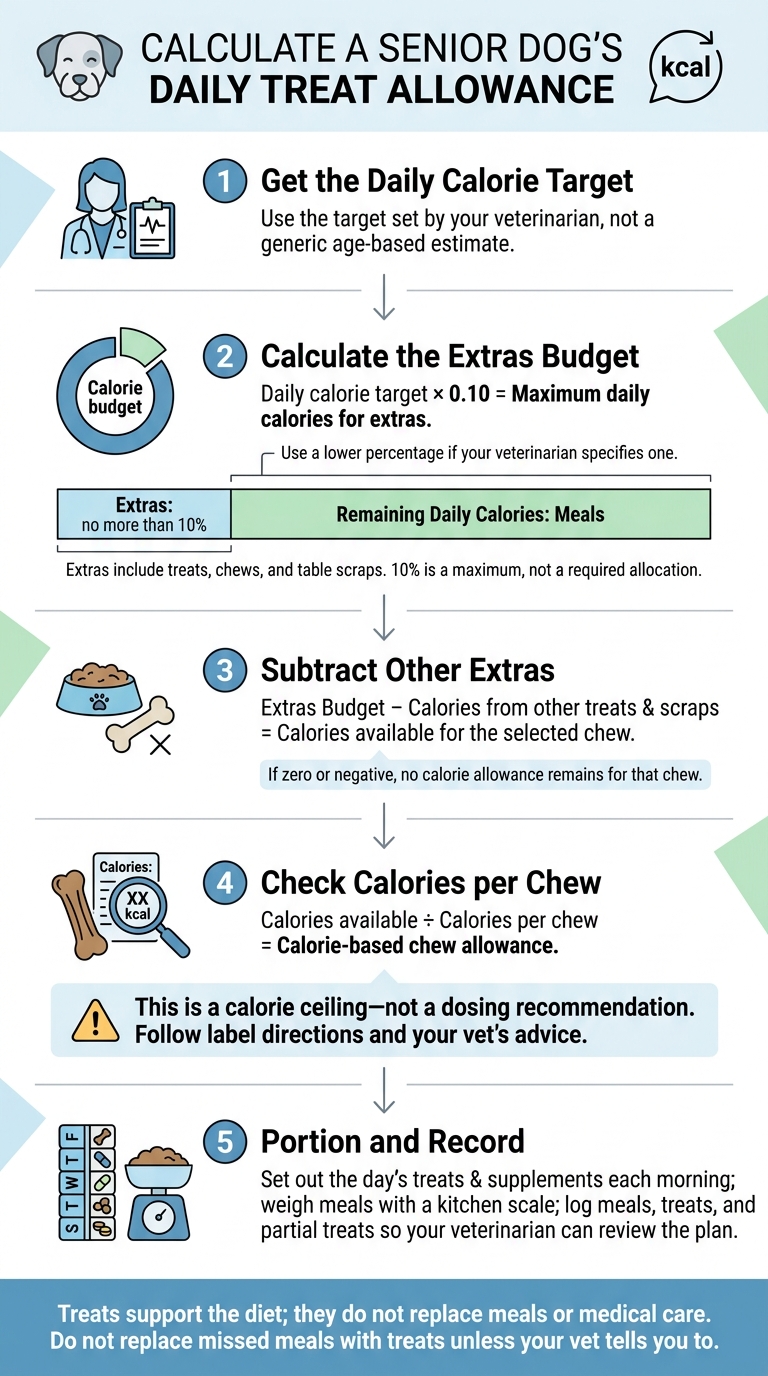
How to Calculate a Senior Dog’s Treat Budget
Once you’ve found a formula that fits your senior dog, keep calories in check - especially as activity slows. Treats, chews, and table scraps should make up no more than 10% of daily calories, unless your veterinarian sets a lower cap.
How Many Treats Can a Senior Dog Have?
Start with your vet’s daily calorie target and set aside up to 10% for extras. Subtract the calories from other treats and table scraps, then divide the remaining amount by the calories per chew.
How Can You Keep Portions Consistent?
Set out the day’s treats and supplements each morning so everyone sticks to the same portions. Use a kitchen scale to weigh meals, and log meals, treats, and partial treats. That record helps your vet adjust the plan and track changes in weight and body condition over time.
Follow the dosing instructions, and don’t replace missed meals with treats unless your vet tells you to.
Conclusion: Make Treats Part of a Senior Care Plan
Once you’ve chosen a formula and set portions, keep metabolic treats within your senior dog’s daily calorie budget. They should support the diet, not replace it.
Build a Safe Senior Weight Plan
Ask your veterinarian to reassess weight changes, update targets, and review treats and supplements alongside a diet that helps preserve muscle. If joint pain limits activity, opt for shorter, gentler walks.
Any weight-loss claim on the label should have product-specific evidence behind it - ideally clinical trials to test effectiveness and third-party lab testing to check purity and consistency.
Track Weight, Muscle, and Mobility
Regular vet checkups should assess weight, body condition, and muscle mass. Between visits, keep notes on appetite, stool quality, mobility, and muscle changes to guide the next checkup. If progress stalls, review nutrition, pain, and activity with your vet.
FAQs
How can my senior dog lose fat without losing muscle?
Work with your veterinarian to create a safe, gradual weight loss plan. Choose a nutrient-dense diet, measure each portion carefully, and ask your vet how many calories your dog needs.
Regular, gentle activity - such as controlled walks or hydrotherapy - can help preserve muscle. Track your dog’s body condition and muscle tone, and work with your vet to adjust the routine so your dog stays healthy, mobile, and comfortable.
Can metabolic treats help if joint pain limits exercise?
Joint support treats can help senior dogs with mobility issues, but they’re no substitute for veterinary care. Ingredients like glucosamine, chondroitin, and omega-3s help support cartilage and reduce inflammation. Pair these treats with weight management and low-impact activity for the best results.
If pain keeps your dog from moving comfortably, talk to your veterinarian to rule out conditions that need targeted treatment. Vet Treat offers veterinarian-recommended, clinically tested daily chews that support senior wellness and joint mobility.
How soon should I expect weight changes?
Weight changes take time. Most supplements need 4 to 8 weeks of consistent daily use before visible results appear. Some owners notice better mobility or more energy within 2 to 3 weeks.
Stick with a steady routine for at least 4 to 6 weeks before judging how well the supplement works. Work with your veterinarian to track progress through regular weigh-ins and wellness checks.