

L-Carnitine vs Fiber for Dog Weight Support
My take: fiber fits hunger and stool needs; L-carnitine may help preserve muscle during calorie restriction. For either option, I’d start with a vet-set calorie target, weigh meals, and keep treats and supplement chews at 10% or less of daily calories.
Neither ingredient reliably increases calorie burn. Your dog’s age, activity, digestion, and muscle condition help guide whether to use one, both, or neither.
Quick Comparison
| What matters | L-carnitine | Fiber |
|---|---|---|
| Main role | Helps the body use fat for energy | Supports fullness and stool consistency |
| Hunger control | Little direct effect | May help reduce hunger |
| Muscle support | May help preserve lean muscle | Doesn’t directly preserve muscle |
| What to watch | Muscle condition and energy | Gas, stool changes, and tolerance |
I’d make changes with veterinary guidance - especially for puppies, seniors, or dogs with medical conditions. Introduce higher-fiber food over 7–14 days, and track weight, appetite, stools, and muscle condition. <u>The goal is fat loss without sacrificing muscle or balanced nutrition.</u>
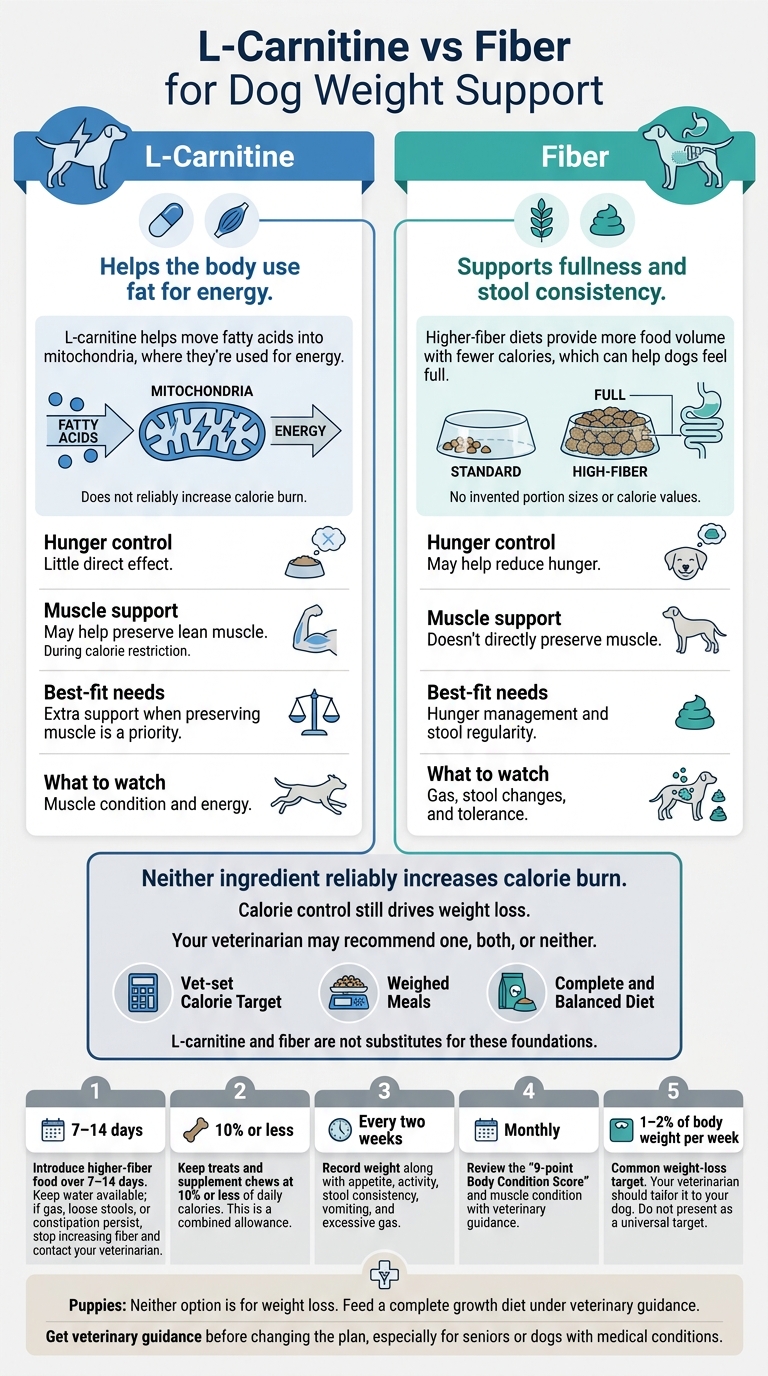
L-Carnitine vs Fiber for Dog Weight Support
How L-Carnitine and Fiber Work
L-Carnitine: Fat Use and Muscle Support
L-carnitine helps move fatty acids into mitochondria, where they’re used for energy. It may also help preserve lean muscle during calorie restriction. But supporting fat use isn’t a weight-loss shortcut.
Ask your veterinarian whether your dog needs a supplement and what dose to use, especially if your dog has a medical condition or takes medication.
Fiber works differently: it affects how much a dog eats and how food moves through the gut.
Fiber: Fullness and Stool Support
Fiber supports fullness and digestion - not fat metabolism. Higher-fiber diets provide more food volume with fewer calories, which can help dogs feel full. Fiber doesn’t directly burn fat, and adding too much can dilute protein, vitamins, and minerals in the diet.
The type of fiber matters, too. Psyllium holds water and helps stool form. Cellulose adds bulk, while fermentable fibers feed gut bacteria.
Introduce higher-fiber diets over 7–14 days, keep water available, and watch for gas, loose stools, or constipation. If these symptoms persist, stop increasing fiber and contact your veterinarian.
sbb-itb-6d7d69d
L-Carnitine vs Fiber: Uses and Limits
Neither ingredient reliably increases daily calorie burn. L-carnitine helps the body use fat, while fiber supports fullness and stool quality. Calorie control still drives weight loss.
| Feature | L-Carnitine | Fiber |
|---|---|---|
| Primary mechanism | Helps move fatty acids into cells for energy; weight-loss results vary. | Adds non-caloric bulk, lowers calorie density, and slows stomach emptying. |
| Fullness and begging | Has little direct effect on hunger. | May help dogs feel fuller and beg less. |
| Stool quality | Generally neutral. | Can increase stool bulk and change consistency. |
| Daily calorie burn | No reliable increase. | No reliable increase. |
| Best-fit needs | Extra support when preserving muscle is a priority. | Hunger management and stool regularity. |
| Monitoring | Muscle condition and energy levels. | Stool consistency, volume, gas, and begging. |
Neither option is better for every dog. L-carnitine is an add-on, not a replacement for a balanced weight-loss plan. Fiber’s usefulness depends on the dog’s digestive health and tolerance.
Veterinary weight-management diets may include both ingredients, plus more protein, less fat, and fewer calories. Because these diets combine several ingredients, they don’t separate out each ingredient’s effect. Weight loss on the full diet doesn’t prove that either L-carnitine or fiber caused it.
Age and daily routine also help determine which ingredient fits best.
Choosing by Age, Routine, and Health
Once you understand how each option works, match it to your dog’s age, routine, and health.
Choose based on hunger, stool needs, and muscle condition after a veterinary exam rules out disease. Get a veterinary evaluation before changing the plan for obesity, unexplained weight gain, suspected hypothyroidism or Cushing’s disease, diabetes, or persistent digestive symptoms. Diet changes in diabetic dogs can affect insulin needs.
| Dog profile | Best fit | Reason | Vet note |
|---|---|---|---|
| Sedentary adults | Fiber for hunger; L-carnitine as a veterinarian-directed add-on during calorie restriction. | Begging can make smaller meals hard to stick with. | Set a calorie target; check unexplained weight gain. |
| Active adults losing weight | Fiber for hunger; L-carnitine when preserving muscle matters. | Fullness or muscle support is the priority. | Watch for fatigue, lameness, and muscle loss. |
| Seniors with muscle loss | Fiber for stool needs; L-carnitine when included in a veterinarian’s muscle-preserving plan. | Constipation or muscle loss needs attention. | Assess appetite, arthritis, mobility, and kidney or liver health. |
Puppies: Neither option is for weight loss. Feed a complete growth diet under veterinary guidance.
Adult Dogs: Managing Hunger and Activity
For sedentary adults, start with measured food portions and low-impact exercise. A higher-fiber diet may make calorie control easier. Before adding L-carnitine, confirm that your dog gets enough protein. Activity level alone isn’t a reason to use it.
Puppies and Seniors: Protecting Growth and Muscle
Age changes the goal. Don’t restrict a puppy’s calories or add weight-management supplements without veterinary guidance. Growth requires balanced nutrients, including the right amounts of calcium and phosphorus.
For seniors, check muscle over the spine and thighs - not just pounds lost. Let appetite, arthritis, and organ health guide the plan. Avoid fast weight loss that costs your dog lean tissue.
Tracking Progress and Counting Chew Calories
Whether you choose fiber or L-carnitine, track more than weight. Record weight every two weeks, along with appetite, activity, stool consistency, vomiting, and excessive gas. Review the 9-point Body Condition Score and muscle condition monthly with veterinary guidance.
A common weight-loss target is 1–2% of body weight per week, but your veterinarian should tailor it to your dog. If symptoms persist or progress stalls, review the plan rather than changing the dose.
Count all treats and supplement chews, including Vet Treat, toward daily calories. Together, these extras should provide no more than 10% of the total calorie allowance.
Conclusion: Match the Ingredient to Your Dog's Needs
Choose the ingredient that fits your dog’s main challenge. Fiber helps with fullness and stool quality. L-carnitine helps the body use fatty acids for energy and may help preserve lean mass when calories are restricted.
But the choice depends on more than your dog’s weight. Your veterinarian may recommend one, both, or neither, based on your dog’s age, routine, muscle condition, digestion, and health. Neither replaces a complete and balanced diet, measured calories, suitable activity, or regular reassessment.
Use a digital kitchen scale to weigh food in grams. Simply feeding less of a maintenance diet can leave your dog short on protein, vitamins, and minerals.
FAQs
How can I tell if my dog is losing muscle instead of fat?
Don’t rely on the scale alone. Check muscle and fat around the ribs, spine, hips, and skull. Fat can mask muscle loss, even when weight hasn’t changed. Compare photos taken from the same angles, and track strength, posture, and how easily your pet gets up.
Call your vet promptly if your pet loses weight without explanation or has weight loss along with weakness, appetite changes, pain, or tiring easily. Your vet can check for disease before you assume diet is the cause.
Does my dog’s food already contain enough fiber or L-carnitine?
Standard dog foods may not provide therapeutic levels of L-carnitine or high-fiber blends unless they’re made for weight management. Look for a weight-management or weight-control label on the packaging. These formulas offer more fiber to help your dog feel full and often contain added L-carnitine to support fat metabolism.
Before switching diets, check with your veterinarian to make sure the food meets your dog’s health needs and is right for their life stage.
How long should I try a weight-loss plan before reassessing?
Schedule a veterinary weigh-in about every two weeks while your dog is losing weight. Aim for 1% to 2% of your dog’s total body weight per week.
If your dog’s weight hasn’t dropped at three consecutive weigh-ins - even though you’ve followed the plan consistently - ask your veterinarian about adjusting calorie intake by 10% to 15% or adding more physical activity.