

How to Improve Your Dog's Joint Health Naturally
Does your dog seem stiff, tired, or hesitant to move? Joint issues like arthritis affect many dogs, particularly as they age. The good news is that you can help your dog stay active and comfortable with natural methods. Here’s how:
- Supplements: Glucosamine, chondroitin, turmeric, and green-lipped mussels can reduce inflammation and support cartilage repair.
- Diet: Add omega-3-rich foods (like salmon), bone broth, and antioxidant-packed produce (like blueberries) to their meals.
- Exercise: Low-impact activities like swimming or short walks on soft surfaces can strengthen muscles without stressing joints.
- Weight Management: Keeping your dog at a healthy weight reduces joint strain and inflammation.
- Home Adjustments: Use non-slip mats, ramps, and orthopedic beds to make their environment more joint-friendly.
- Vet Care: Regular check-ups help catch joint problems early, and baseline X-rays can monitor their condition.
Start early to protect your dog’s mobility and quality of life. Combining these approaches can make a big difference in managing joint health naturally.
Hip and Joint Health for Aging Pets | PetSmart Veterinary Services

sbb-itb-6d7d69d
Natural Supplements for Joint Health
Natural supplements can help rebuild cartilage and reduce inflammation, improving joint function without simply masking pain. Below are some key supplements that support joint health and how they work.
Glucosamine and Chondroitin
Glucosamine helps your dog's body create glycosaminoglycans, which are essential for strong and resilient cartilage. Chondroitin complements this by slowing down cartilage breakdown and retaining water in the joints, ensuring proper cushioning with every movement. A study published in The Veterinary Journal followed 35 arthritic dogs over ten weeks. The results? Dogs given a glucosamine-chondroitin blend showed smoother movement and experienced less pain compared to those on a placebo.
For best results, consistent supplementation is key - allow about 30 days before expecting noticeable improvements. A common dosage is 20 mg of glucosamine hydrochloride and 15 mg of chondroitin sulfate per kilogram (2.2 pounds) of body weight, given once or twice daily. Many experts recommend starting with a full dose for four weeks as a "loading phase", then reducing to about two-thirds of that amount for maintenance. For example, Vet Treat's Glucosamine + Chondroitin chews offer triple-strength support and include added MSM for even greater benefits.
Turmeric and Curcumin
Turmeric is packed with curcumin, a compound that not only reduces inflammation but also acts as an antioxidant to protect joint cartilage. It's especially helpful for dogs dealing with stiffness after periods of rest. The recommended dosage is 15–20 mg per pound of body weight daily. If you're using raw turmeric powder, start with 1/8 to 1/4 teaspoon daily for every 10 pounds of your dog's weight.
Keep in mind that curcumin on its own isn't easily absorbed. Pairing it with healthy fats like coconut or fish oil - or combining it with black pepper (piperine) - can significantly boost absorption. Begin with a small amount and gradually increase, monitoring for any digestive issues. However, turmeric isn’t suitable for all dogs. If your dog has gallbladder or liver conditions, or is scheduled for surgery, consult your vet before use, as turmeric may increase bleeding risks.
Green-Lipped Mussels and Omega-3s
Green-lipped mussels (Perna canaliculus) from New Zealand are a powerhouse of joint support. They contain a unique omega-3 fatty acid called eicosatetraenoic acid (ETA), which is known to reduce inflammation. Along with ETA, these mussels provide glycosaminoglycans, hyaluronic acid, and amino acids - all of which promote joint lubrication and connective tissue health. Clinical studies suggest that 77 mg/kg per day of green-lipped mussel extract can ease arthritis symptoms.
Omega-3 fatty acids, especially EPA found in fish oil, also play a critical role in managing joint inflammation and protecting cartilage. Research shows that higher levels of EPA can help slow cartilage degeneration. A typical fish oil dosage is about 1 teaspoon per 20 pounds of body weight. Since omega-3s can degrade in moist environments, they are best given as a separate liquid or capsule. Keep in mind that fish oil is calorie-dense, so you'll need to account for your dog's overall caloric intake when adding it to their diet.
When combined with a balanced diet and regular exercise, these supplements can be an effective approach to maintaining your dog's joint health.
Next, consider adjusting your dog's diet with specific foods and nutrients that further support joint health.
Dietary Adjustments for Joint Support
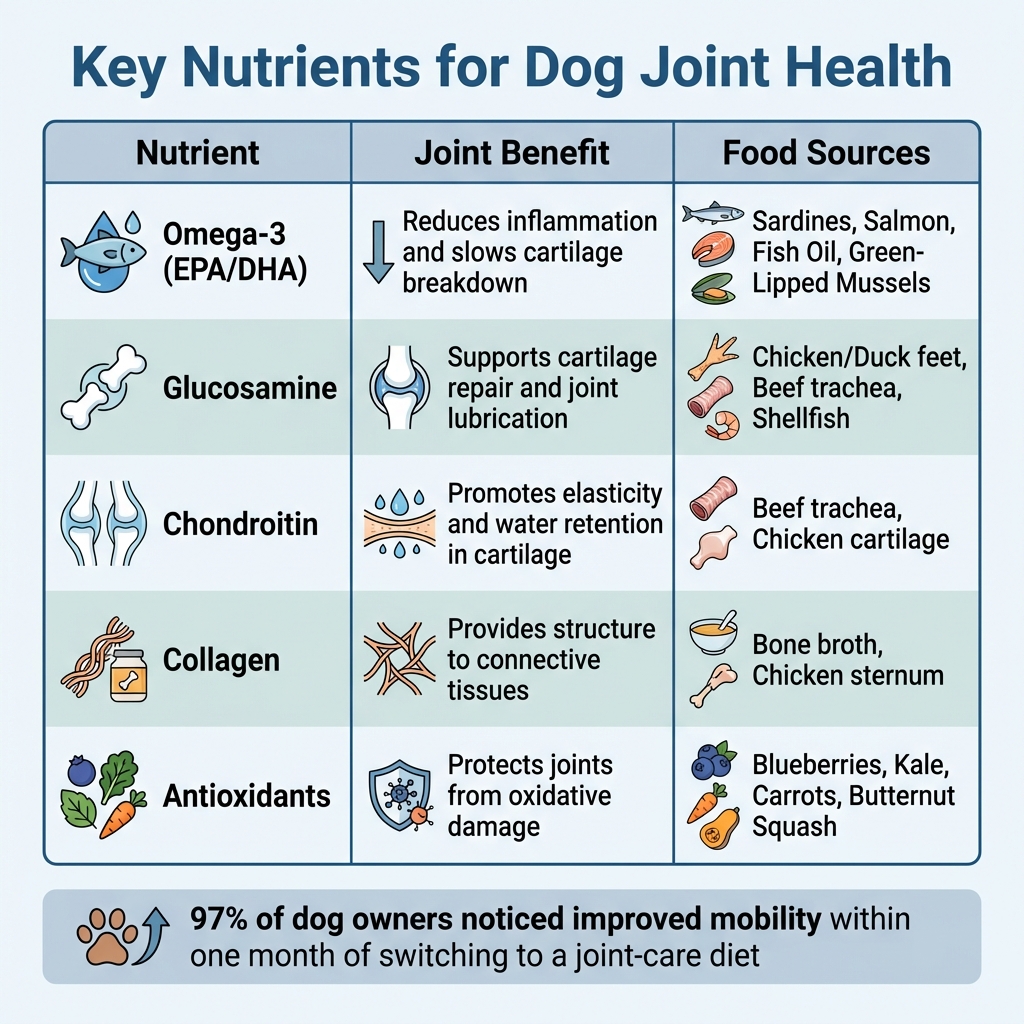
Key Nutrients for Dog Joint Health: Benefits and Food Sources
Your dog’s diet plays a major role in maintaining joint health. The right foods can provide anti-inflammatory benefits and nutrients that help rebuild cartilage, protecting joints and improving mobility from the inside out. Let’s take a closer look at some of the foods that can actively support your dog’s joint health.
Foods That Support Joint Health
Oily fish like sardines and salmon are excellent additions to your dog’s meals. These fish are rich in omega-3 fatty acids (EPA and DHA), which help reduce inflammation and stiffness. If you’re using canned sardines, opt for those packed in water to avoid added sodium and extra calories. Always cook salmon thoroughly and remove the skin and bones, as raw salmon poses a risk of dangerous parasites.
Bone broth and natural cartilage sources, such as chicken feet, duck feet, beef trachea, and chicken sternums, are fantastic for joint health. These foods are loaded with collagen, glucosamine, and chondroitin, which are easier for your dog’s body to absorb compared to synthetic supplements.
Antioxidant-rich produce like blueberries, kale, and butternut squash can help protect joints from oxidative damage. These foods are high in vitamins C and E, which combat free radicals that contribute to cartilage breakdown over time. You can mix small amounts into your dog’s meals or offer them as healthy, low-calorie treats.
Ginger is another natural option for reducing joint pain and stiffness. Research has shown that ginger extract can lower pain and stiffness by 40% compared to a placebo. Start with a small amount of grated fresh ginger to see how your dog tolerates it, and increase gradually if there are no issues.
Nutrient Comparison Table
Many standard kibble formulas provide only minimal amounts of nutrients that support joint health. Fresh, whole-food diets or specialized mobility formulas are better suited to deliver levels of nutrients that can actively reduce inflammation and repair cartilage. Here’s a breakdown of key nutrients and their benefits:
| Nutrient | Joint Benefit | Sources |
|---|---|---|
| Omega-3 (EPA/DHA) | Reduces inflammation and slows cartilage breakdown | Sardines, Salmon, Fish Oil, Green-Lipped Mussels |
| Glucosamine | Supports cartilage repair and joint lubrication | Chicken/Duck feet, Beef trachea, Shellfish |
| Chondroitin | Promotes elasticity and water retention in cartilage | Beef trachea, Chicken cartilage |
| Collagen | Provides structure to connective tissues | Bone broth, Chicken sternum |
| Antioxidants | Protects joints from oxidative damage | Blueberries, Kale, Carrots, Butternut Squash |
Maintaining a healthy weight is also crucial for joint health. Excess weight increases stress on your dog’s joints and triggers the production of inflammatory hormones, which can worsen pain. Studies have shown that 97% of dog owners noticed improved mobility and comfort within one month of switching to a targeted joint-care diet. When combined with natural supplements and proper exercise, these dietary changes can create a well-rounded approach to supporting your dog’s joint health.
Exercise Routines for Dogs with Joint Issues
Low-Impact Activities
Exercise plays a big role in supporting joint health, especially for dogs dealing with conditions like osteoarthritis. With about 1 in 3 dogs affected by this issue, finding the right type of exercise can make a world of difference. In fact, regular low-impact activities can help strengthen muscles and improve mobility, offering benefits similar to anti-inflammatory medications - without the added joint stress.
Here are some gentle yet effective exercises to keep your dog moving comfortably:
Swimming is one of the best options for dogs with joint problems. Water supports their body weight, reducing joint stress by up to 38% when it reaches hip level. Plus, just two or three swimming sessions a week over eight weeks can improve their range of motion by 5%. If your dog isn’t a natural swimmer, try using a doggy life vest for added buoyancy. You can also start with shallow water walks to build confidence and provide low-impact resistance.
Short walks on soft surfaces like grass, dirt, or sand are another excellent choice. Breaking these walks into shorter sessions throughout the day and incorporating varied terrains can help reduce lameness scores compared to long, continuous walks.
Nose work and scent games offer a great way to engage your dog’s mind while encouraging slow, controlled movement. Hide treats around your home or yard to let your dog explore at their own pace. For a twist on traditional games, roll a ball gently along the ground instead of throwing it to minimize joint impact.
Balance exercises can also be helpful. Tools like wobble cushions, balance boards, or low ramps strengthen core and leg muscles without requiring jumping or high-impact movements. For dogs with severe joint issues, you can gently stretch their limbs to maintain flexibility and reduce stiffness.
Before starting any activity, warm up your dog with a five-minute walk and keep an eye out for signs of fatigue, such as lagging behind, worn-down nails, or less interest in treats. If you notice increased limping later in the day or the next morning, scale back the exercise intensity during the next session.
Lifestyle Tips to Prevent Joint Problems
Taking care of your dog's joints goes beyond supplements, diet, and exercise. Simple lifestyle changes can play a big role in keeping their joints healthy and pain-free.
Weight Management and Comfortable Living
Maintaining a healthy weight is one of the most effective ways to protect your dog's joints. In the U.S., about 60% of dogs are overweight, which puts extra stress on their cartilage and can accelerate arthritis due to chronic inflammation.
"The absolute best way to prevent arthritis in dogs is to keep your pet at a healthy weight." - Ashley Gallagher, DVM
Portion control is crucial. Use a level measuring cup to avoid overfeeding and aim for gradual weight loss - around 3–5% per month. If you're reducing food portions, start by cutting back by about 10%, then monitor your dog's weight monthly. To help them feel full without adding calories, mix in 1–2 teaspoons of plain canned pumpkin or green beans. Treats should make up less than 10% of their daily calories, and healthier options like carrots, cucumbers, or zucchini can replace calorie-dense snacks.
Creating a joint-friendly living space is just as important. Add non-slip mats to hard floors to prevent slips and reduce strain on their joints. Orthopedic or memory foam beds can distribute weight evenly, providing extra comfort. To avoid high-impact activities like jumping, use ramps or pet stairs for furniture and cars. Elevated food and water bowls can also help by reducing strain on the neck and shoulders.
Regular vet visits and a joint-friendly home setup, combined with weight management, can make a lasting difference in your dog’s joint health.
Regular Vet Check-Ups and Multivitamin Support
Routine veterinary care is essential for spotting joint issues early. Since arthritis is irreversible, catching it in its early stages is key to slowing its progression. Shockingly, 25% of dogs over one year old have arthritis, and this climbs to 50% for dogs aged 5 to 10 years.
"Once the effects of arthritis have taken effect, all you can do is help it not progress or cause your dog any additional pain – but you can't repair the damage it's caused." - Dr. Beth Turner, Veterinarian
Consider scheduling baseline X-rays around age 2 to detect potential joint problems early. Monthly weigh-ins can help track weight changes that may lead to inflammation, and during routine check-ups, your vet will assess your dog's gait and Body Condition Score to catch subtle signs of discomfort. If your dog is sedated for any procedure, it’s a good opportunity to ask for joint or spine X-rays to monitor their health.
Your veterinarian might also suggest supplements to support joint health. For example, Vet Treat's Multivitamin 15 in 1 Daily Supplement combines glucosamine for joints, probiotics for digestion, and ingredients to boost immunity - all in one chew made in the USA with natural, non-GMO ingredients. Always consult your vet before starting any supplement to ensure it’s safe and properly dosed for your dog’s needs.
Conclusion
To maintain your dog's mobility, a well-rounded approach is key. Combining weight management, specific supplements, gentle exercise, and a joint-friendly environment can make a real difference. Supplements designed for joint health can help repair cartilage and reduce inflammation, often showing results within 4–8 weeks. Activities like swimming or short, low-impact walks help keep muscles strong without putting extra stress on the joints. Meanwhile, adjustments like orthopedic beds, non-slip mats, and ramps can ease everyday movements and reduce strain.
"The most effective and often safest pain management protocols for dogs are typically 'multi-modal' – a few things need to be done together for the best results." - Dr. Beth Turner, Veterinarian, Preventive Vet
Acting early is critical for preserving joint health and mobility. It's far simpler to maintain healthy joints than to address severe damage later on. Considering that arthritis affects about 25% of dogs over one year old and nearly 50% of dogs aged 5 to 10 years, introducing these natural strategies early can greatly enhance your dog's quality of life and keep them moving comfortably for years to come.
FAQs
How do I know if my dog’s stiffness is arthritis?
Dogs showing stiffness might be dealing with arthritis if you notice signs like limping, struggling to get up or lie down, avoiding stairs or jumping, and being less active. Some less noticeable clues include sleeping more than usual, losing muscle mass, seeming down or depressed, or even eating less. If these issues stick around or get worse - especially in older dogs - it’s time to check in with your veterinarian for a thorough evaluation and treatment options.
Can I combine glucosamine, turmeric, and fish oil safely?
Yes, it's generally safe to combine glucosamine, turmeric, and fish oil (such as omega-3 fatty acids) for dogs when used properly. These supplements are commonly suggested to support joint health and help manage inflammation. That said, it's important to consult your veterinarian before introducing any new supplements. They can guide you on the correct dosage based on your dog's unique health requirements.
When should I take my dog to the vet for joint pain?
If your dog starts showing signs of joint pain - like limping, changes in how they walk, or noticeable discomfort - it’s a good idea to schedule a vet visit, especially if these symptoms don’t go away or seem to get worse. For more urgent cases, such as severe pain, trouble moving, swelling, or other alarming symptoms, don’t wait - seek immediate veterinary care. Early diagnosis can help pinpoint problems like arthritis or injuries and allow your vet to develop a treatment plan that improves your dog’s comfort and ability to move.