

How Food Prebiotics Support Dog Gut Health
My advice: start with one plain food your dog tolerates, add it slowly over 7–10 days, and keep treats and toppers under 10% of daily calories. Food prebiotics feed helpful gut bacteria, but they don’t replace a complete-and-balanced diet.
Here’s the approach I recommend:
- Choose a simple topper: Plain pumpkin, cooked vegetables, or cooked oats or barley can add fiber - but not all fiber is prebiotic.
- Watch your dog’s response: Track stools, gas, appetite, and energy. Reduce or stop the addition if symptoms worsen.
- Ask your vet about concentrated inulin: Review the food and supplement labels before adding it.
- Know when food isn’t the answer: <u>Persistent digestive symptoms need veterinary care.</u> Blood in the stool, repeated vomiting, or marked lethargy calls for prompt attention.
The goal isn’t more fiber. It’s the smallest amount your dog tolerates while balanced meals stay the base.
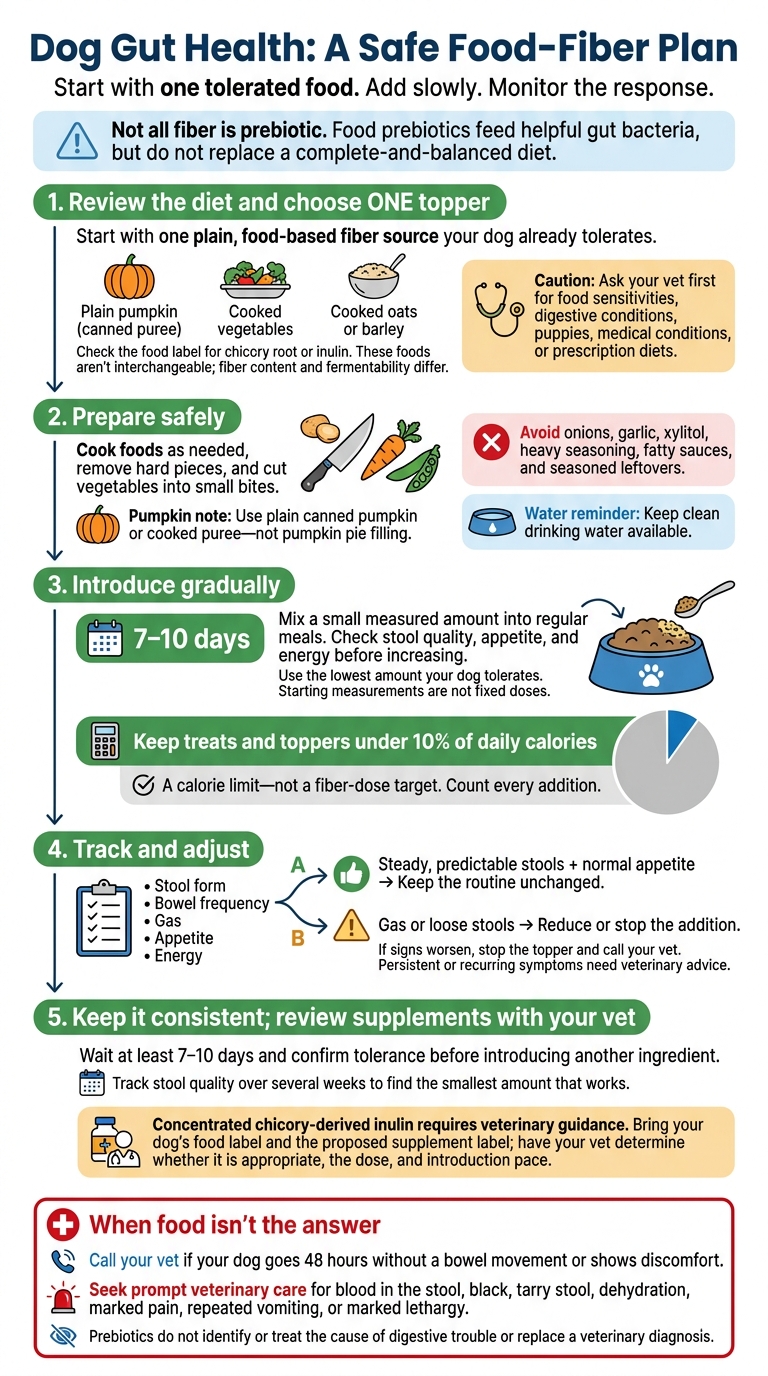
Dog Gut Health: A Safe Food-Fiber Plan
Archive Highlight: Prebiotics for animal health, with Prof. George Fahey
sbb-itb-6d7d69d
Step 1: Choose a Safe Fiber Source
Start with one plain, food-based fiber source your dog already tolerates. Plain foods are the safest starting point; concentrated inulin calls for more caution. If your dog has food sensitivities or a digestive condition, check with your vet before changing their diet.
Compare Whole-Food Toppers
Prepare toppers without butter or added salt. Each ingredient has a different fiber content and fermentability, so these foods aren’t interchangeable.
| Food | Preparation | Main effect | Watch for |
|---|---|---|---|
| Plain pumpkin | Use plain canned pumpkin or cooked puree | Contains soluble and insoluble fiber | Avoid pumpkin pie filling, which contains sugar and spices. |
| Sweet potato | Fully cook and peel | Provides fiber and carbohydrates | Use sparingly for dogs with diabetes. |
| Green beans | Steam plain or use no-salt-added canned beans | Adds stool bulk | Too much can displace nutrients from regular meals. |
| Carrots | Steam or serve raw in bite-sized pieces | Provides fiber and micronutrients | Serve in small pieces. |
| Broccoli | Serve plain, in small amounts | Adds vegetable fiber | Monitor your dog’s tolerance. |
| Oats or barley | Cook thoroughly in water until soft | Supplies fermentable soluble fiber | Avoid raw oats. |
| Chicory-derived inulin | Use only with veterinary guidance | Highly fermentable prebiotic | Excess can cause gas, bloating, or loose stools. |
Let your dog’s tolerance guide your choice. More fermentable fiber isn’t always better. If you need a stronger prebiotic effect, ask your vet about an appropriate option.
Ask Your Vet About Chicory Root and Inulin
Chicory-derived inulin is the concentrated option here that needs veterinary guidance. It’s a fermentable prebiotic used in some formulated foods and supplements - not an everyday vegetable topper.
Before using it, bring your dog’s food label and the proposed supplement label to your veterinarian. Ask whether extra concentrated fiber is appropriate, how much to use, and how slowly to introduce it.
Step 2: Add Fiber Gradually to a Balanced Diet
Once you’ve chosen a safe fiber source, add it slowly to a complete-and-balanced diet suited to your dog’s life stage. Toppers should add to that diet, not replace it. Too many unbalanced extras can dilute nutrients your dog needs, including calcium, zinc, and vitamins, or disrupt the benefits of probiotics. Aim for steady tolerance - not a bigger dose.
Review the Current Diet and Pick One Topper
Check the food label for chicory root or inulin. Then choose one whole-food topper, such as oats, barley, or vegetables. Introduce it slowly to give your dog’s gut time to adjust.
| Topper | Preparation | Gradual introduction | Veterinary guidance |
|---|---|---|---|
| Plain pumpkin | Use plain canned pumpkin. | Start with 1–2 tsp per meal and increase slowly. | Ask your vet first for puppies or dogs with medical conditions. |
| Cooked vegetables or grains | Steam or boil, then cut into small pieces. | Mix in a small amount and increase slowly over 7–10 days. | Ask your vet before adding to a prescription diet. |
| Concentrated inulin | Stir the powder into wet food. | Use the measured dose your vet recommends. | Have your vet set the dose. |
Mix Small Amounts Into Regular Meals
Stir the measured portion into your dog’s usual wet food or kibble. A little water can help distribute it through dry food. Use teaspoons for small dogs and tablespoons for large dogs as starting measurements, not fixed doses.
Introduce the change over 7–10 days. Check stool quality, appetite, and energy before increasing the amount. If gas or loose stools develop, reduce or stop the addition. Stick with the lowest amount your dog tolerates.
Keep treats and toppers under 10% of daily calories. This is a calorie limit, not a fiber-dose target; your dog’s digestive tolerance should guide the portion. Count every addition, and ask your vet for guidance for puppies, dogs with medical conditions, or dogs eating prescription diets. Wait at least 7–10 days and confirm your dog tolerates the change before introducing another ingredient.
Prepare Food Safely and Provide Water
Cook foods as needed, remove hard pieces or anything that could cause choking, and cut vegetables into small bites. Avoid onions, garlic, xylitol, heavy seasoning, fatty sauces, and seasoned leftovers.
Keep clean drinking water available. Extra fiber without enough water can contribute to harder stools or constipation. Check stool quality and appetite before adding anything else.
Step 3: Track Digestion and Consider Supplements
After adding one topper, track your dog’s stool form, bowel frequency, gas, appetite, and energy. Steady, predictable stools and a normal appetite are good signs. Once your dog tolerates the topper, keep the routine unchanged. If it stops working, adjust it promptly.
When to Stop Additions or Call Your Vet
If your log shows worsening signs, stop the topper and call your vet. Pause or reduce it if your dog develops constipation, vomiting, appetite loss, gas, or loose stool. Ask your vet about symptoms that persist or keep returning, especially diarrhea that lasts more than a few days or comes with weight loss.
Call your vet if your dog goes 48 hours without a bowel movement or shows discomfort. Straining can also point to diarrhea or a urinary issue.
Seek prompt veterinary care for blood in the stool, black, tarry stool, dehydration, marked pain, repeated vomiting, or marked lethargy. Before changing fiber intake, check with your vet if your dog is underweight, has chronic digestive problems, diabetes, kidney or liver disease, or eats a therapeutic diet.
Ask Your Veterinarian About Supplements
Before adding any supplement to a food-first plan, review the label with your veterinarian. They can confirm whether it fits your dog’s diet and health needs.
Prebiotics may support digestion, but they do not identify or treat the cause of digestive trouble or replace a veterinary diagnosis.
Conclusion: Keep Portions Small and Use Them Consistently
Once you choose a topper, keep portions small and consistent. Measure each serving and introduce it gradually over several days. Keep complete, balanced food as the base - too much topper can dilute nutrients.
Not all fiber is prebiotic; some only adds bulk. Choose the simplest topper that improves stool quality.
Track stool quality over several weeks to find the smallest amount that works. Persistent digestive symptoms need veterinary care, not another topper. Stick with a consistent routine rather than adding variety.
FAQs
How do prebiotics differ from probiotics?
Probiotics are live bacteria and yeasts that help balance your dog's gut microbiome and support immune function. Prebiotics are fibers that feed helpful gut bacteria, such as inulin or fructooligosaccharides (FOS).
The difference: probiotics add microbes, while prebiotics nourish bacteria already in the gut. This helps those bacteria produce compounds that support gut health, including short-chain fatty acids. The two are often used together to support digestive comfort and stool quality.
How soon will I notice digestive improvements?
How soon your dog improves depends on the cause and treatment. Mild digestive upset may ease within a day or two. For chronic issues, daily fiber or probiotics typically help improve stool consistency and gas within three to four weeks.
Some dogs respond sooner, but symptoms can come and go or briefly worsen as they adjust. If you don’t see clear progress within four to six weeks, talk with your veterinarian about reviewing the plan.
Does my dog need prebiotics if their stools are normal?
Prebiotics can help maintain your dog’s gut health - even if their stools are normal. They support a healthy gut microbiome and promote fecal butyrate production, which supplies fuel for the colon. Their role goes beyond managing digestive issues.
Every dog is different. Ask your veterinarian whether prebiotics suit your dog’s needs and what dosage to use.