

Homeopathic UTI Remedies for Senior Dogs
I wouldn’t rely on homeopathic remedies for a senior dog’s UTI: there’s no reliable evidence they clear a bacterial infection. If your dog has new accidents, pain, or frequent urination, call your veterinarian for testing - not a home remedy.
Here’s what I’d focus on:
- Find the cause. Infection, stones, bladder leakage, diabetes, and mobility problems can look alike.
- Follow the treatment plan. A confirmed bacterial UTI needs vet-prescribed antibiotics. Supplements and senior wellness chews aren’t substitutes.
- Make daily care easier. Keep water available, offer frequent potty breaks, and keep skin and bedding dry.
- Check every product. Ask your vet to review ingredients, medication interactions, and which form your dog can take safely.
If your dog is otherwise well, notes on drinking and accidents over 2–3 days can help your vet - but don’t postpone care to collect them. <u>Repeated straining without passing urine is an emergency.</u>
How To Treat Urinary Tract Infections (UTI's) In Dogs | Vet Explains
sbb-itb-6d7d69d
Urinary Symptoms and Diagnosis
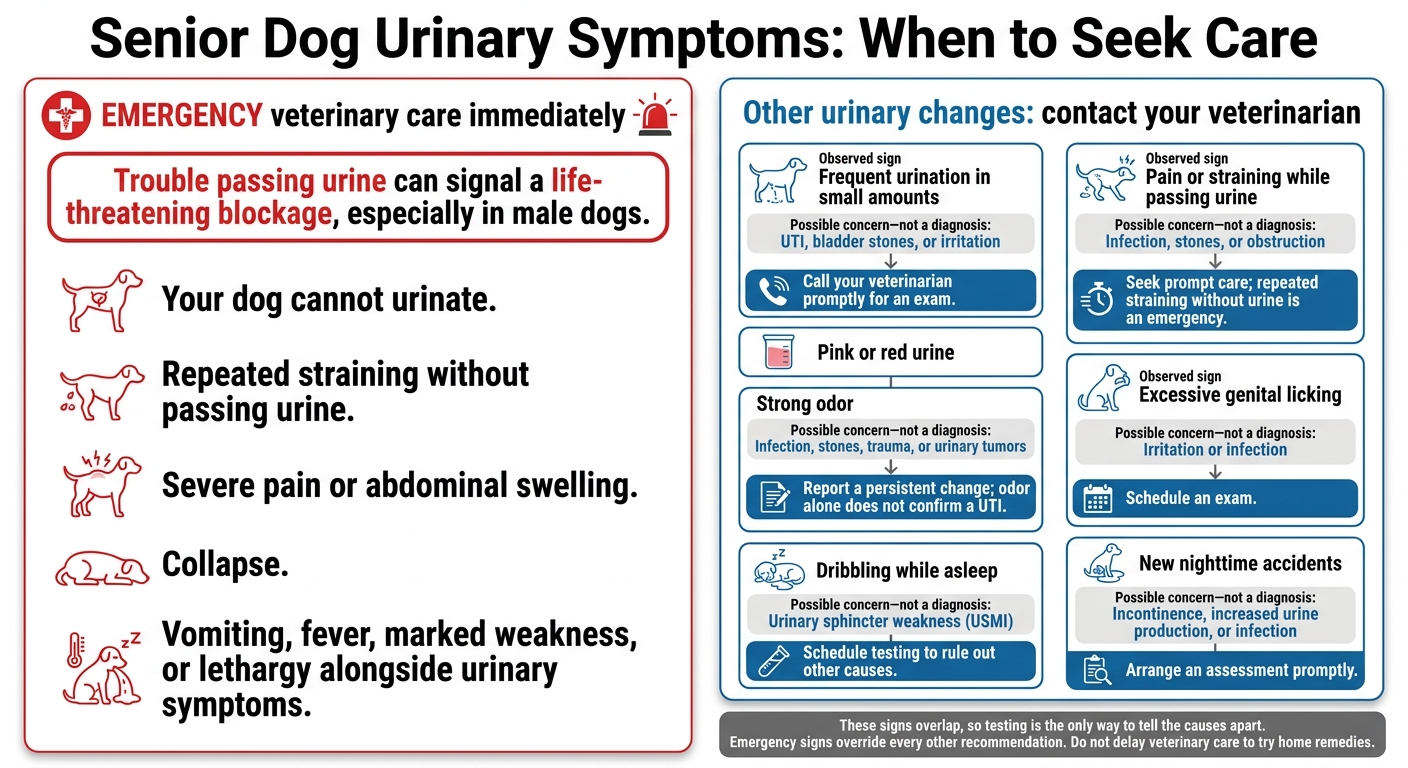
Senior Dog Urinary Symptoms: When to Seek Care
Symptoms and When to Get Help
New accidents in senior dogs usually point to a medical or mobility issue, not a behavior problem. Note how much urine your dog passes, their posture, any pain or leakage, and the urine’s color. Frequent small amounts, large puddles, and leaks during sleep can point to different causes - and different tests.
| Observed sign | Possible concern | Recommended action |
|---|---|---|
| Frequent urination in small amounts | UTI, bladder stones, or irritation | Call your veterinarian promptly for an exam. |
| Pain or straining while passing urine | Infection, stones, or obstruction | Seek prompt care; repeated straining without urine is an emergency. |
| Pink or red urine | Infection, stones, trauma, or urinary tumors | Get prompt veterinary evaluation. |
| Strong odor | Concentrated urine or infection | Report a persistent change; odor alone does not confirm a UTI. |
| Excessive genital licking | Irritation or infection | Schedule an exam. |
| Dribbling while asleep | Urinary sphincter weakness (USMI) | Schedule testing to rule out other causes. |
| New nighttime accidents | Incontinence, increased urine production, or infection | Arrange an assessment promptly. |
These signs overlap, so testing is the only way to tell the causes apart, including infection, stones, incontinence, and other diseases.
Go to an emergency veterinarian immediately if your dog cannot urinate, repeatedly strains without passing urine, has severe pain or abdominal swelling, or collapses. Vomiting, fever, marked weakness, or lethargy alongside urinary symptoms also need immediate care. Trouble passing urine can signal a life-threatening blockage, especially in male dogs.
Tests for UTIs and Other Urinary Problems
A urinalysis checks urine concentration, glucose, protein, blood, and bacteria. Results may point to diabetes or kidney disease, but they don’t confirm either condition. Urine culture and sensitivity testing identify bacteria and help your veterinarian choose an antibiotic, especially if your dog has already taken antibiotics or has recurring infections.
If possible, collect a fresh urine sample in a clean container before the appointment. Samples for culture should be collected before antibiotics when feasible, but this should never delay urgent treatment.
Blood tests, including a CBC and chemistry panel, can check kidney markers and blood glucose. X-rays or ultrasound may show stones, a blockage, or urinary tumors. Incontinence needs a different assessment than infection, while suspected Cushing’s disease may call for hormone testing.
Your dog’s age also helps your veterinarian put symptoms and test results into context.
Senior Dogs vs. Younger Dogs
Senior dogs often show the same urinary signs as younger dogs, but aging, mobility limits, or medication are more likely to play a role. Still, poor sphincter control and reduced urine-concentrating ability aren’t inevitable parts of aging.
Arthritis can make getting to the door or holding a squat painful. Report persistent increased thirst, even if your dog takes medication that could explain it. Your veterinarian needs to check whether the change comes from the drug or a disease.
| Feature | Senior dogs | Younger dogs |
|---|---|---|
| Bladder control | Sphincter weakness may cause involuntary leakage, especially during rest. | New leakage still needs assessment; age does not establish the cause. |
| Mobility | Arthritis or hind-end weakness can delay bathroom trips or make squatting difficult. | Usually fewer mobility barriers. |
| Hydration | Kidney disease or diabetes may increase thirst and urine volume. | Lasting changes still deserve attention. |
| Underlying disease | Kidney disease, diabetes, and Cushing’s disease can cause urinary changes. | Chronic metabolic disease is generally less common. |
| Medication use | Steroids or diuretics may increase drinking and urination. | Long-term medication use is generally less common. |
| Diagnostic needs | Blood, urine, and imaging tests may be needed. | Symptoms and history, not age alone, guide testing. |
Alongside bladder care, a senior dog may need daily supplements, easier access to water, more frequent potty breaks, and a medication review.
Homeopathy and Urinary Support
What the Evidence Says About Homeopathy
Once your veterinarian identifies the cause, home care should support treatment - not replace it.
Homeopathy uses highly diluted substances, often at 30C, where little or none of the original material remains. Herbal products and nutritional supplements contain measurable ingredients, so they are not homeopathic remedies.
Evidence does not support homeopathy for treating canine UTIs. Delaying needed antibiotics can allow an infection to spread to the kidneys. Ask your veterinarian to review any product before use, especially if your dog has a chronic condition or kidney disease.
Water, Bathroom Breaks, and Hygiene
For senior dogs, daily care starts with making urination easier and less stressful alongside a vet-directed diagnosis and treatment plan.
- Water access: Keep clean water near resting spots. Ask your veterinarian whether adding water to meals could help. Report increased thirst, which can point to another disease.
- Bathroom access: Offer frequent trips outside, including after waking, eating, and drinking. Nonslip paths, ramps, night lights, and suitable mobility assistance can make these trips easier.
- Skin and bedding care: Gently clean wet skin with pet-safe, unscented wipes, then dry it. Keep bedding clean and dry. Change absorbent pads or belly bands often to prevent urine scald.
Give prescribed medication exactly as directed.
Urinary Supplements and Senior Wellness Chews
Some owners ask about supplements after a diagnosis. Cranberry and D-mannose may support urinary health, but evidence of benefit in dogs is limited. Supplements do not diagnose or treat infection. Ask your veterinarian to review the evidence for each ingredient, amounts per serving, and safety with your dog’s health conditions and medications.
Vet Treat offers senior wellness chews for general senior wellness support, but they are not UTI treatments. Have your veterinarian review the product before use.
Medication Safety and Product Forms
Check Medications and Ingredients Together
Senior dogs often take several medications. Before adding any urinary product, have your veterinarian check it for interactions.
Bring labels and dosing details for every prescription, over-the-counter drug, supplement, and homeopathic remedy. Ask your veterinarian to review your dog’s kidney and liver function, blood pressure, and stomach sensitivity. They should also look for repeated ingredients, such as glucosamine or vitamins, that could make the total dose too high.
Do not stop or change steroids or diuretics without veterinary direction. Don’t give human urinary pain relievers or leftover antibiotics unless your veterinarian prescribes them. The wrong antibiotic can cause side effects, leave the infection untreated, or contribute to antibiotic resistance.
Choosing Chews, Liquids, Powders, or Tablets
Limited mobility, dental pain, and pill refusal can make dosing harder for older dogs than younger dogs. Choose a form your dog can take consistently, accounting for arthritis, sore teeth, or trouble swallowing. If your dog has swallowing problems, ask your veterinarian which form is safest.
| Form | Practical advantages | Limitations | Veterinary checks |
|---|---|---|---|
| Chews | Can be offered as a treat. | Hard textures may hurt sore teeth; calories or ingredients may conflict with dietary restrictions. | Check calories, repeated ingredients, and medication compatibility. |
| Liquids | May help dogs with dental pain; can be given into the cheek pouch. | Need careful measuring; spills change the dose. | Confirm the measuring device and check alcohol or sugar content. |
| Powders | Mix into wet food or softened kibble. | Your dog won’t get the full dose if part of the meal is left uneaten. | Make sure your dog will eat the full serving. |
| Tablets or pellets | Provide a defined dose when given as directed. | Can be hard to give if your dog refuses pills or has trouble swallowing. | Ask whether crushing or dissolving is appropriate. |
What to Check on the Label
Clear labels help your veterinarian decide whether a product fits your dog’s care plan.
Check ingredient amounts, dosing directions for dogs, manufacturer contact details, lot number, expiration date, and testing information. Read the inactive ingredients, too: xylitol is highly toxic to dogs. If amounts or directions aren’t clear, ask before giving the product.
Reviews and claims such as “natural,” “non-GMO,” or “Made in the USA” do not establish that a product works for UTIs or is safe for your dog. A ‘tested’ claim doesn’t prove it treats a bacterial infection. Ask what was tested and what the results support.
Conclusion: Follow Your Veterinarian's Care Plan
Once your dog has a diagnosis and treatment begins, track urine amount, color, odor, and any straining. Note changes in thirst or medication, and whether accidents happen while your dog is asleep or awake. In senior dogs, limited mobility and bladder changes can make improvement harder to spot.
Stay in touch with your veterinarian, complete the recommended tests, and give prescribed treatment exactly as directed. Use supplements or homeopathic products only with veterinary approval. Homeopathic remedies cannot replace antibiotics for a bacterial UTI.
During recovery, also watch your dog’s appetite and energy. Improving symptoms don’t mean the infection has cleared, so keep recommended recheck appointments and repeat testing. Ask your veterinarian to reassess your dog if symptoms return or never fully go away.
Don’t delay veterinary care to try home remedies. If your dog cannot urinate, seek emergency care immediately. Repeated vomiting, collapse, or severe weakness also calls for emergency care.
FAQs
How soon should my senior dog improve with UTI treatment?
Most simple bladder infections clear up soon with veterinarian-prescribed antibiotics. Your pet may feel more comfortable or show fewer symptoms before treatment ends. Still, finish the full antibiotic course as directed to make sure the infection is fully resolved.
If symptoms don’t fully resolve or persist for more than 24 to 48 hours after treatment starts, contact your veterinarian immediately for further evaluation.
Why does my senior dog keep getting UTIs?
Senior dogs are more prone to UTIs because conditions like diabetes, Cushing’s disease, and kidney disease can weaken their immune system, making it easier for bacteria to grow. Arthritis or joint pain can also make moving around harder. As a result, dogs may empty their bladder less often, giving bacteria more time to multiply.
What looks like recurring UTIs may instead be an underlying anatomical issue, bladder stones, or age-related incontinence.
What if my dog refuses their prescribed UTI medication?
Contact your veterinarian immediately. Give your dog the full course of antibiotics as directed to clear the infection and help prevent complications, including kidney infections or antibiotic resistance. Don’t replace antibiotics with home remedies or supplements - they cannot cure bacterial infections.
If your senior dog struggles to take the medication, your veterinarian may suggest hiding it in high-moisture food or offer a different formulation that’s easier for your dog to accept.