

Dog Won't Stop Scratching: Allergy Solutions
If your dog is scratching excessively, it’s likely due to allergies. Common triggers include fleas, pollen, dust mites, mold, or food sensitivities. Left untreated, this can lead to skin infections, hot spots, and even behavioral changes. The key to relief is identifying the cause and addressing it directly. Here’s how:
- Flea Allergies: Look for flea dirt or itching near the tail and hind legs. Use year-round flea prevention.
- Environmental Allergies: Pollen, dust mites, and mold can cause itching on the face, ears, and paws. Wipe your dog’s coat after walks and wash bedding weekly in hot water.
- Food Allergies: Proteins like beef or chicken are common culprits. Try an elimination diet to identify triggers.
Quick relief options include oatmeal baths, aloe vera gel, and anti-itch sprays. Long-term care involves omega-3 supplements, probiotics, and hypoallergenic diets. If symptoms persist or worsen (e.g., hair loss, open sores, or a musty odor), consult a vet for targeted treatments like Apoquel or Cytopoint.
Allergies in Dogs: Top 5 Remedies to Stop the Itching
sbb-itb-6d7d69d
How to Identify Allergy Triggers
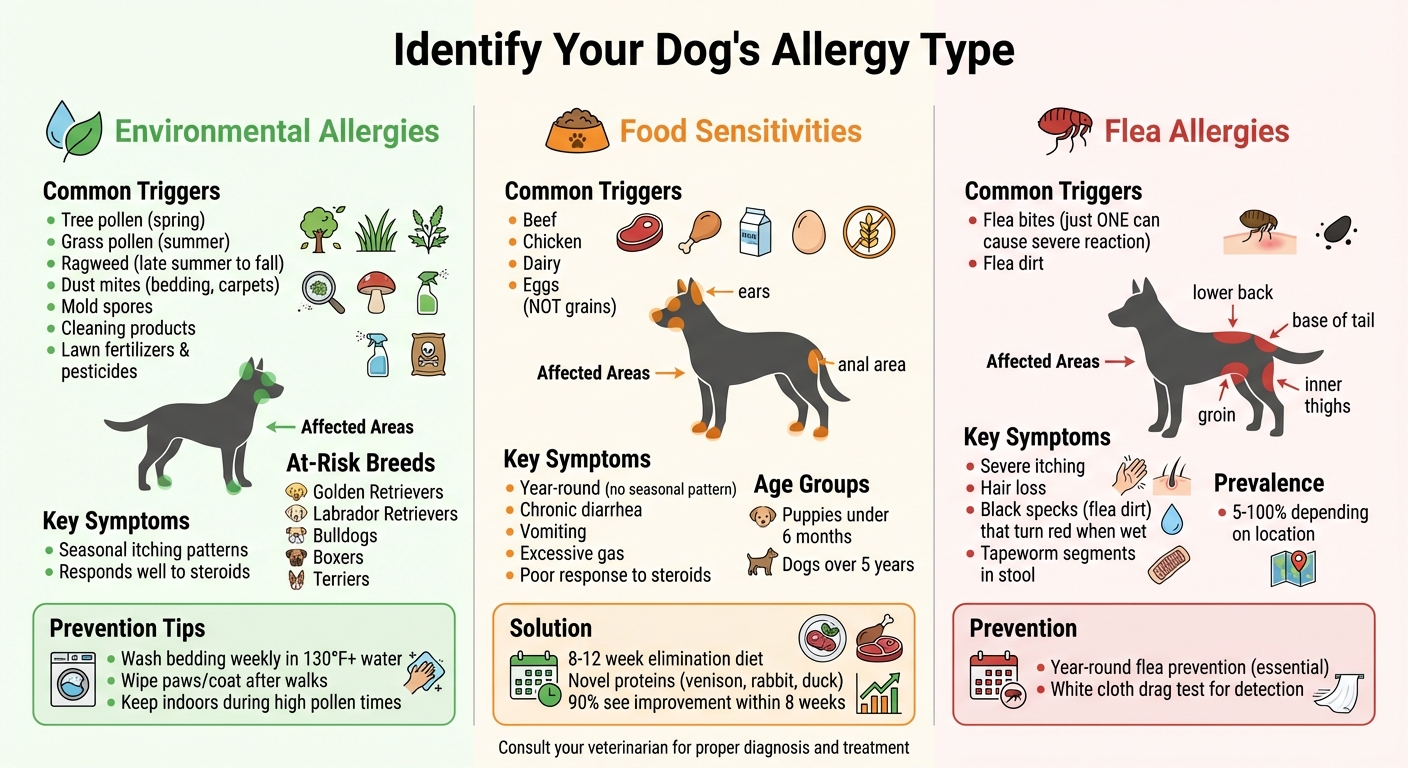
Dog Allergy Types: Symptoms, Triggers, and Treatment Comparison Chart
Pinpointing what's causing your dog's itching is crucial. Once you identify the triggers, you can address the problem directly instead of relying on guesswork. The main offenders are environmental allergens, food sensitivities, and parasites. Each leaves its own set of clues, helping you narrow down the cause and take action.
Environmental Allergens
Outdoor allergens like tree pollen (common in spring), grass pollen (summer), and ragweed (late summer to fall) are frequent culprits. Mold spores, especially in damp areas, can also irritate. Indoor allergens, however, are often overlooked. Dust mites, for instance, thrive in bedding and carpets, as Zack Keithy, a Certified Veterinary Technician, explains:
The most overlooked trigger is the house dust mite, which thrives in your dog's bedding.
Other irritants include cleaning products, cigarette smoke, and synthetic fabrics. Contact allergens like lawn fertilizers, pesticides, and de-icing salts can also cause skin reactions. Certain breeds, such as Golden Retrievers, Labrador Retrievers, Bulldogs, Boxers, and Terriers, are more prone to these allergies due to genetics.
To minimize exposure, wash your dog's bedding weekly in hot water (at least 130°F) to eliminate dust mites. After walks, wipe down their paws and coat with a damp cloth to remove pollen. Keep them indoors during high pollen times and away from freshly treated lawns. These steps, paired with natural remedies, can help restore your dog's skin health.
If environmental factors aren't the issue, your dog's diet might be the next area to investigate.
Food Sensitivities
Food allergies are constant and don't fluctuate with the seasons. If your dog also has symptoms like chronic diarrhea, vomiting, or excessive gas along with itching, food sensitivities might be the root cause. The itching often appears around the ears, paws, anal area, and face.
Contrary to popular belief, animal proteins - like beef, chicken, dairy, and eggs - are the most common triggers, not grains. Food allergies can show up in puppies under six months old or in older dogs over five years. A key indicator is if your dog doesn't respond well to steroids, which typically help with environmental allergies.
The best way to confirm food allergies is through an elimination diet trial. For 8 to 12 weeks, feed your dog a diet with a novel protein (like venison, rabbit, or duck) or hydrolyzed protein. Avoid all treats, flavored medications, dental chews, and table scraps during this period, as even small amounts of allergens can disrupt the process. Research shows that 90% of dogs see skin improvement within 8 weeks of starting a hydrolyzed protein diet.
Parasites and Flea Allergies
Flea allergy dermatitis is another common issue - just one flea bite can cause severe itching and hair loss.
To check for fleas, look for flea dirt, which looks like tiny black specks near the base of your dog's fur. These specks turn red when placed on a wet paper towel. Itching around the lower back, base of the tail, groin, and inner thighs often points to fleas. You might also notice tapeworm segments in your dog's stool, as fleas can transmit these parasites.
A simple at-home test is the white cloth drag: drag a white washcloth over your dog's coat to collect flea dirt or catch fleas. If your dog has mange mites instead - signaled by intense itching, scabbing, and patchy hair loss - a vet can confirm this through a skin scraping. Depending on your location, flea prevalence ranges from 5% to 100%. Year-round prevention is essential to keep these pests at bay.
Natural Remedies for Quick Itch Relief
When you notice your dog scratching non-stop, you want to ease their discomfort as soon as possible while addressing the underlying cause. These natural remedies can provide immediate relief, helping to soothe irritated skin while you work on long-term solutions.
Soothing Baths and Rinses
A colloidal oatmeal bath is one of the best ways to calm itchy, inflamed skin. Colloidal oatmeal contains avenanthramides, compounds known for their anti-inflammatory properties, which help reduce redness and swelling while supporting the skin's natural barrier. To make the bath, grind 1–2 cups of plain, unsweetened oatmeal into a fine powder using a blender or food processor. Stir the powder into lukewarm water (avoid hot water, as it can strip natural oils) until the water turns milky. Let your dog soak for 10–15 minutes, gently massaging the solution into their coat, and rinse thoroughly.
For dogs dealing with seasonal allergies or hot spots, herbal tea rinses can work wonders. Brew 3–4 chamomile or green tea bags in one liter of hot water. Once cooled, use the tea to rinse your dog's skin or apply it with a clean cloth. These teas have mild antiseptic and anti-inflammatory properties, offering a cooling effect. Let the tea dry naturally on your dog's coat for the best results.
If your dog has a yeast infection or bacterial skin issues, an apple cider vinegar (ACV) rinse may help balance their skin's pH. Mix equal parts raw, unfiltered ACV and water in a spray bottle or bowl. Spray the solution on itchy areas like paws or armpits, or use it as a 5-minute paw soak. However, as small animal expert Christina Donnelly notes:
Apple cider vinegar should never be used on raw skin or open wounds - it can be extremely painful for your dog and worsen symptoms.
Always check for cuts or sores before applying any ACV-based remedy.
For spot treatments, you can also try anti-itch gels or pastes for targeted relief.
DIY Anti-Itch Sprays and Gels
Aloe vera gel provides quick, cooling relief for hot spots and inflamed skin. Use only 100% pure aloe vera gel without alcohol or additives to avoid further irritation. Apply a thin layer to affected areas once or twice daily. Since aloe vera can be toxic if ingested in large amounts, you may need to use an Elizabethan collar to prevent your dog from licking the treated areas.
A baking soda paste is another simple remedy for localized itching. Mix equal parts baking soda and water to form a thick paste, then apply it to the irritated area for about 20 minutes. Rinse thoroughly afterward to avoid any residue.
For a more versatile option, create a DIY anti-itch spray by combining 1/2 cup of alcohol-free witch hazel, 1 cup of distilled water, and 5–10 drops of lavender essential oil in a spray bottle. This blend acts as a natural astringent and antihistamine. Store the spray in the refrigerator for an extra cooling effect when applied to inflamed areas.
| Remedy | Best For | Application Time | Key Precaution |
|---|---|---|---|
| Oatmeal Bath | Dry, allergy-prone skin | 10–15 minutes | Use lukewarm water only |
| ACV Spray | Yeast infections, itchy paws | 5 minutes (soak) | Avoid open wounds |
| Aloe Vera Gel | Hot spots, red patches | Leave on | Toxic if ingested |
| Baking Soda Paste | Localized itchy spots | 20 minutes | Rinse thoroughly |
| Tea Rinse | Seasonal allergies | 5 minutes or air dry | Ensure completely cooled |
These remedies can provide quick relief and work well alongside the long-term strategies discussed later in this guide.
Long-Term Solutions for Healthy Skin
Achieving lasting skin health for your dog goes beyond quick fixes. It involves improving their internal skin health through the right supplements and dietary changes. These steps can help reduce inflammation, strengthen the skin barrier, and better regulate immune responses that may lead to allergic reactions.
Dietary Supplements for Skin Health
Adding the right supplements to your dog's diet can make a real difference. One of the most effective options is Omega-3 fatty acids, particularly EPA and DHA. These essential fats are proven to lower inflammation by reducing compounds like prostaglandins and leukotrienes. They also help fortify the skin barrier, making it harder for allergens to penetrate. Studies show that proper Omega-3 dosing can reduce allergy symptoms by 30–50%. For a medium-sized dog, aim for 20–55 mg of combined EPA and DHA per pound of body weight daily. When choosing a fish oil supplement, focus on the EPA and DHA content listed on the label, not just the total fish oil amount.
Another helpful addition is probiotics, which support the gut-skin connection. With around 70% of a dog’s immune system located in the gut, probiotics can reduce allergic symptoms by 20–40% when specific strains are used. Look for products with guaranteed CFU counts to ensure effectiveness.
Quercetin, often called "nature's Benadryl", is another natural option. It works as an antihistamine by blocking histamine release from mast cells. For the best results, pair it with bromelain to improve absorption. A common dose is 5–10 mg per pound of body weight, given twice a day. Additional supplements like Vitamin E (for antioxidant support and skin barrier maintenance) and Zinc (for skin repair and immune function) can also be beneficial.
"Omega-3 fatty acids are the most evidence-backed supplement for allergic dogs - studies show 30-50% symptom reduction at proper doses."
- Gary, Founder, Pet Allergy Scanner
It’s important to note that supplements take time to show results - usually 6–12 weeks. Start with half-doses during the first week to avoid digestive upset, and refrigerate liquid fish oils after opening to prevent spoilage. A basic supplement plan typically costs $30–$50 per month, though adding quercetin may raise this to $40–$70.
To maximize results, combine these supplements with dietary adjustments to reduce allergen exposure.
Allergy-Friendly Nutrition
Supplements can help tackle inflammation, but your dog’s diet plays a key role in managing allergen exposure. If food sensitivities are causing the itching, you’ll need to identify and eliminate the problem ingredients. Food allergies in dogs are more often tied to animal proteins than grains.
An effective way to pinpoint triggers is through an elimination diet lasting 8–12 weeks. This involves feeding your dog either novel proteins (like venison or duck) they’ve never eaten before or hydrolyzed protein diets, where proteins are broken down into tiny fragments that the immune system doesn’t recognize. During this period, it’s crucial to stick to the diet strictly - just a small amount of the offending protein can restart the allergic response. Once the trigger is identified, you can transition to a long-term limited-ingredient or hypoallergenic diet.
Adding antioxidant-rich foods, such as blueberries or pumpkin, can also help. These toppers combat oxidative stress and complement your supplement regimen to promote overall immune balance and healthier skin.
In addition to diet and supplements, proper grooming can further reduce allergen exposure and support your dog’s skin health.
Grooming and Care to Prevent Allergies
Regular grooming plays a crucial role in reducing allergen buildup on your dog's coat and skin. While supplements and allergy-friendly diets work internally, grooming tackles external allergens like pollen, dust mites, and mold spores that cling to fur during outdoor adventures. Without proper care, these irritants can accumulate, worsening itching and skin sensitivity. A consistent grooming routine not only supports your dog's appearance but also helps maintain a healthy skin barrier, breaking the itch-scratch cycle and offering relief alongside other allergy treatments.
Bathing and Shampoo Selection
The frequency of baths depends on your dog's lifestyle and the severity of their allergies. For dogs with environmental allergies, bathing twice a week can significantly reduce allergens - up to 84% from fur and 86% from dander, according to studies.
When choosing a shampoo, stick to hypoallergenic or soap-free options specially designed for a dog's skin pH (6.2 to 7.4). Avoid human shampoos, as their lower pH (around 5.5) can irritate your pet's skin. Look for soothing ingredients like colloidal oatmeal or aloe vera to calm inflammation. If your dog suffers from secondary skin infections caused by scratching, shampoos with chlorhexidine can help manage bacterial growth. Some highly rated options include Douxo S3 CALM Soothing Shampoo (4.6/5 stars from 770 reviews) and Earthbath Oatmeal & Aloe Fragrance-Free Shampoo (4.7/5 stars from 326 reviews).
Always bathe your dog with lukewarm water (around 100°F), as hot water can strip natural oils and aggravate irritation. If using medicated shampoos, let them sit on your dog's coat for 10–15 minutes before rinsing thoroughly. After outdoor walks, quick paw soaks with lukewarm water mixed with Epsom salts or diluted chlorhexidine can help remove trapped allergens from between their paw pads.
In addition to bathing, regular brushing is another essential step in managing allergens.
Regular Brushing Techniques
Daily brushing removes up to 90% of loose fur and dander before it becomes airborne. For dogs with allergies, this routine helps eliminate pollen, dust, and dried saliva that carry allergen proteins. Plus, brushing stimulates the production of natural oils, strengthening your dog's skin barrier and improving coat health.
For short-coated breeds, a bristle brush or rubber mitt works best, while slicker brushes are ideal for medium to long coats. Pay special attention to mats, as they can trap moisture, heat, and allergens against the skin, potentially causing more irritation. Whenever possible, brush your dog outdoors to minimize the spread of dander inside your home.
"Regular grooming is key to your pet's health and lessening allergens at home."
When to See a Veterinarian
While home care can help manage mild symptoms, there are times when professional intervention is essential. Recognizing when your dog needs veterinary attention can prevent complications and provide quicker, more effective relief. After trying home remedies, watch for signs that indicate it’s time to seek expert care.
Warning Signs That Need Veterinary Care
Certain symptoms should prompt a visit to the vet. If your dog has hair loss, severe redness, swelling, or open sores, it’s a sign that at-home treatments might not be enough. Other red flags include signs of secondary infections like a musty "corn-chip" smell, oozing or pus-like discharge, scaling, or thickened, darkened skin (a condition called lichenification).
Chronic issues, such as hot spots or repeated ear infections with redness, discharge, or head shaking, often point to underlying allergies that require professional management. In cases of suspected microbial infections, veterinarians typically prescribe antibiotics for 21 to 30 days.
If your dog shows any of the following symptoms, seek emergency care immediately: facial swelling, sudden vomiting or diarrhea, difficulty breathing, pale or blue gums, or collapse. These could be signs of anaphylaxis, a life-threatening allergic reaction. Dr. Barri J. Morrison, DVM, emphasizes:
If your dog is having respiratory symptoms, take them to the veterinarian. And if they're having trouble breathing, take them to the nearest emergency vet.
Regularly inspect your dog’s coat and skin - ideally once a month - for early signs of worsening allergies. Keeping a detailed log of symptoms, their severity (on a scale of 1–10), and any changes in diet or environment can help your vet identify patterns and tailor a treatment plan.
Combining Home Remedies with Vet Care
Natural remedies can provide a strong foundation for relief, but they work best when paired with vet-prescribed treatments. For example, omega-3 supplements and oatmeal baths are excellent supportive care options but shouldn’t be relied on alone. Combining these with professional treatments offers the most effective way to manage allergies.
Veterinarians can prescribe targeted medications like Zenrelia (around $85.07 for 30 tablets) or Apoquel (about $3.25 per tablet), which block itch signals to the brain. For longer-lasting relief, Cytopoint injections can alleviate itching for up to a month in 80% of dogs. If food allergies are suspected, your vet may recommend an elimination diet that must be followed strictly.
For dogs with seasonal allergies, starting anti-itch medications before allergy season can help prevent flare-ups. Additionally, using vet-approved medicated shampoos like Douxo S3 CALM (approximately $22.99 for 6.7 fl oz) and maintaining year-round flea prevention are crucial. Even one flea bite can trigger a severe reaction in allergic dogs.
This integrated approach - combining veterinary care with natural remedies - can break the itch-scratch cycle and ensure your dog experiences lasting relief.
Conclusion
Managing your dog's allergies is possible with a balanced approach: identifying triggers, offering immediate relief, and promoting long-term skin health. It’s worth noting that around 20–25% of dogs experience some form of allergy-related skin disease.
Earlier, we covered strategies for both quick relief and ongoing management. Flea prevention remains a top priority, as even minor infestations can worsen symptoms. To address food-related triggers, elimination diets are essential. For environmental allergens, simple practices like wiping your dog’s paws after walks and washing their bedding weekly in water heated to at least 130°F can significantly cut down allergen exposure.
Natural remedies are most effective when used as part of a larger plan. Options like colloidal oatmeal baths, Omega-3 supplements, and probiotics can help soothe irritation and improve skin health. However, these typically require 6–8 weeks of consistent use to deliver noticeable results. As Dr. Chaitanya Solanki explains:
Recognize that itching signals deeper issues, and understanding that signal is what leads to real relief.
For more severe cases, professional allergy testing can identify specific triggers, and prescription treatments may be necessary. Be alert for signs like hair loss, open sores, or a musty "corn-chip" odor, as these may indicate secondary infections that require immediate veterinary attention.
FAQs
How can I tell if my dog’s itching is fleas, food, or environmental allergies?
Flea allergies can trigger severe itching, especially around the base of the tail, hind legs, and abdomen. You might also notice flea dirt or even fleas themselves. Food allergies, on the other hand, often cause itching across multiple areas like the face, ears, paws, and belly. These may also come with symptoms like vomiting or diarrhea. Environmental allergies, such as reactions to pollen or dust, tend to vary with the seasons and frequently affect the paws, face, and ears. Keep an eye on your pet’s symptoms and consider consulting a vet for testing if needed.
What’s the safest quick home remedy for itching?
An oatmeal bath is one of the safest and quickest home remedies for itching. It can help calm your dog's irritated skin while offering relief almost immediately. To prepare, mix plain, unsweetened oatmeal with warm water and let your dog soak in this soothing mixture.
When should I take my dog to the vet for scratching?
If your dog exhibits severe symptoms such as hives, swelling around the face, lips, or eyes, excessive panting, inflamed or oozing skin, or if scratching leads to wounds or infections, it’s time to visit the vet. These could be signs of a serious allergic reaction or an underlying health issue requiring prompt medical care.