

Dog Muscle Supplements: Vet Guide
My advice: don’t start a dog muscle supplement until your vet checks whether your dog needs it. If you notice muscle loss or weakness, book an exam first. For most dogs, complete and balanced food, enough calories, and suitable exercise come before supplements.
Here’s what I’d focus on:
- Age and activity: Puppies need growth diets - not extra calcium. Seniors and working dogs may need changes to food or exercise.
- Ingredients: Protein supports muscle maintenance, but extra protein usually isn’t needed. Research on HMB is still developing; canine data on creatine remain limited. Joint supplements may help movement, not directly build muscle.
- Safety: Ask your vet to check doses, calories, medication interactions, and duplicate nutrients. An NASC seal is a quality signal - not proof a product works.
- Progress: Track muscle condition and movement, not just weight. Start one vet-approved product at a time so side effects are easier to spot.
<u>More weight doesn’t necessarily mean more muscle.</u> I’d judge the plan by your dog’s comfort, strength, and muscle condition - not the supplement’s promises.
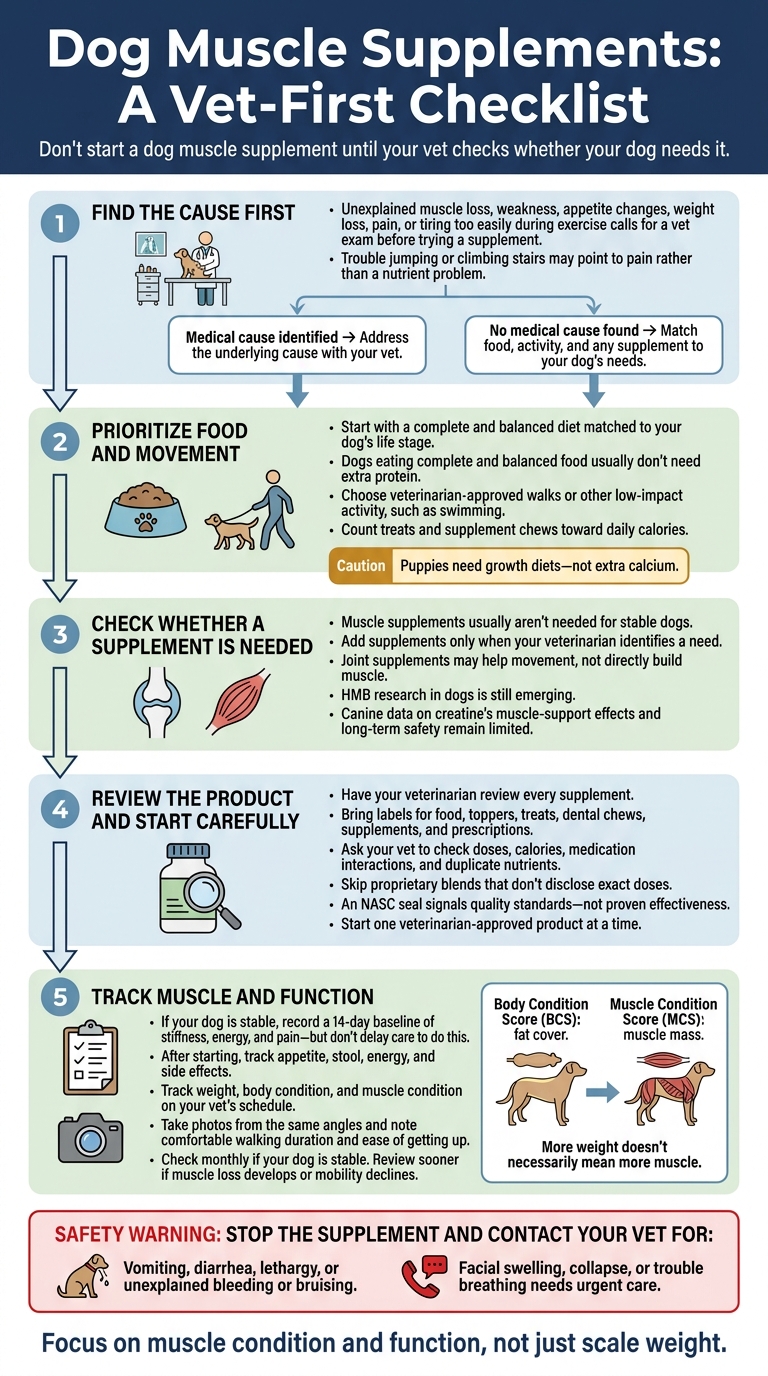
Dog Muscle Supplements: A Vet-First Checklist
How Common Are Supplements in Dogs? Evidence From the Dog Aging Project
sbb-itb-6d7d69d
Understanding Your Dog’s Muscle Needs
Before choosing a supplement, work out whether your dog needs muscle support, weight control, or both.
Lean muscle helps with strength, posture, mobility, and joint stability. Muscle loss isn’t the same as weight loss: changes on the scale can come from fat, fluid, or muscle. Your dog’s age and activity level help determine whether a supplement has a role - or isn’t needed at all.
Veterinarians use Body Condition Score (BCS) to assess fat cover and Muscle Condition Score (MCS) to assess muscle mass. Both matter. Fat can hide muscle loss around the spine, hips, and skull, so feel these areas regularly rather than relying only on the scale.
Muscle Needs by Age and Activity
Puppies need complete nutrition made for growth. Small breeds usually finish growing at 8–12 months, while giant breeds may take up to 2 years. Extra supplements usually aren’t needed. Too much calcium during growth can cause developmental bone disease, especially in large and giant breeds.
Adult dogs need enough protein to maintain muscle tone and energy. Active dogs may need nutrition that supports recovery, but activity alone doesn’t mean they need supplements.
Senior dogs often lose muscle. Pain, chronic disease, and inactivity caused by arthritis can make that loss worse, so assess the cause before deciding on a supplement. For overweight dogs, follow a gradual fat-loss plan that preserves muscle, and include treats and chews in the daily calorie total.
When Muscle Changes Need a Vet Visit
Unexplained muscle loss, weakness, appetite changes, weight loss, pain, or tiring too easily during exercise calls for a vet exam before trying a supplement. Trouble jumping or climbing stairs may point to pain rather than a nutrient problem. Puppies with poor growth or bone deformities also need a veterinary assessment, not a supplement trial.
If the vet finds no medical cause, the next step is to match food, activity, and any supplement to your dog’s needs.
Muscle Supplement Ingredients and Evidence
Once disease is ruled out, choose ingredients that fit your dog’s needs - not the claims on the label.
Protein and Other Muscle-Support Ingredients
Dogs eating complete and balanced food usually don’t need extra protein. If your dog has a diagnosed deficiency, eats a poorly balanced home-cooked diet, or has unusually high activity needs, talk with your veterinarian before adding protein.
HMB research in dogs is still emerging. Findings suggest it may help slow muscle atrophy in senior dogs or dogs recovering from illness or injury, but it hasn’t been proven to build muscle. L-carnitine helps with fat metabolism and energy production, yet it isn’t an established muscle-builder. Canine data on creatine’s muscle-support effects and long-term safety remain limited.
It also helps to distinguish ingredients that act directly on muscle from those that mainly help your dog stay active.
Direct Muscle Support vs. Support for Activity
Some ingredients support muscle repair. Others mainly help with mobility and activity.
| Ingredient | Main use | Canine evidence | Main cautions | When to discuss with a veterinarian |
|---|---|---|---|---|
| Dietary protein | Muscle repair and maintenance | Established as part of a balanced diet | Extra calories can contribute to weight gain | If your dog is underweight or losing muscle |
| Supplemental amino acids / BCAAs | Support for protein synthesis | Limited when the diet is already complete and balanced | Cannot replace complete food | When formulating a home-cooked diet |
| HMB | May help slow muscle breakdown | Emerging | Limited long-term canine data | For senior dogs or diagnosed muscle atrophy |
| EPA/DHA | Joint support and mobility; indirect support for activity | Established for joint support | Calorie-dense; high doses can affect clotting | For arthritis or stiffness |
| L-carnitine | Fat metabolism and energy | Emerging | Not a direct muscle-builder | For weight management or selected heart-health needs |
| Creatine | Cellular energy support | Limited | Canine dosing and long-term safety are unclear | Before use in athletic dogs |
| Glucosamine/chondroitin | Joint and cartilage support; indirect support for activity | Mixed/weak | More likely to help mobility than muscle | For diagnosed osteoarthritis |
| Taurine | Heart and muscle function | Established physiological role | Use for a specific need | For suspected deficiency or breed-related heart concerns |
How to Read Supplement Labels
Label details matter more than product promises. A supplement’s effect depends on its ingredients, doses, and formula. Check the active-ingredient amounts per chew or serving, total calories, lot number, and manufacturer contact details. Skip proprietary blends that don’t disclose exact doses.
Animal supplements don’t receive the same FDA premarket approval as animal drugs. An NASC seal signals quality standards - not proven effectiveness. Don’t give your dog human workout products without veterinary approval. They may contain xylitol or doses that aren’t appropriate for dogs.
Supplement Safety and Veterinary Care
Before starting a product, check what’s in it and review it with your vet. Have your veterinarian review every supplement, especially if your dog has kidney or liver disease or takes medication. Supplements can interact with prescriptions. Muscle changes can also point to an underlying disease - not just a nutritional need - so diagnosis comes first.
Check Health Risks and Ingredient Overlap
Bring a complete list of everything your dog eats or takes, along with labels for food, toppers, treats, dental chews, supplements, and prescriptions. Your vet can check for duplicate nutrients and drug interactions.
Dogs with kidney disease need protein advice tailored to their health, not an automatic protein increase. Natural doesn’t mean safe: too much vitamin A or D can be toxic, and some herbs interact with NSAIDs or anesthetics.
Include chew calories in your dog’s daily total, and ask whether any ingredient could cause digestive upset.
Start One Supplement and Watch for Side Effects
Start one veterinarian-approved product at a time and follow the directions you’ve agreed on with your vet. If your dog is stable, record a 14-day baseline of stiffness, energy, and pain - but don’t delay care to do this. After starting the supplement, track appetite, stool, energy, and side effects.
Stop the supplement and contact your vet if your dog develops vomiting, diarrhea, lethargy, or unexplained bleeding or bruising. Facial swelling, collapse, or trouble breathing needs urgent care.
What to Bring to Your Vet Visit
Bring your dog’s product labels and monitoring notes. Include any visible muscle loss, stiffness, or trouble getting up or climbing stairs. Review these changes with your vet and ask whether blood work is needed.
Combining Supplements With Diet and Exercise
Plan Safe Meals and Exercise
Once your vet has ruled out disease and reviewed any supplement, focus on food and movement to support lean muscle.
Start with a complete and balanced diet matched to your dog’s life stage. Supplements work best when diet and activity already support muscle. Your dog needs enough protein and calories, but extra calories can add fat - not muscle.
Large-breed puppies need a growth diet suited to their size. Too much calcium can cause developmental bone disease. For home-prepared meals, use a veterinary nutritionist’s formulation, including any required vitamin-mineral supplement.
Keep your dog lean without underfeeding, and count treats and supplement chews toward daily calories.
Choose veterinarian-approved walks or other low-impact activity, such as swimming. Match exercise to your dog’s age, fitness, and mobility. Increase activity only while your dog remains pain-free, and stop if you notice pain, limping, or excessive fatigue. Use joint support only to help support movement.
Set Next Steps and Track Muscle Changes
Match the plan to your dog’s current condition.
| Dog’s situation | Diet-and-exercise priorities | Veterinary or supplement next step |
|---|---|---|
| Stable dogs | Maintain life-stage nutrition, lean muscle, and regular movement that helps preserve muscle. | Muscle supplements usually aren’t needed. |
| Seniors or low-activity dogs | Provide enough protein and comfortable, low-impact activity to preserve muscle. | Assess joint pain; discuss omega-3s or other targeted joint support if indicated. |
| New muscle loss | Limit strenuous activity and avoid major diet changes before assessment. | Arrange a prompt veterinary visit to identify the cause of muscle loss. |
| Working dogs | Match protein and calories to workload to maintain lean muscle, and schedule recovery time. | Review feeding and training needs; add targeted support only for an identified need. |
Use the same measures each time to make muscle changes easier to spot. Track weight, body condition, and muscle condition on your vet’s schedule. Take photos from the same angles, and note how long your dog can walk comfortably and how easily they get up.
Check monthly if your dog is stable. Review sooner if muscle loss develops or mobility declines. Focus on muscle condition and function, not just scale weight: weight gain alone doesn’t prove muscle gain.
Conclusion: Put Nutrition, Movement, and Diagnosis First
After checking ingredients and safety, keep the decision simple: Find the cause first. Unexpected muscle loss may be a sign of disease, and supplements cannot treat the underlying disease.
Once you know the cause, start with a complete diet suited to your pet’s life stage and regular exercise. Add supplements only when your veterinarian identifies a need.
Before starting a product, ask your vet to check the evidence for its ingredients, the serving dose, the dose for your pet’s body weight, and any overlap with food, chews, or medications. Skip blends that hide ingredient doses. Supplements do not guarantee muscle gain. Without enough activity, extra calories add fat - not muscle.
FAQs
How long should I try a muscle supplement?
Give your dog the muscle support supplement daily for 4 to 8 weeks before judging the results. Most supplements need time to build up in your dog's system. Before you start, log your dog's behavior and physical signs for two weeks so you have a baseline to track progress.
If you don't see clear improvement after 6 to 8 weeks, talk with your veterinarian about adjusting the dose, trying a different formula, or considering other treatment options.
Can my overweight dog still lose muscle?
Overweight dogs can still lose muscle. Muscle loss is common in overweight or senior dogs and may be linked to arthritis, chronic thyroid conditions, or obesity itself. Extra weight also puts stress on joints, which can limit movement.
Work with your veterinarian to find the cause and build a safe plan. The plan should combine appropriate nutrition, weight management, and controlled, low-impact exercise to support lean muscle health.
When should my dog start muscle-building exercise?
Talk to your veterinarian before starting muscle-building exercise. They can help you choose a routine that fits your dog’s life stage and health. Avoid overworking your dog, especially young dogs (6–24 months) and seniors (6+ years).
Muscle-building supplements supply protein and energy, so pair them ONLY with consistent, active exercise, such as long walks, swimming, or fetch, to help prevent unwanted weight gain. Follow your veterinarian’s guidance to keep the routine safe and effective.