

Dog Gut Support Guide: When to Start
My starting point: if your dog is healthy and has normal stools, daily gut support may not be needed. Before starting a supplement for food changes, travel, stress, or antibiotic use, I’d ask your vet whether it fits your dog’s needs.
Here’s my short checklist:
- Check symptoms first. Call your vet if diarrhea lasts more than 24 hours - sooner for puppies, seniors, or dogs with health conditions. Repeated vomiting, bloody stool, or marked lethargy need prompt care. A swollen belly with unsuccessful retching is an emergency.
- Match the product to the goal. Probiotics add live microbes; prebiotics feed helpful gut microbes; combined products do both. A higher microbe count isn’t automatically better.
- Check before you buy. I’d review the label, product studies, weight-based serving, ingredients, and storage directions with your vet.
- Track the response. Start one product at a time and record stool, gas, appetite, and energy. Stop and contact your vet if symptoms worsen.
<u>A chew is not a substitute for veterinary care.</u> The goal is to decide whether support is needed, choose it carefully, and know when to stop.
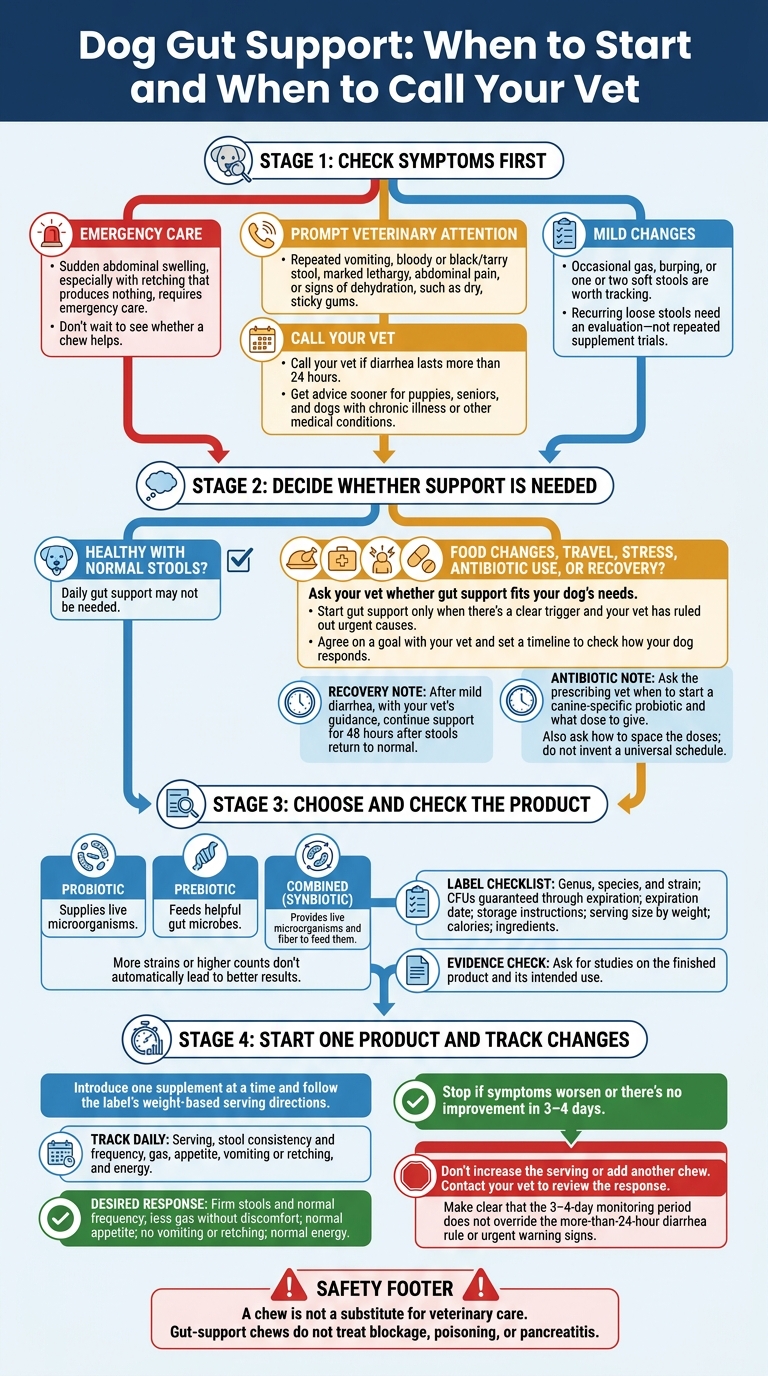
Dog Gut Support: When to Start and When to Call Your Vet
Gut Check: Navigating Probiotics in Veterinary Medicine | A Vet2Vet Conversation
sbb-itb-6d7d69d
Check Digestive Symptoms First
Digestive symptoms don’t automatically mean your dog needs gut support. Gas, loose stools, and a gurgling stomach can come from food changes, parasites, illness, or emergencies such as blockage or poisoning. Gut-support chews do not treat blockage, poisoning, or pancreatitis. Before choosing a dog multivitamin or gut supplement, check when symptoms started and how severe they are.
Mild Changes to Discuss With Your Vet
Occasional gas, burping, or one or two soft stools are worth tracking. A noisy belly alone is often normal if your dog stays alert, hungry, active, and comfortable. Note when changes began, whether they followed boarding, travel, or a food transition, and any changes in stool consistency, mucus, or urgency.
Call your vet if diarrhea lasts more than 24 hours, or sooner if other symptoms appear. Recurring loose stools need an evaluation - not repeated supplement trials. Ask whether you should bring a newly collected stool sample for parasite testing. Don’t give human anti-diarrhea medicine without veterinary guidance.
Warning Signs That Need Veterinary Care
Repeated vomiting, bloody or black/tarry stool, marked lethargy, abdominal pain, or signs of dehydration, such as dry, sticky gums, need prompt veterinary attention. Sudden abdominal swelling, especially with retching that produces nothing, requires emergency care. Don’t wait to see whether a chew helps. If symptoms are serious, pause gut support until your vet rules out medical causes.
Get advice sooner for puppies, seniors, and dogs with chronic illness or other medical conditions. Don’t fast puppies, seniors, or chronically ill dogs without veterinary guidance. Also, ask your vet before starting supplements if your dog is a puppy, senior, immunocompromised, chronically ill, or taking medication.
If symptoms are mild and your vet rules out urgent causes, consider whether gut support fits the trigger: a food change, travel, stress, or recovery.
When to Consider Gut Support
Start gut support only when there’s a clear trigger and your vet has ruled out urgent causes. Daily use needs a specific reason. Agree on a goal with your vet and set a timeline to check how your dog responds.
Food Changes, Travel, and Stress
During a diet change, use gut support until stools stay normal. If boarding, travel, a move, or another known stressor is coming up, ask your vet whether to start a probiotic beforehand.
During and After Antibiotics
Antibiotics can change gut balance, so timing matters. Ask the prescribing vet when to start a canine-specific probiotic and what dose to give. Some vets wait until the antibiotic course ends to help the helpful bacteria settle in.
After Mild Digestive Upset
After mild diarrhea, your vet may recommend a short course of a specific probiotic, along with hydration and a bland diet. With your vet’s guidance, continue support for 48 hours after stools return to normal. If diarrhea lasts more than 24 hours or symptoms return, your vet should reassess the cause.
Puppies, Seniors, and Daily Support
Your dog’s digestive history matters more than age alone. Review past digestive issues, food intolerance, medications, and chronic disease with your vet. Together, you can decide whether support should be temporary, long-term, or unnecessary.
With the timing sorted out, the next step is choosing the right chew.
How to Choose and Use Gut-Support Chews
Once you’ve decided gut support is appropriate, match the chew to your dog’s goal: recovery, maintenance, or support during predictable stress.
Probiotic, Prebiotic, and Combined Chews
Choose for your dog’s needs - not the biggest CFU count. More strains or higher counts don’t automatically lead to better results. Fiber types differ, too. Not all fiber is prebiotic: fermentable fiber feeds helpful bacteria, while non-fermentable fiber mainly adds bulk.
Use the digestive trigger and your goal to guide your choice.
| Support type | Primary role | When it may fit | Key cautions |
|---|---|---|---|
| Probiotic | Supplies live microorganisms | Short-term support when a vet recommends a probiotic for a specific digestive trigger. | Look for strain names and potency guaranteed through expiration. |
| Prebiotic | Feeds helpful gut microbes | Daily maintenance to support helpful bacteria already in the gut | Fermentable ingredients may temporarily cause more gas or bloating. |
| Combined (synbiotic) | Provides live microorganisms and fiber to feed them | Daily support or chronic digestive sensitivities, with veterinary guidance. | Check the fiber source for ingredients that could trigger food allergies or sensitivities. |
Check Labels and Research
Check the label for genus, species, and strain; CFUs guaranteed through expiration; an expiration date; storage instructions; serving size by weight; calories; and ingredients.
Ask for studies on the finished product and its intended use, rather than general research on individual ingredients. A quality seal, such as the NASC Quality Seal, signals manufacturing standards. Use these checks to assess a brand’s claims before buying.
Review Vet Treat’s Gut-Support Options
Review Vet Treat’s current label with your vet. Check the ingredients, amounts, and supporting studies, along with whether the product suits your dog’s weight and sensitivities.
Start One Product and Track Changes
Introduce one supplement at a time and follow the label’s weight-based serving directions. If your dog takes antibiotics, ask the prescribing veterinarian how to space the doses.
Record the serving, stool changes, appetite, and behavior each day. These notes help your vet assess your dog’s response.
| What to observe | Desired change |
|---|---|
| Stool consistency and frequency | Firm stools and normal frequency |
| Gas | Less gas without discomfort |
| Appetite | Normal appetite |
| Vomiting | No vomiting or retching |
| Energy | Normal energy |
Stop if symptoms worsen or there’s no improvement in 3–4 days. Don’t increase the serving or add another chew. Follow up with your vet to review your dog’s response.
Conclusion: Choose Support Based on Your Dog’s Needs
Healthy, stable dogs often don’t need daily gut support. Use targeted support only with veterinary guidance for predictable stressors, such as food changes, boarding, or travel. Repeated vomiting, bloody stool, or marked lethargy need veterinary care - not a chew. If support makes sense for your dog, choose a chew that matches the goal, follow the label, and track stool, gas, appetite, and energy.
FAQs
Does my dog's food already provide gut support?
A complete and balanced diet comes first for your dog's health. That diet may already include prebiotics or fiber. Supplements can offer extra support, but they don't replace balanced meals.
Your veterinarian may suggest specific supplements for digestive issues, changes in life stage, stress, or recovery. Review your dog's food label and any supplements with your veterinarian to check that the amounts are safe and appropriate - and avoid giving too much.
How soon before travel should I start gut support?
Start 7 to 10 days before travel, gradually introducing any new digestive supplement or diet change to help prevent stomach upset. This gives your dog’s microbiome time to adjust and helps keep digestion steady before, during, and after the trip.
Always check with your veterinarian about the best timing and approach for your dog’s needs.
Can I stop gut-support chews without tapering?
Talk to your veterinarian before stopping your dog’s gut-support chews. Depending on your dog’s health needs, stopping suddenly or without veterinary guidance may bring symptoms back or cause digestive discomfort.
Watch your dog closely when changing their supplement routine. Contact your veterinarian immediately if you notice negative changes in appetite, energy, or stool consistency.