

Dog Detox Checklist After Yard Chemical Use
If your dog touched a treated lawn, do four things now: get them off the grass, stop licking, wash exposed fur and paws, and call your vet if they swallowed anything or seem sick. Signs can start at once or take 24 to 72 hours to show up, so waiting to “see what happens” can be risky.
Here’s the short version in plain English:
- Move your dog away from sprayed or treated grass right away.
- Stop paw and fur licking because swallowing residue is often more dangerous than skin contact.
- Find the product label or invoice and note the product name, active ingredient, and time of exposure.
- Rinse and wash paws, legs, belly, and coat with lukewarm water and a pet-safe cleanser if needed.
- Flush eyes with clean water if the product got in the eyes, then call your vet.
- Give indoor water and take away outdoor bowls, toys, bedding, and loose granules.
- Check the label for reentry timing. “Dry” does not always mean safe.
- Watch for signs like drooling, vomiting, diarrhea, tremors, trouble breathing, weakness, or pale/blue gums.
- Go to an emergency vet now for seizures, collapse, severe tremors, breathing trouble, or uncontrolled bleeding.
A few points matter most: don’t use home remedies, don’t make your dog vomit unless a vet tells you to, and don’t guess on wait times. I’d treat any unknown product, eye exposure, or swallowed chemical as a vet call.
This article walks through the same steps in order so you can act fast and lower more exposure.
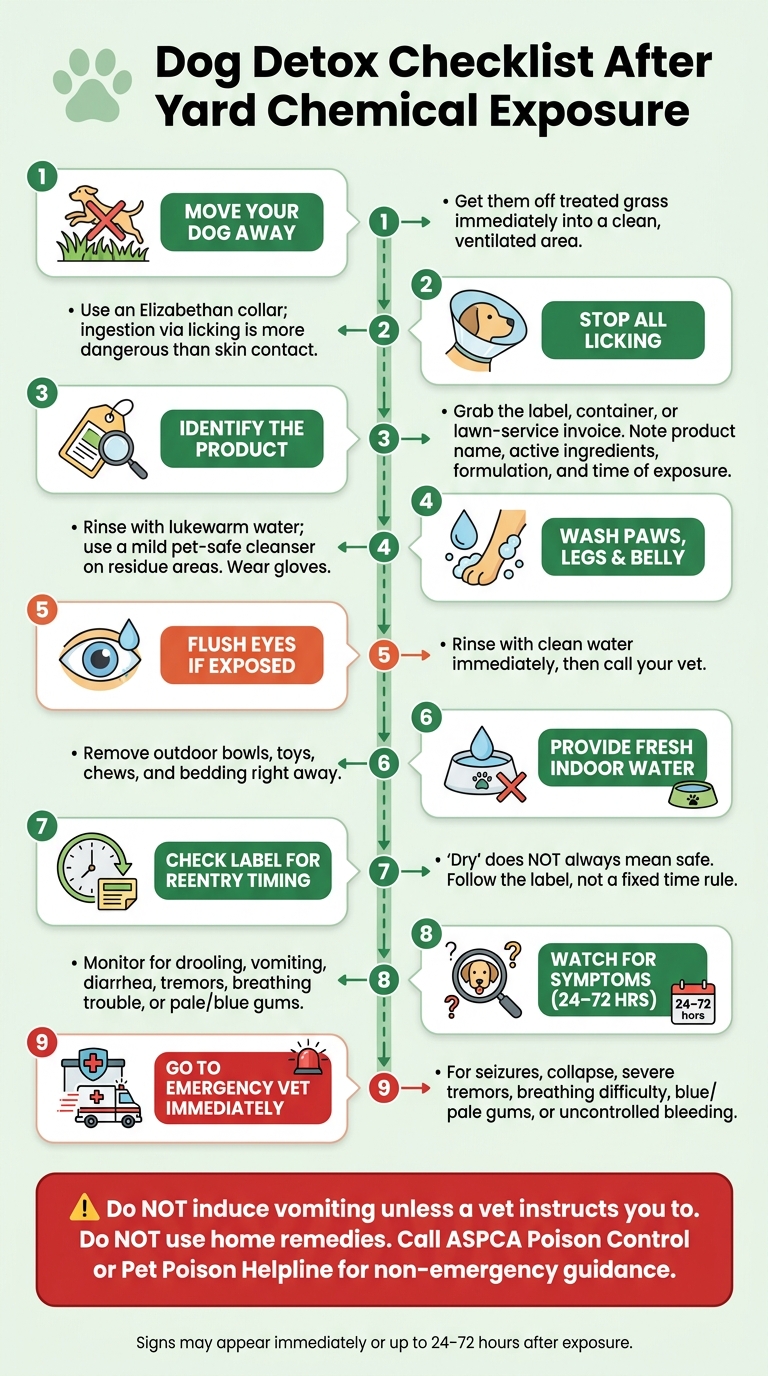
Dog Detox Checklist: What to Do After Lawn Chemical Exposure
First Steps: Remove Your Dog and Identify the Product
If your dog just walked through or rolled on a recently treated area, act fast. Signs of poisoning don't always show up right away. As soon as the label or your vet says it's safe, clean your dog.
Stop Further Exposure Right Away
Get your dog off the treated grass and into a clean, quiet, well-ventilated area. Stop any licking of paws or fur right away. Ingestion through licking paws or fur is often more dangerous than skin contact alone. If the product was sprayed, move your dog away from any mist or fumes too. An Elizabethan collar can help stop licking.
Write Down the Product Details Before You Call for Help
Before you call, grab the product label, container, or lawn-service invoice. That information can save time when you speak with your vet or a poison helpline.
| Information to Record | Why It Matters |
|---|---|
| Product name and manufacturer | Helps identify the product fast in safety databases |
| Active ingredients | Shows what kind of treatment may be needed |
| Formulation (liquid, granular, or pellet) | Different forms can carry different absorption rates and risks |
| Time of application and exposure | Helps the vet judge whether washing may still help |
| Your dog's current weight | Used to estimate whether a toxic dose threshold may have been reached |
If you can't safely bring the packaging with you, take a clear photo of the label, ingredient list, and EPA registration number to share with your vet.
Do Not Use Home Remedies Unless a Vet Tells You To
Skip home remedies. Don't induce vomiting unless a vet tells you to. Call your vet or a poison helpline right away and follow their instructions.
Once you've identified the product and stopped the exposure, the next move is washing off residue and giving fresh water.
sbb-itb-6d7d69d
How to Clean Your Dog and Keep Them Hydrated
Wash your dog right away to remove residue before they can lick it off or absorb it through the skin.
Wash Paws, Legs, Belly, and Coat
Start with the paws and lower legs. Those areas are the most likely to get licked, so deal with them first. Rinse with lukewarm water, then wash the belly and coat if they touched the treated area. If you see dirt or residue, use a mild, pet-safe cleanser on those spots and rinse well.
Wear gloves the whole time so residue doesn’t get on your skin. Keep an Elizabethan collar on your dog during cleanup so they can’t lick themselves mid-wash. If you think your dog already groomed itself before you noticed the exposure, gently wipe the mouth with a damp towel.
Flush Eye Exposure and Wipe the Underside After Grass Contact
If the product got into your dog's eyes, rinse them with clean water now and call your vet. If your dog rolled in or brushed through treated grass, carefully wipe the belly and inner legs. That helps cut down the chance of them swallowing residue later during normal grooming.
Provide Fresh Water and Remove Contaminated Items
Give your dog fresh indoor water. Don’t force them to drink. If your dog has severe symptoms, check with your vet first, since water can sometimes interfere with treatments like activated charcoal or increase the risk of aspiration.
Remove outdoor bowls, toys, chews, and bedding right away.
| Item Category | Action Required | Reason |
|---|---|---|
| Outdoor Bowls | Remove immediately | Prevents ingestion of chemicals settled in water or food |
| Toys & Chews | Remove or replace | Porous materials can absorb and hold chemical residues |
| Bedding | Wash or remove | Prevents skin contact and inhalation of trapped fumes |
| Loose granules | Sweep up and dispose of them. | Prevents dogs from getting into concentrated residue |
Keep these items out of reach until the label says the yard is safe - not just dry. Then check the label for reentry timing and keep watching for symptoms.
Reentry Timing and Symptom Checks
Follow the Label Instead of a Fixed Time Rule
After you’ve cleaned your dog, check the product label before letting them back onto the lawn. There isn’t one set wait time that works for every yard treatment. Reentry depends on the product, how it was applied, and the weather.
| Product Type | Typical Reentry Guideline | Key Condition |
|---|---|---|
| Liquid lawn treatment | Reenter when the lawn is dry | No wet residue |
| Granular fertilizer | After watering in and drying; some labels require 24 hours or more | Granules must be dry before reentry |
| Herbicides | Follow the label | Reentry varies by active ingredient |
| Unknown product | Keep your dog off the lawn | Do not reenter until the product is identified and the label is confirmed |
The main idea is simple: don’t guess. A dry lawn may be fine in one case and still unsafe in another. If you don’t know what was used, keep your dog off the grass until you confirm the product and read the label.
Watch for Digestive, Skin, and Neurologic Symptoms
Some signs show up fast. Others take a few hours. That’s why it’s smart to keep an eye on your dog for several hours after exposure, even if they seem normal at first.
Watch for problems in these areas:
- Digestive: Excessive drooling, foaming at the mouth, vomiting, diarrhea, loss of appetite, or bloody/black tarry stools.
- Skin and eyes: Rashes, hives, redness, or irritation on the paws, mouth, nose, or eyes.
- Breathing and neurologic: Wheezing, fast breathing, or trouble breathing; tremors, unsteady walking, sudden weakness, seizures, or collapse.
Also check your dog’s gums. Pink gums are normal. Pale, white, yellow, or blue-gray gums can point to a serious problem. Watch for panting at rest too.
If any of these signs appear, move to the vet-call step next.
When to Call a Vet and What to Do Next
Call a Vet Right Away for Ingestion, Eye Exposure, or Serious Symptoms
If your dog swallowed the product, got it in their eyes, or starts showing severe symptoms, get veterinary help now.
Any time a dog swallows a yard chemical, touches a concentrated or undiluted product, or gets the product in their eyes, call a vet or poison control right away. Time matters here. Some toxins can lead to kidney or liver damage that doesn't show up for 24 to 72 hours.
Do not make your dog vomit unless a veterinarian tells you to. With caustic chemicals, vomiting can do even more damage on the way back up.
Before you call, keep this information close:
- Product name
- Active ingredients
- Your dog's weight
- Exposure time
- Exposure route
- Symptoms
- Medical history
Keep the label nearby, or have a clear photo of it ready.
For immediate help, call the ASPCA Animal Poison Control Center or the Pet Poison Helpline. But if your dog is having seizures, collapses, struggles to breathe, has severe tremors, blue or pale gums, or bleeding that won't stop, don't wait on a hotline. Go straight to an emergency veterinary hospital.
Only Use Wellness Products After Your Vet Gives the All-Clear
Supplements won't fix chemical exposure. After 24 to 72 hours, if your vet says your dog is okay, go back to their normal care routine and nothing more.
Conclusion: The Key Steps to Remember
- Remove your dog from the treated area and stop licking or grooming until they are clean.
- Identify the product and keep the label.
- Call a vet or poison control for ingestion, eye exposure, or contact with a concentrated product.
- Follow the product label for reentry timing.
- Watch for drooling, vomiting, tremors, or other changes for several hours after exposure.
- Go to an emergency vet right away for seizures, collapse, trouble breathing, severe tremors, blue or pale gums, or uncontrolled bleeding.
FAQs
Can lawn chemicals hurt my dog later?
Yes. Lawn chemicals can harm your dog hours later or even days after exposure. Some problems show up right away. Others take time.
A dog may walk across treated grass, then lick the residue off its paws or fur later on. That’s often how exposure happens. If you think your dog came into contact with lawn chemicals, call your veterinarian right away, even if your dog seems fine at first.
How do I know when my dog can go back outside?
Follow the product label’s re-entry instructions for the chemical, fertilizer, or treatment you used. If the label doesn’t list a time, keep your dog out of the yard until the product is completely dry or the manufacturer says it’s safe.
If you’re not sure, keep your dog indoors until you’ve confirmed the area is safe. Some toxins can still be harmful even after they’ve been applied.
Should I bathe my whole dog or just wash the paws?
Start by rinsing your dog’s paws and any other irritated skin to wash off possible lawn chemicals. If the chemicals may have spread to other spots, wipe down the whole coat too.
If the exposure seems heavy or involves harsh, caustic substances, call your veterinarian right away to ask if your dog needs a full bath.