

7 Signs of Anxiety in Dogs
I look for patterns - not one symptom - when checking for anxiety in dogs. If your dog’s behavior changes, note when it starts, what happens beforehand, and how long it lasts. Ask your veterinarian to rule out pain or illness.
These 7 signs can point to anxiety:
- Panting, drooling, or trembling
- Pacing or trouble settling
- Hiding, cowering, or avoiding people
- Excessive barking, whining, or growling
- Destructive behavior or escape attempts
- Potty accidents or digestive problems
- Repetitive actions or changes in sleep, appetite, or play
My first step is to offer a quiet space, without punishment or forced contact. A short video and symptom log can help your veterinarian assess new, worsening, or persistent changes. Supplements should not replace that care.
<u>Don’t wait for emergency signs:</u> trouble breathing, collapse, pale or blue gums, or a swollen belly with unsuccessful attempts to vomit need immediate veterinary care.
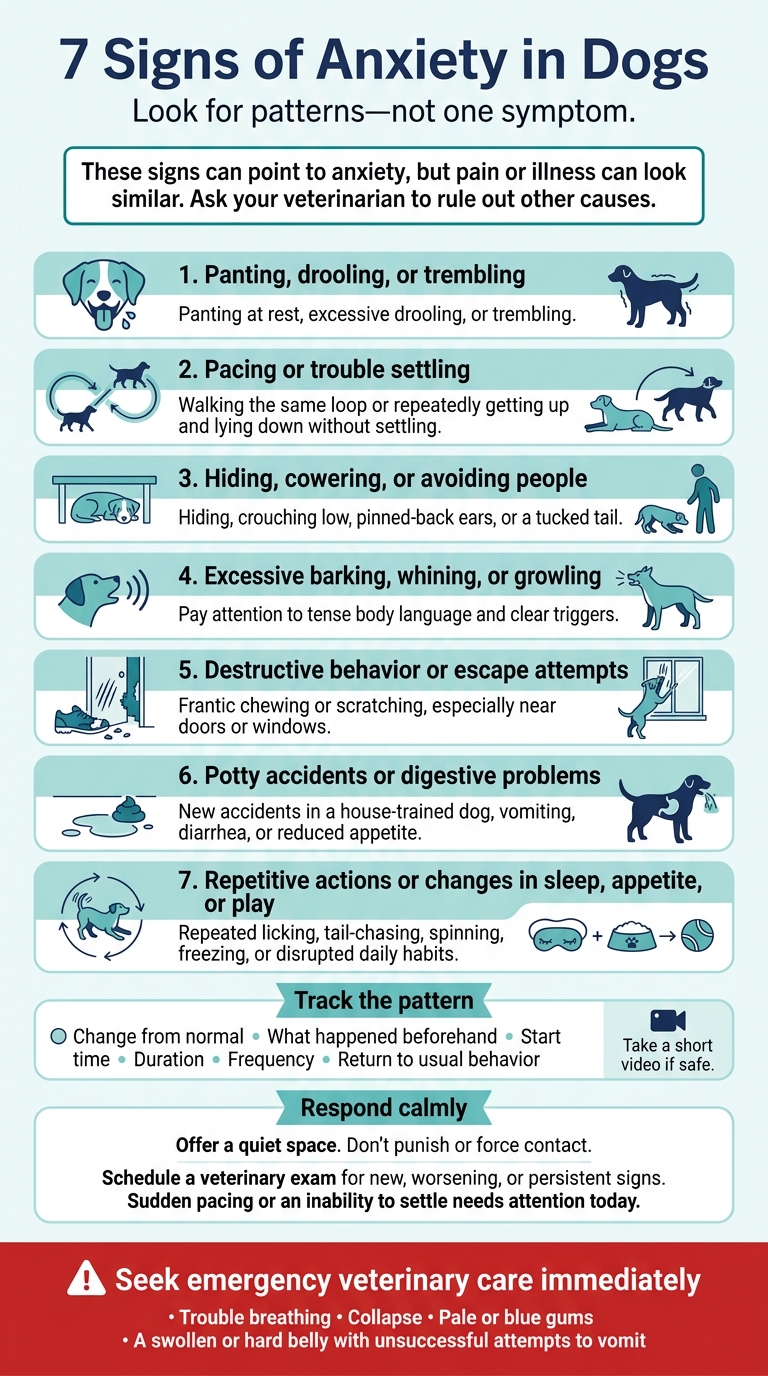
7 Signs of Anxiety in Dogs
5 Signs Your Dog Is Anxious (Even If They Don’t Look Like It)
sbb-itb-6d7d69d
Check Changes, Timing, and Triggers
Compare the behavior with your dog’s normal routine.
Circling before bed is normal. A normal routine, like going to the door for a potty break, differs from sudden pacing that your dog cannot interrupt or settle.
Watch for new behavior or a familiar habit that suddenly becomes more intense or frequent. Knowing what sets it off can help you spot these changes.
Watch for reactions to thunderstorms, fireworks, being left alone, car rides, or unfamiliar places. Dogs with storm phobia may react as storms approach, and picking up your keys can trigger a reaction if your dog expects you to leave.
Note whether the behavior stops once the trigger passes.
For each episode, record when it started, what happened just before it, how long it lasted, and how often it happens. Also note whether your dog returns to their usual behavior afterward. Take a short video for your veterinarian, since your dog may behave differently at the clinic.
In senior dogs, nighttime pacing or whining may point to cognitive decline rather than anxiety. Your notes can help your veterinarian tell anxiety apart from other problems.
Consider physical causes, too.
Heat or exercise can explain panting. Arthritis or stomach pain can make settling difficult. Drooling and lip licking in the car may be motion sickness.
Some symptoms need urgent care rather than observation.
Seek emergency care for a hard or swollen belly, unproductive retching, pale or blue gums, trouble breathing, or collapse.
1. Persistent Panting, Drooling, or Trembling
These physical signs often show up before a dog can settle down or change its behavior.
What it looks like
Watch for panting at rest, trembling, and excessive drooling. These may come with a tucked tail, repeated yawning, or dilated pupils.
Triggers and Timing
Grooming, vet visits, and changes at home can bring on these signs. Symptoms may continue after the trigger is gone, so lingering trembling can still point to anxiety. Give your dog a quiet space, and never punish a frightened dog.
What makes it different
Anxiety is more likely if your dog still can't settle after the trigger passes. Trembling in a warm room also needs attention once you've ruled out cold.
When to See a Veterinarian
Contact your veterinarian promptly if these signs are sudden, severe, or persistent.
2. Pacing and Trouble Settling
Anxiety can shift from body tension to movement. Your dog might walk the same loop, get up and lie down repeatedly, or scan the room or exits. Repeated pacing without settling can signal anxiety, especially if your dog seems distressed and is hard to interrupt.
Note when the pacing starts, what happened beforehand, and how long it lasts. Track whether it follows thunder, fireworks, or your departure.
Changes From Usual Behavior
Repeated nighttime pacing or pacing that disrupts sleep is different from an occasional circle before bed. If it’s new, don’t assume age is the cause. In senior dogs, nighttime pacing paired with confusion or getting stuck may point to cognitive dysfunction rather than anxiety alone.
When to See a Veterinarian
Book a veterinary visit if pacing persists or nighttime restlessness is new. Seek same-day veterinary advice if pacing starts suddenly and won’t stop, or your dog has trouble lying down. Pain and nausea can look like anxiety.
If your dog starts hiding or vocalizing after pacing, those next signs may be easier to spot.
3. Hiding, Cowering, or Avoiding People
Some anxious dogs withdraw rather than pace.
Physical Signs and Behaviors
A distressed dog may hide, crouch low, pin their ears back, tuck their tail, or show the whites of their eyes. Those visible eye whites, called whale eye, can appear when a dog feels worried or guarded. Other dogs become unusually clingy, staying close to you to feel safe.
Triggers and Timing
Watch for triggers like separation, fireworks, storms, car rides, vet visits, or changes at home. Give your dog space first and let the behavior pass. Offer a quiet place without forcing them out or punishing them.
A covered crate or interior room can provide a quiet space.
If your dog seeks comfort, calm reassurance does not reinforce fear.
Changes From Usual Behavior
Resting quietly isn’t the same as suddenly avoiding familiar people or following you closely during a trigger. Record when the behavior starts and whether your dog settles once the trigger passes.
When to See a Veterinarian
Contact your veterinarian if the hiding is new, unexplained, or lasts more than 24–48 hours. Seek help sooner if your dog stops eating or seems lethargic.
4. Excessive Barking, Whining, or Growling
Some anxious dogs withdraw. Others bark, whine, howl, or growl. Pay close attention when these sounds come with tense body language or a clear trigger.
Physical Signs and Behaviors
Watch for tension, cowering, or hiding while your dog vocalizes. Limping, stiffness, or reluctance to move are more likely to point to pain or illness.
Triggers and Timing
Record a short video showing both the sounds your dog makes and their body language.
Changes From Usual Behavior
If your normally quiet dog suddenly becomes vocal or irritable, stress may be behind the change. Barking from enthusiasm often stops with a cue; anxiety-driven vocalizing usually doesn’t. This difference can suggest anxiety, but it doesn’t confirm it. Don’t punish growling - it can increase anxiety.
When to See a Veterinarian
Schedule a veterinary exam for new, unexplained vocalizing, especially whining when your dog gets up or is touched. A senior dog that howls at night also needs an evaluation for pain or cognitive decline.
Seek emergency care if vocalizing comes with a swollen belly, repeated retching, or pale gums.
5. Destructive Behavior or Escape Attempts
Physical Signs and Behaviors
Some anxious dogs cope with stress by chewing, digging, or trying to escape. Like panting or pacing, these behaviors can be signs of stress.
Damage near doors or windows may point to anxiety.
Look for chewed door frames, damaged windows, or carpet dug up near doors.
Frantic scratching, chewing, or pushing at exits is more concerning than routine chewing.
Triggers and Timing
Pay attention to when chewing or digging starts: after you leave, during storms or fireworks, or on car rides. Behavior that follows your departure or a sudden noise may point to anxiety. If it happens only during certain events or departures, that pattern makes anxiety more likely.
Changes From Usual Behavior
If a normally calm dog starts damaging things, schedule a veterinary exam - especially after a major change at home or in their routine.
When to See a Veterinarian
Book an exam if destructive behavior is new or escape attempts keep happening. Broken teeth, bleeding gums, or cuts on the face or paws need prompt veterinary attention.
6. Potty Accidents and Digestive Problems
Anxiety can affect your dog’s stomach and bathroom habits.
Physical Signs and Behaviors
Watch for accidents in dogs who are reliably house-trained, vomiting, diarrhea, or reduced appetite. Lip licking, drooling, and repeated swallowing may also point to nausea.
Triggers and Timing
Notice whether symptoms happen around stressful events. If they’re new, compare their timing with your dog’s normal routine.
Changes From Usual Behavior
New accidents in the house may signal a urinary tract infection, parasites, or pain. Don’t punish your dog for accidents.
When to See a Veterinarian
Contact your veterinarian promptly for recurring accidents or digestive symptoms, sudden appetite loss, blood in stool or vomit, or signs of dehydration. Vomiting or diarrhea that lasts more than 24–48 hours needs veterinary care, especially if your dog is also lethargic.
Some symptoms call for immediate help rather than waiting to see if they pass.
Seek emergency care for a swollen or hard belly, unproductive retching, pale gums, or collapse.
7. Repetitive Behaviors and Changes in Daily Habits
Anxiety can show up as repeated actions or changes in your dog’s daily routine.
Physical Signs and Behaviors
Watch for repeated licking, chewing, tail-chasing, spinning, excessive grooming, or freezing. Freezing means sudden stillness and can signal fear. Pay closer attention when these behaviors are new, start suddenly, are hard to interrupt, or cause distress.
Track when they happen and whether specific triggers come before them.
Triggers and Timing
Record when each behavior starts, how long it lasts, and any apparent trigger. Note whether it happens during storms, when you leave, or at night. A short video can help your veterinarian tell anxiety apart from compulsive behaviors or neurological issues.
Changes From Usual Behavior
These patterns deserve closer attention when they interfere with eating, sleeping, or normal activities. Watch for disrupted sleep, appetite loss, or less interest in food, treats, or toys. In senior dogs, these changes may also point to cognitive dysfunction.
When to See a Veterinarian
Schedule a veterinary exam for new repetitive behaviors, especially if your dog seems distressed or you can’t redirect their attention. Address these patterns early, before they become harder to manage.
What to Do When Anxiety Signs Appear
If you notice signs of anxiety, track the pattern, make your dog’s surroundings calmer, and contact your veterinarian if the changes persist.
Keep a log of symptoms, possible triggers, how long each episode lasts, and how often it happens. Note any changes in breathing or other physical signs, and record a short video if it’s safe. Act promptly once you spot a pattern.
Give your dog a quiet, dim room with less noise. A covered crate may help if your dog already feels safe there. Don’t punish your dog or force contact. Let them retreat, and offer comfort if they seek it. White noise may help mask sounds from thunderstorms or fireworks.
Schedule a veterinary exam for new, worsening, or persistent signs, especially if the behavior doesn’t ease. Sudden pacing or an inability to settle needs attention today. These behaviors may also point to pain, illness, or cognitive decline.
Seek emergency care immediately for difficulty breathing, collapse, suspected heatstroke, or serious injury. A swollen or hard belly with unsuccessful attempts to vomit, or pale or blue gums, also needs immediate care.
After getting veterinary guidance, Vet Treat Dog Calming Anxiety & Stress Relief daily chews may offer support. Discuss the valerian root and melatonin with your veterinarian, along with possible medication interactions and any prescription sedatives your dog takes. Supplements don’t replace veterinary care or treat anxiety.
Conclusion: Track Patterns and Talk to Your Veterinarian
Look for a repeated pattern, not just one symptom. Anxiety can affect your dog’s behavior and body, but a single sign doesn’t confirm it. When you notice a pattern, record when it happens and what comes before it.
Track possible triggers, how long the signs last, appetite, and sleep. Talk to your veterinarian if signs persist or worsen. Bring your notes so they can tell anxiety apart from pain, illness, or cognitive decline and decide whether your dog needs prompt care.
FAQs
Can my dog have anxiety without an obvious trigger?
Yes, dogs can experience anxiety without an obvious trigger. Still, many cases are linked to separation, loud noises, or changes in routine.
Pacing or restlessness can look like anxiety, but these behaviors may also be early signs of pain, nausea, or cognitive decline. Always consult a veterinarian to rule out physical health concerns before assuming the cause is behavioral.
How can I tell separation anxiety from boredom?
Pay attention to when the behavior happens. Separation anxiety causes distress when you leave or your dog is alone. Signs include destructive behavior, excessive vocalization, pacing, panting, or house accidents during those times. Boredom comes from too little mental or physical stimulation and can occur whether you’re home or away.
Pain or illness can cause similar behaviors. Consult a veterinarian to rule out medical conditions before deciding what’s behind them.
What should I expect at a vet visit for anxiety?
Your vet will start with a physical exam to check for medical causes, such as pain or organ disease. They’ll likely ask about your dog’s home life, daily routine, and what triggers their anxiety.
Based on the diagnosis, your vet may suggest a plan tailored to your dog that combines behavior modification, changes at home, and prescription anti-anxiety medication if needed. For complex cases, they may refer you to a veterinary behaviorist.