

Daily Dog Health Checklist: 8 Things to Monitor
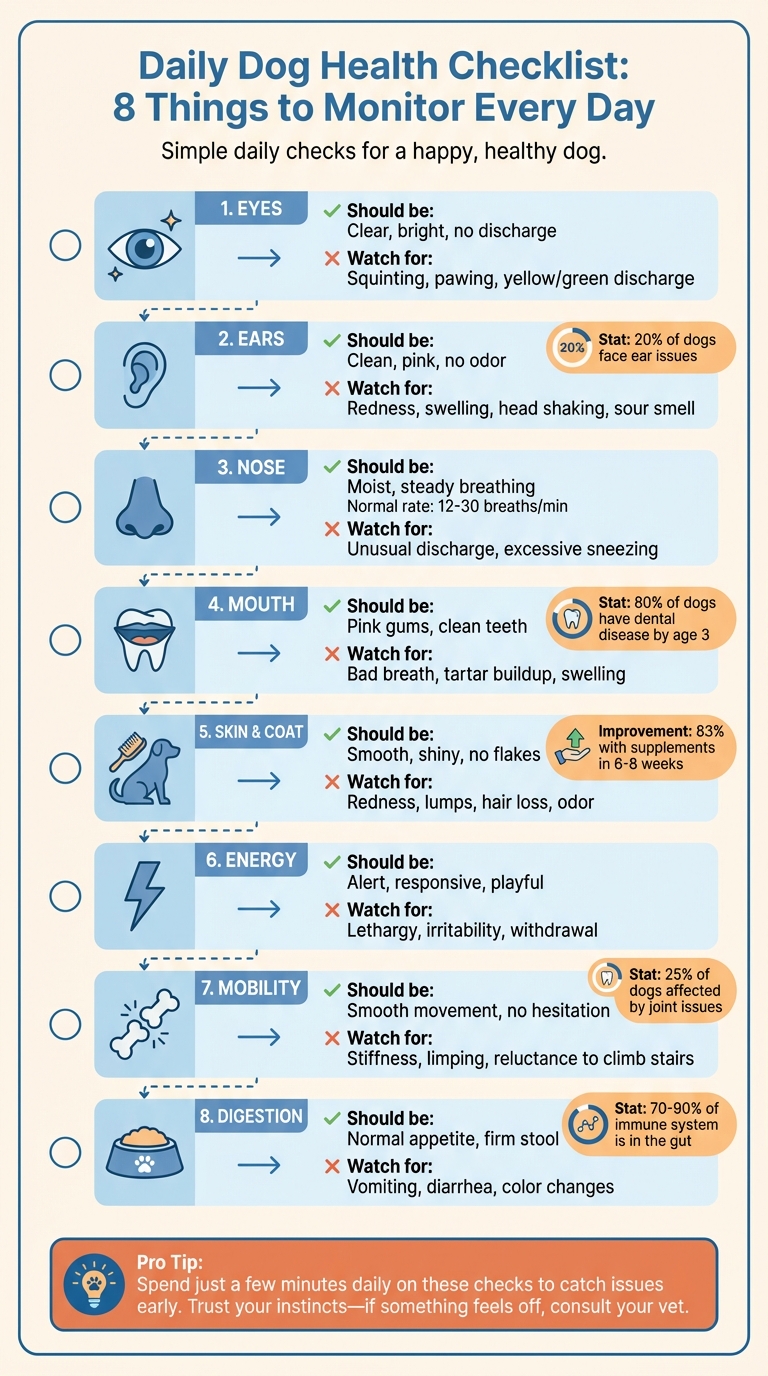
Your dog's health can change quickly, and they can't tell you when something's wrong. That’s why daily checks are crucial. By paying attention to key areas like eyes, ears, nose, mouth, skin, energy levels, mobility, and digestion, you can spot issues early before they become serious. Here’s a quick summary of what to monitor each day:
- Eyes: Clear, bright, no redness or discharge. Watch for squinting or pawing.
- Ears: Clean, pink, no odor. Look for redness, swelling, or head shaking.
- Nose: Moist, steady breathing (12–30 breaths/min). Check for unusual discharge.
- Mouth: Pink gums, clean teeth. Bad breath or tartar buildup can signal dental issues.
- Skin: Smooth coat, no redness, flakes, or lumps. Check for odor or hair loss.
- Energy: Sudden lethargy, irritability, or behavior changes can indicate discomfort.
- Mobility: Stiffness, limping, or reluctance to climb stairs might mean joint pain.
- Digestion: Normal appetite and stool. Watch for vomiting, diarrhea, or changes in poop color.
Pro Tip: Small, daily habits like brushing teeth, trimming fur, or adding omega-3s to their diet can help prevent common issues. Always trust your instincts - if something feels off, consult your vet.
Spending a few minutes each day on these checks can help keep your dog healthy, happy, and comfortable.
Daily Dog Health Checklist: 8 Essential Areas to Monitor
1. Eyes and Vision
Your dog's eyes should be clear, bright, and free from excessive discharge. A quick morning glance can reveal a lot about their overall health and help you catch potential issues early.
How to Check for Irritation or Discharge
Take a close look at your dog's eyes in a well-lit area while they’re calm. Both eyes should look symmetrical, with pupils of equal size that respond properly to light.
"In the morning, the whites of the eyes should look quite white, with a few pink blood vessels. At the end of the day, we are all more bloodshot, but increased redness of the white area may indicate ocular disease."
– Dr. Catherine Nunnery, DVM, DACVO
Gently lift the upper eyelid to check the sclera (the white part). It should be bright white - not yellow or bloodshot. The cornea should look shiny and clear, not cloudy. While a small amount of clear, dried "sleep" is normal, yellow or green discharge could point to an infection. Also, watch for signs of discomfort. Squinting, excessive blinking, or pawing at the face might indicate eye pain or irritation. Keep in mind, dogs often lose up to 80% of their vision before showing noticeable signs of impairment.
Once you've done your check, there are simple ways to support your dog's eye health naturally.
Natural Support for Eye Health
Did you know that about 30% of the tissue in a dog’s eyes is made up of fatty acids? This makes omega-3s essential for keeping eye cells healthy. Products like Vet Treat Dog Allergy Chews, which include omega-3 fatty acids, can help reduce inflammation and support overall eye wellness. Additionally, keeping fur trimmed around their eyes - especially for long-haired breeds - can prevent accidental corneal scratches. And when traveling, roll car windows up enough to shield your dog's eyes from debris. Small steps like these can make a big difference in protecting their vision.
sbb-itb-6d7d69d
2. Ears and Hearing
Healthy ears are a key indicator of your dog's overall well-being. Ideally, they should be clean, pink, and have a neutral smell, with only a small amount of light brown or yellow wax. Your dog should remain at ease when you handle their ears, making a weekly check a smart habit. Since around 20% of dogs face ear issues at some point in their lives, regular monitoring can help catch problems early.
Signs of Ear Infections
Be on the lookout for redness or swelling inside the ear, which could point to an infection or allergies. A sour or pus-like smell often signals a bacterial infection, while a musty, "corn chip" odor might indicate yeast. If the earwax appears gray, green, dark brown, or has a "coffee grounds" texture, ear mites could be the culprit. Behavioral signs like head shaking, ear scratching, or a noticeable head tilt can also hint at trouble. Dogs with droopy ears, like Basset Hounds, are particularly vulnerable because their ear shape tends to trap moisture.
"If you notice that your dog's ear flap has started to look inflated or swollen, you should take them to your veterinarian right away."
– Dr. Matthew Goetz, DVM
Natural Prevention Methods
If you notice any of these warning signs, taking preventive steps can make a big difference. Keeping your dog's ears dry is one of the simplest yet most effective measures. After swimming or bathing, use a towel to thoroughly dry the ears, paying extra attention to the inner flap. For dogs with hair in their ear canals, regular trimming can improve airflow and reduce moisture buildup. Since 80% of chronic ear infections are tied to allergies, managing food sensitivities and environmental allergens is essential. Adding Omega-3 supplements to your dog's diet may also help reduce inflammation that could lead to ear problems. By incorporating these steps into your weekly routine - such as a quick visual and scent check - you can help maintain your dog's ear health and potentially prevent infections.
3. Nose and Respiration
A healthy dog’s nose is typically moist, and breathing should be quiet, steady, and effortless, with a normal resting rate of 12–30 breaths per minute. While the wetness or dryness of a dog’s nose isn’t always a clear health indicator, it’s more important to watch for unusual discharge, frequent sneezing, or difficulty breathing, as these can point to respiratory issues.
How to Spot Breathing Problems
Pay attention to your dog’s breathing while they’re in a deep sleep. Count the number of chest rises over 30 seconds and double it. If the breathing rate consistently exceeds 35–40 breaths per minute, it’s time to reach out to your vet. Also, look for signs like an extended neck or flared elbows - this "orthopneic posture" is a red flag for respiratory distress.
Check your dog’s gums, too. Healthy gums should be pink and return to their normal color within two seconds after applying gentle pressure. Gums that are blue, purple, pale, or white signal an oxygen problem and require immediate attention. Nasal discharge is another clue: clear discharge is usually harmless, but yellow, green, or bloody discharge should be evaluated promptly. If the discharge is coming from just one nostril, it could mean there’s a foreign object or an issue like a tooth root abscess.
"If your pet is incessantly sneezing - especially if it is accompanied by a nasal discharge - take your pup to an emergency vet immediately." – Dr. Heather Hoffmann, DVM
Addressing potential allergens can also help ease these symptoms.
Managing Allergies for Better Breathing
If your dog has mild congestion or seasonal allergies, a steam session can provide quick relief. Let them sit in a steamy bathroom for about 5–10 minutes. Keeping your home environment clean is equally important - use air purifiers, change filters regularly, and avoid exposing your dog to smoke or dust. If your dog struggles to eat because they can’t smell their food, warming canned food in the microwave can make it more aromatic and appealing. For persistent breathing issues, it’s best to consult your veterinarian for further advice.
4. Mouth, Teeth, and Gums
Your dog's dental health is a key indicator of their overall well-being. Did you know that around 80% of dogs develop dental disease by the time they're three years old? Left unchecked, bacteria from infected gums can spread to critical organs like the heart, kidneys, and liver, leading to serious health issues. A quick daily check of your dog's mouth, similar to the routine you do for their eyes, ears, and breathing, can help catch potential problems early and prevent complications.
How to Check Teeth and Gums Daily
Start by gently lifting your dog's lips to examine their gumline and teeth. Healthy gums should be pink and smooth, much like bubblegum. If you notice redness, swelling, or puffiness, these could be signs of gingivitis or an infection. Keep an eye out for yellow or brown tartar buildup, especially near the gumline and on the back molars. Plaque can harden into tartar in just 24 to 48 hours if it's not removed.
Pay attention to your dog's breath - persistent bad odors, especially those resembling sulfur, can signal dental trouble. Other warning signs include dropping food, chewing on one side of the mouth, or excessive drooling accompanied by thick, unpleasant-smelling saliva. Swellings around the jawline or below the eyes could indicate a tooth root abscess, which requires immediate veterinary care.
"Halitosis is often the first sign of gum disease arising from plaque (biofilm) and tartar build-up. Don't ignore it - early intervention saves teeth." – Dr. Tammy Hunter, DVM
Certain breeds, like Chihuahuas, Toy Poodles, and Yorkies, are more prone to dental problems due to their crowded teeth. If you have a smaller dog, it's especially important to stay vigilant.
Natural Dental Health Solutions
Once you've completed your daily inspection, consider incorporating natural methods to support your dog's dental health. Brushing your dog's teeth daily is the gold standard for removing plaque and slowing the progression of periodontal disease. If daily brushing isn't feasible, aim for at least three times a week using enzymatic toothpaste. These toothpastes contain enzymes that break down plaque and bacterial buildup more effectively than regular cleaning products.
You can also use water additives to reduce bacteria and freshen your dog's breath - just add them to their drinking bowl. For additional support, probiotics like those found in the Vet Treat Multivitamin 15-in-1 can help balance both oral and gut microbiomes, promoting better dental and digestive health. Dental powders made with brown algae are another option; simply mix them into your dog's meals to help combat tartar buildup.
When it comes to mechanical cleaning, durable chews like yak sticks or raw carrots can help scrape away soft plaque. However, be cautious with chew toys or treats. A good rule of thumb: if it's too hard for you to comfortably knock against your knee, it could risk fracturing your dog's teeth. To test, press the toy with your fingernail - if it doesn't leave an indent, it's likely too hard.
Finally, always ensure your dog has access to fresh water. Regular hydration helps naturally flush the mouth and keep it cleaner. Small daily habits like these can make a big difference in maintaining your dog's oral health.
5. Skin and Coat Condition
Your dog's skin and coat can reveal a lot about their overall health. Since skin cells regenerate quickly, changes in your dog's skin often serve as early indicators of internal health issues. A healthy coat should feel smooth and flexible with a natural sheen, even in breeds with coarse hair. The skin underneath should be soft, clear, and free from redness, flakes, or excessive oil.
How to Identify Skin Problems
Start by running your hands over your dog's body to check the texture of their coat and look for any abnormalities like dullness, discoloration, lumps, or tender spots. Pay special attention to high-friction areas such as the armpits, groin, and behind the ears.
Be on the lookout for warning signs, including brittle or greasy fur, which might point to hormonal imbalances or conditions like seborrhea. Red, warm, localized patches (commonly called "hot spots") could indicate bacterial infections. Symmetrical hair loss, especially around the midsection, may be an early symptom of conditions like Cushing's disease. Even your dog's scent can provide clues - a healthy dog usually smells clean, while a sour or rancid odor might hint at bacterial or yeast overgrowth.
"A healthy coat should be shiny and smooth, not brittle or coarse, and healthy skin should be supple and clear, not greasy, flaky, or bumpy." – Ryan Llera, BSc, DVM; Tammy Hunter, DVM; Cheryl Yuill, DVM, MSc, CVH
Catching these signs early allows you to address potential problems before they develop into more serious health concerns.
Improving Skin and Coat Health
If you notice skin or coat issues, there are natural ways to improve your dog's condition. Start with their diet - make sure the first ingredient in their food is a specific meat like chicken or beef, rather than fillers like corn or wheat. Adding omega-3 fatty acids (found in fish oil) can help reduce inflammation and add shine, while omega-6 fatty acids (from sources like safflower oil) support skin hydration. Studies show that dogs taking comprehensive skin and coat supplements see an 83% improvement within six to eight weeks, compared to a 62% improvement with omega fatty acids alone.
For soothing dry patches, try applying a small amount of coconut oil to areas like the skin, nose, or paw pads. You can also use a rinse made from apple cider vinegar diluted 1:2 with water to help control oil production in dogs with greasy fur. After baths or swimming, make sure to dry your dog thoroughly - especially if they have a thick coat - to prevent trapped moisture, which can lead to odors or infections.
6. Energy Levels and Behavior
Daily shifts in your dog's energy and behavior can sometimes hint at underlying health concerns. If your dog suddenly seems more tired, withdrawn, or irritable, it could be an early sign of an issue, even before other symptoms appear.
How to Spot Behavioral Changes
Understanding your dog's normal behavior is the first step. For example, what’s typical for an older dog with arthritis will differ from a young, energetic puppy. Dr. Amy Attas, VMD, highlights this:
"There has to be a change in behavior compared to the dog's baseline to say that they are lethargic." – Dr. Amy Attas, VMD
A simple test can help: offer a favorite treat or toy. A healthy dog will show interest, but a lethargic dog might not respond. Dr. Attas explains:
"If they're lethargic, sleeping doesn't automatically make them feel better. Fixing the problem makes them feel better." – Dr. Amy Attas, VMD
Other signs to watch for include withdrawal, sudden aggression, or unusual clinginess. Physical cues like increased whining, trembling, or hesitation to stand may point to pain or neurological problems. For reference, a healthy resting dog typically breathes 18 to 34 times per minute.
If your dog is lethargic but shows no other alarming symptoms like vomiting or pale gums, you can monitor them for 24 hours before contacting a vet. However, seek immediate care if you notice pale gums, difficulty breathing, a swollen abdomen, or seizures.
Sometimes, these behavioral changes stem from anxiety rather than illness. In such cases, natural remedies can help.
Natural Support for Calm Behavior
Certain natural supplements can promote relaxation by balancing serotonin and dopamine levels. Ingredients like hemp oil, valerian root, and melatonin are often used. L-theanine (found in Suntheanine) helps dogs manage stress from triggers like fireworks or thunderstorms, while Ashwagandha (Sensoril) supports focus during high-stress situations.
For example, Vet Treat Dog Calming Anxiety Chews combine hemp oil and valerian root in a vet-approved formula. These chews typically take effect within 30 to 45 minutes, providing up to 12 hours of relief. They’re especially useful before stressful events like car rides, grooming, or storms - just give them about 30 minutes beforehand.
Always consult your vet before starting any supplement. Monitor your dog for 24–48 hours for side effects such as drowsiness or stomach upset. Keep in mind, certain health issues like thyroid or kidney disease can mimic behavioral changes. Supplements are most effective when paired with a balanced diet, regular exercise, and mental stimulation.
7. Mobility and Joints
Keeping an eye on your dog's mobility can provide valuable clues about their overall comfort and well-being. Joint issues are common, affecting up to 25% of dogs, with 60% showing signs of arthritis on X-rays. Identifying these problems early can significantly improve your dog’s quality of life, especially for older dogs and larger breeds like Labradors and German Shepherds.
Early Signs of Joint Problems
Pay close attention to how your dog moves, especially after resting. Dr. Julie Buzby highlights an important point: "Absence of vocalization does not mean absence of pain". Similarly, Dr. James St. Clair explains, "Joint discomfort is almost 99% of the time a silent problem in dogs".
Signs to watch for include stiffness that eases after a few minutes of activity, difficulty getting up from a lying position, or hesitation when climbing stairs or jumping into the car. Noticeable changes in gait, such as "bunny hopping" (when both back legs move together) or a shorter, uneven stride, are also warning signs. Dogs might shift their weight forward or hold their hind legs closer together to avoid discomfort.
Other indicators include excessive licking or chewing around joints like the hips, knees, or wrists. On lighter-colored dogs, you might even see rust-colored stains from saliva, a sign of chronic irritation. Check for muscle symmetry in the legs - muscle loss on one side could mean your dog is favoring a painful limb. Additional behaviors, like grunting when lying down, reluctance to finish walks, or sleeping more than usual, might also point to joint discomfort.
Spotting these signs early allows you to explore supportive care options.
Natural Joint Support Supplements
Natural supplements like glucosamine, chondroitin, and MSM are known to support joint cartilage and soft tissue health.
One option is Vet Treat Glucosamine + Chondroitin for Dogs, a vet-formulated chew that combines these ingredients with MSM. Starting at $21.95 for 120 chews, this product is clinically tested to improve mobility and flexibility while promoting hip and joint health. Made in the USA, the chews contain natural ingredients and are free from artificial flavors.
Dr. Elizabeth DeLomba, DVM, advises patience when using joint supplements:
"It can take 6-8 weeks for the beneficial ingredients in Healthy Hip & Joint to be incorporated into tissues, so be patient. It is not uncommon to have gradual improvement and not realize the change until you discontinue the product".
Begin with a daily loading dose for 4–6 weeks, then transition to a maintenance dose.
For the best results, pair supplements with weight management, low-impact exercises like swimming, and keeping your dog’s nails trimmed short. Long nails can force weight shifts, putting extra strain on sensitive joints. To track progress, consider recording short videos of your dog’s movement every two weeks.
8. Appetite and Digestion
Your dog's eating habits and bathroom patterns are key indicators of their digestive health and overall well-being. Since approximately 70–90% of a dog's immune system resides in the gut, keeping an eye on these daily patterns can help you detect potential health issues early. This is an important part of your daily routine to ensure your dog's overall health.
What to Monitor in Eating and Stool Patterns
Start by understanding what is normal for your dog. Healthy stool should have a log shape, be firm, and have a consistent color. Dr. Beth Turner from Preventive Vet explains, "Generally speaking, your dog's poop should be 'formed' - in that it comes out in a 'log-type' shape that is free of foreign objects. It should be firm enough to be picked up easily but not hard or dry".
Pay close attention to changes in stool color. Healthy stool is typically chocolate brown. Green stool might indicate rapid digestion or grass consumption, while black or tarry stool could be a sign of internal bleeding and requires immediate veterinary attention. Other warning signs include mucus (pointing to large intestine inflammation), a greasy or shiny appearance (suggesting fat malabsorption), or white, rice-like segments, which may indicate tapeworms.
Changes in appetite can also reveal underlying issues. A reduced appetite might signal dental pain, gastrointestinal problems, or organ dysfunction. On the other hand, an unexpected increase in food intake could point to hormonal imbalances or diabetes. If your dog refuses regular kibble but still shows interest in treats, it might be a sign of nausea. While healthy adult dogs can fast for three to five days as long as they stay hydrated, consult your vet if your dog eats less for two consecutive days.
Behavioral cues can also indicate digestive discomfort. For instance, dogs may adopt a "prayer position" (front legs down, rear up) to relieve gas pressure. Other signs of discomfort include excessive lip licking, restlessness, or pacing. To check for dehydration, gently pinch the skin on the back of your dog's neck - if it doesn't snap back quickly, your dog may need fluids. These daily observations help you stay on top of your dog's health.
Natural Digestive Health Support
If you notice any changes in your dog's eating or stool patterns, natural supplements can help restore balance. Probiotics like Lactobacillus acidophilus and Bifidobacterium animalis support healthy gut flora and improve stool consistency. Prebiotics, such as pumpkin or coconut flour, nourish beneficial bacteria to promote a healthy digestive system.
One option to consider is the Vet Treat Multivitamin 15-in-1 Daily Supplement for Dogs. This supplement provides digestive support along with benefits for joint health. Priced at $21.95 for 120 chews, it’s made in the USA with natural ingredients and no artificial flavors, offering a convenient way to support your dog's daily health.
When introducing new supplements, make the transition gradual to avoid upsetting your dog's digestive system. Always ensure your dog has access to fresh water, as hydration is critical for proper digestion and nutrient absorption. Monitor your dog's stool consistency to gauge the effectiveness of the supplement - firm, well-formed stool is the goal.
Conclusion
Keeping an eye on these eight daily indicators is a simple yet powerful way to safeguard your dog's health. As Dr. Jo Myers from Vetster wisely points out, "You know what's normal for your dog and should trust your instincts if something seems off. Don't assume subtle changes are due to the weather or some other change in your dog's environment". Dogs age faster than humans, so staying ahead with preventive care is essential - think of it as doubling the effort for their well-being compared to our own.
Regular handling during these daily checks not only helps with early issue detection but also makes your dog more comfortable with touch. This can significantly reduce stress during vet visits. Plus, by knowing your dog's normal patterns, you’ll be quicker to notice small changes that could signal a problem. Sharing this information - like temperature, heart rate, or behavior trends - with your veterinarian strengthens your partnership and ensures better care.
Adding natural supplements to your dog's routine can further support their overall health. Vet Treat offers veterinarian-recommended chews designed to improve digestion, joint health, and more. From the Multivitamin 15-in-1 Daily Supplement for Dogs (120 chews for $21.95) to formulas targeting allergies, anxiety, and mobility, these products are made in the USA with natural, non-GMO ingredients and no artificial flavors.
Spending just a few minutes each day on health checks can make a big difference. This proactive care not only extends your dog's lifespan but also ensures any medical issues are caught early - often making them easier and less costly to treat. Start when your dog is calm, stick to a routine, and always end with plenty of praise or a treat. These small daily efforts build the foundation for a healthier, happier life for your furry companion.
FAQs
How long should daily dog health checks take?
Daily health checks for your dog take just about 15 minutes, but they can make a big difference. During this short routine, you’ll keep an eye on key health signs like their mobility, appetite, coat condition, and energy levels. These regular check-ins help you catch potential problems early, so you can address them promptly and keep your dog feeling their best.
Which changes mean I should call an emergency vet right away?
If your dog exhibits symptoms like severe vomiting, trouble breathing, collapsing, unresponsiveness, or shows signs of extreme pain, contact an emergency veterinarian right away. These signs could point to a critical health problem that demands immediate attention.
How do I track my dog’s daily health patterns over time?
To keep an eye on your dog’s health over time, make it a habit to do regular at-home checks and take note of important details like their mobility, appetite, coat quality, dental condition, and energy levels. Using a health journal or a simple checklist can help you track any changes or patterns that might develop. This kind of routine monitoring not only helps you catch early signs of potential problems but also ensures you stay in tune with what’s normal for your dog - making it much easier to know when it’s time to consult your vet.