

Complete Guide to Boosting Your Dog's Immunity
Your dog’s immune health starts with daily basics, not a magic chew. The short version: feed a complete diet, support gut health, keep up with exercise and sleep, stay on top of vaccines and parasite control, and use supplements only with a clear goal and your vet’s input.
Here’s what matters most:
- About 70% of a dog’s immune system is linked to the gut, so food and digestion matter a lot.
- Omega-3s and probiotics often take 4 to 12 weeks to show visible changes.
- Loose stool, repeat ear infections, itching, dull coat, and low energy can point to a health problem, not just “low immunity.”
- Vomiting over 24 hours or diarrhea over 48 to 72 hours means it’s time to call your vet.
- Supplements can support a plan, but they do not treat infections, allergies, or other medical problems.
- Fish oil, probiotics, Vitamin E, colostrum, and mushrooms each have limits, risks, and best-use cases.
If I wanted to sum up the whole article in one line, it would be this: build the base first, then add supplements only if they fit your dog and your vet agrees.
A few points I’d keep top of mind:
- Food first: A complete, balanced diet gives the body the protein, fats, minerals, and vitamins it needs.
- Gut support matters: Probiotics and prebiotics may help the gut lining and microbiome.
- Routine helps: Daily movement, 12 to 14 hours of sleep, and lower stress all play a part.
- Prevention still matters: Vaccines, dental care, and flea, tick, and heartworm prevention still do a lot of the heavy lifting.
- Track one change at a time: Watch stool, skin, coat, appetite, energy, weight, and exercise recovery each week.
Immune Boosters That Work!
sbb-itb-6d7d69d
Quick comparison
| Area | What to do | What to watch for |
|---|---|---|
| Diet | Feed a complete, balanced food | Homemade diets can miss key nutrients |
| Gut health | Add dog-specific probiotics slowly | Gas, bloating, or loose stool at first |
| Omega-3s | Use marine-sourced EPA/DHA with vet guidance | Bleeding risk at high doses; extra calories |
| Sleep and exercise | Keep activity steady and let your dog rest | Too much exercise can backfire in puppies and seniors |
| Prevention | Keep vaccines, parasite control, and dental care current | Natural products do not replace these |
| Monitoring | Give changes 4 to 12 weeks | Stop and call your vet if symptoms get worse |
That’s the core of it. The rest of the article fills in how to spot warning signs, when to call your vet, and how to build a simple plan that’s safe to stick with.
Signs Your Dog May Need Immune and Wellness Support
Recurring problems like loose stools, low energy, a dull coat, or repeat ear infections usually point to a health issue, not just one rough day.
Common Signs of Weakened Immune Health
Digestive changes like chronic soft stool, unpredictable bowel movements, frequent gas, on-and-off vomiting, and bloating often point to gut imbalance or intestinal inflammation.
Skin and coat changes - such as nonstop itching, hot spots, repeat ear infections, redness, rashes, and flaky or greasy skin - can reflect a weakened skin barrier or body-wide immune stress.
Low energy or unusual irritability can be linked to the gut-stress connection or deeper immune strain. You may also notice slow, steady weight loss even with a normal appetite, a dull or brittle coat, patchy hair loss, or brown staining on the paws from constant licking. Those changes are worth taking seriously.
Coughing or sneezing can point to a contagious respiratory illness, including distemper. Slow wound healing or infections that keep coming back may suggest a weakened intestinal barrier.
If vomiting lasts more than 24 hours or diarrhea lasts more than 48–72 hours, your dog needs veterinary care.
Conditions That Can Look Like Immunity Problems
Here’s the tricky part: these signs don’t always mean immune weakness. Allergies, parasites, dental disease, and diet shortfalls can look very similar. That’s why it helps to rule out the usual suspects first.
Recurrent ear infections often come from yeast or allergies, not primary immune failure. Sneezing and watery eyes are often tied to pollen, dust mites, or mold. Fleas are still a major cause of allergic skin disease, and in sensitive dogs, even one bite can set off a strong reaction.
Diet can also play a part. Nutrient gaps are common, especially with unbalanced homemade meals. Zinc deficiency, for example, can show up as crusty, thinning skin around the eyes and paws - which can look a lot like a broad immune issue.
Before you treat these signs as immune-related, take a closer look at parasites, diet quality, and your veterinarian’s diagnosis. Once those lookalike causes are ruled out, the next move is building a daily routine that supports immune resilience.
The Daily Routine That Supports Long-Term Immune Health
After the big medical causes have been ruled out, everyday habits become the next layer of immune support. Food, activity, sleep, and prevention all matter. The key is consistency. These habits do the job when you stick with them.
Feed a Complete Diet and Protect Gut Health
Start with food. It sets the baseline for everything else.
A complete and balanced diet gives your dog the protein, zinc, healthy fats, vitamins, and fiber immune cells need to be built and maintained. Supplements, probiotics, and chews can help, but they sit on top of that base. They don't replace it.
Gut health matters here too. Your dog's gut lining helps control inflammation and keeps harmful substances out of the bloodstream. So when you support gut health through diet and probiotics, you're also supporting immune function. Probiotics add helpful bacteria, and prebiotics such as inulin feed those bacteria. Together, they help keep the gut lining in good shape.
If you're changing foods to help with gut or skin issues, go slow. Transition over 7 to 10 days to cut the chance of digestive upset. Then be patient. Give any new diet or supplement at least 8 to 12 weeks before deciding whether it's working. That's the usual timeline for visible changes in skin and coat health.
Homemade diets need extra care. Most homemade dog food recipes miss at least one required nutrient, and calcium is the most common serious gap. If you cook for your dog, work with a veterinary nutritionist instead of relying on a random recipe online.
| Support type | Likely benefits | Limits | Dosing control | When veterinary input matters |
|---|---|---|---|---|
| Complete food | Balanced baseline of all required nutrients; natural absorption | Hard to reach therapeutic levels for certain conditions | Fixed by the manufacturer's formulation | When choosing a life-stage diet or managing chronic illness |
| Supplements | Targeted higher doses of nutrients such as omega-3s or probiotics | Risk of nutrient imbalance or pro-inflammatory effects if rancid | Can be adjusted based on body weight | Always; high doses can affect blood clotting or interact with medications |
Use Movement, Rest, and Low-Stress Routines to Build Resilience
Once diet is in place, movement and sleep help the body hold up over time.
Daily exercise does more than help your dog stay at a healthy weight. It can lower inflammation and support mental well-being. What that looks like depends on the dog. Puppies do better with shorter, gentler sessions. Senior dogs, or dogs with joint disease, often do best with low-impact activity like leash walks.
Sleep matters just as much. Dogs need 12 to 14 hours of sleep in a quiet, steady space. Poor sleep gets in the way of cellular repair and keeps stress hormones high, which can suppress immune function.
Simple routines help more than many owners think. The same mealtimes, the same walk schedule, and the same sleep area can lower cortisol over time. For dogs dealing with anxiety or chronic stress, that kind of routine isn't just comforting. It has a direct physical effect.
Keep Preventive Care Non-Negotiable
Prevention still has to stay on the table. Vaccines, parasite control, and dental care lower the burden on the immune system, and no natural product can take their place.
Dental care is a good example. Bacteria from untreated dental disease can enter the bloodstream and affect the heart and kidneys. That creates a slow, chronic drain on immune resources. Daily brushing is the gold standard. Dental chews can help, but they are backup support, not a replacement.
| Prevention tool | What it helps protect against | How often it is reviewed | Key owner notes |
|---|---|---|---|
| Core vaccines | Rabies, Distemper, Parvovirus, Adenovirus | Annually or every 3 years after the initial series | Titer testing can sometimes verify existing immunity levels |
| Parasite prevention | Fleas, ticks, heartworms, and intestinal parasites | Monthly for most preventatives; reviewed at annual exams | Monitor for individual sensitivity to chemical preventives |
| Dental care | Periodontal disease and systemic bacterial spread | Daily at home; annually by a vet | Heavy tartar needs professional cleaning |
| Wellness exams | Silent health issues, weight changes, early organ dysfunction | Annually; bi-annually for senior dogs | Vital for catching issues before symptoms appear at home |
Supplements and Ingredients to Discuss With Your Veterinarian
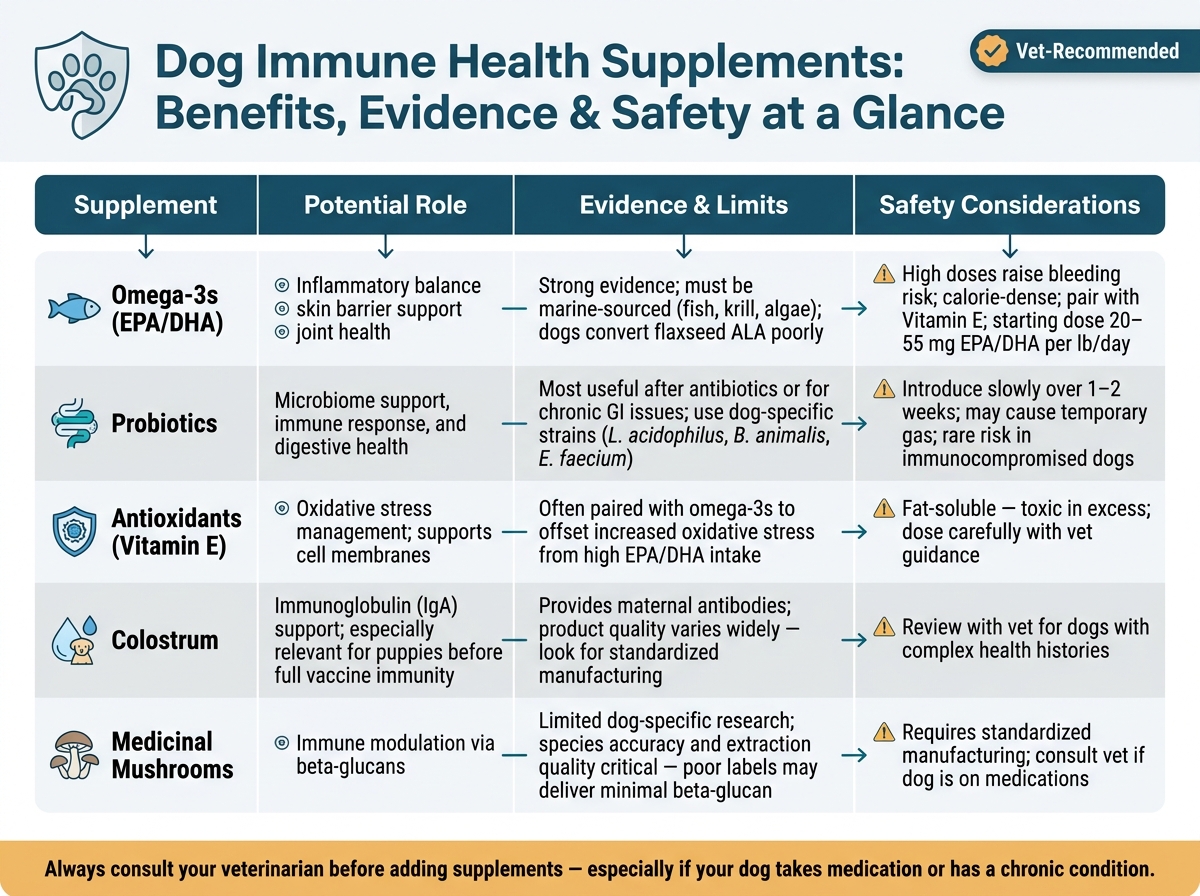
Dog Immune Health: Key Supplements Compared – Benefits, Evidence & Safety
Once the basics are handled, some supplements can give targeted support. But they work best after diet, exercise, sleep, and prevention are already in good shape.
That part matters.
A supplement can't make up for a weak routine. And results can vary a lot based on the ingredient, the dose, the product, and the dog. Before you add anything new, talk with your veterinarian, especially if your dog already takes medication. It helps to start with the goal first: are you trying to help with inflammation, gut health, or immune function?
Omega-3s, Probiotics, and Antioxidants
Fish-derived omega-3s (EPA and DHA) are some of the most studied supplements in veterinary nutrition. They can help calm the body's inflammatory response and support skin barrier function and joint health.
A common starting point is 20 to 55 mg of combined EPA and DHA per pound of body weight per day, but your veterinarian should confirm the right amount for your dog. Stick with marine sources like fish, krill, or algae. Dogs don't convert flaxseed ALA well.
A few practical details can make a big difference:
- Refrigerate liquid fish oil after opening, since rancid oil can promote inflammation.
- Softgels tend to protect the oil better from light and air.
- Fish oil is calorie-dense, so it may help to trim your dog's main meal a bit to avoid slow weight gain.
Probiotics can support the gut microbiome and immune response. Dog-specific strains such as Lactobacillus acidophilus, Bifidobacterium animalis, and Enterococcus faecium are a better fit for canine digestive systems than human formulas, which may cause vomiting or diarrhea in dogs. It's smart to introduce probiotics slowly over one to two weeks to cut down on temporary gas or bloating.
Antioxidants like Vitamin E are often paired with fish oil. High omega-3 intake can increase oxidative stress in cells, and Vitamin E helps balance that effect. Since fat-soluble vitamins can become toxic in excess, the dose needs to be handled with care.
Other ingredients, like colostrum and mushrooms, tend to make more sense in specific cases.
Colostrum and Medicinal Mushrooms
Colostrum contains immunoglobulins, including IgA, that support immune defense . It's especially relevant for puppies during the early window before vaccine-induced immunity is fully working. Product quality can vary a lot, so look for standardized manufacturing and review it with your veterinarian if your dog has a more complicated medical history.
Medicinal mushrooms may help modulate immune function through beta-glucans, but research in dogs is still limited. Species accuracy and extraction quality matter here. A poorly labeled product may not provide much meaningful beta-glucan at all. If your dog has a complicated health history or takes other medications, veterinary review is required before adding a mushroom supplement.
Once you've matched the ingredient to your dog's goal, keep the plan simple and steady.
| Ingredient | Potential role | Evidence or limits | Safety considerations |
|---|---|---|---|
| Omega-3s (EPA/DHA) | Inflammatory balance, skin barrier, joint support | Strong evidence; must be marine-sourced for bioavailability | High doses raise bleeding risk; calorie-dense; pair with Vitamin E |
| Probiotics | Microbiome support, immune response, digestive health | Most useful after antibiotics or for chronic GI issues; use dog-specific strains | May cause temporary gas; rare risk in severely immunocompromised dogs |
| Antioxidants (Vitamin E) | Oxidative stress management; supports cell membranes | Often paired with omega-3s | Fat-soluble; toxic in excess; dose carefully |
| Colostrum | Immunoglobulin support; relevant during puppy vulnerability window | Provides maternal antibodies; product quality varies | Review with vet for dogs with complex health histories |
| Medicinal mushrooms | Immune-modulating potential via beta-glucans | Limited dog-specific research; species accuracy and extraction quality matter | Requires standardized manufacturing; consult vet if dog is on medications |
How Vet Treat Fits Into a Daily Wellness Plan
Daily chews can make supplement routines easier to stick with. That's the main appeal: less fuss, better consistency.
A daily chew can simplify supplement use, but it still needs to fit your dog's needs and your veterinarian's guidance. Vet Treat's daily chews are veterinarian-recommended and combine key ingredients into one format, which can help with consistency. Follow the label directions, and if your dog has any health conditions or takes prescription medication, confirm the plan with your veterinarian before starting.
Track Results and Adjust the Plan Safely
After you put the daily plan in place, check progress each week to see if it's helping. Use the same signs every time so the comparison is clear. Look for weekly changes from your starting point, including stool quality, scratching or licking, coat condition, appetite, energy, weight, and recovery after exercise. Pay close attention to whether skin, coat, and energy are getting better.
Change one major thing at a time. That way, you can tell what’s helping and what’s not. Then give each change 4–12 weeks before you judge the results.
When to Stop and Seek Veterinary Care
If the plan makes anything worse, stop it and call your veterinarian. These signs need prompt veterinary care, not another supplement change: persistent vomiting, chronic diarrhea, blood in the stool, marked lethargy, unexplained weight loss, or fever. Repeated infections are another reason to call your veterinarian.
Difficulty breathing, facial swelling, hives, or collapse are emergencies - stop the new food, supplement, or chew and contact a veterinarian immediately. If symptoms worsen after a new food or supplement, stop it and call your veterinarian.
FAQs
Can stress weaken my dog’s immune system?
Yes. Chronic stress can weaken your dog’s immune system. One big reason is that stress can throw off the balance of good bacteria in the gut, and a lot of immune function is tied to gut health.
When that balance shifts, it can lead to inflammation, digestive problems, and a higher chance of getting sick. A steady daily routine helps. Regular mealtimes, exercise, and enough rest can lower stress and support immune health.
Are human probiotics safe for dogs?
Human probiotics are usually safe for most dogs. But they often don't do much, because probiotic strains and dosing are species-specific. In plain English: what works for a person may not work the same way for a dog.
The other issue is fit. If you use the wrong product, your dog may end up with side effects like vomiting or diarrhea.
For the best shot at helping your dog, choose a probiotic made for dogs. And if your dog has a severely compromised immune system or takes antibiotics or immunosuppressive drugs, check with your vet first.
How do I know if a supplement is helping?
Track symptom changes over the right timeframe, and stay consistent. Don’t expect instant results. Omega-3s may help with skin and coat issues in about 6–12 weeks, while probiotics can take a few weeks to make a difference. If you judge too early, you might miss what’s working.
It also helps to add one new product at a time. That way, if something changes, you’ll have a much better sense of what caused it. Watch for shifts in:
- Stool
- Itching
- Appetite
If symptoms get worse, or you notice lethargy or GI issues that don’t let up, contact your vet. And one more thing: make sure the product you choose is high quality.