

How to Choose Safe Dental Chews for Your Dog
Keeping your dog’s teeth clean isn’t just about their smile - it’s about their overall health. Dental chews can help reduce plaque, prevent tartar buildup, and improve oral hygiene, but not all chews are safe. Some may fracture teeth, cause blockages, or contain harmful additives. Here’s how to pick the right one:
- Check Ingredients: Look for natural proteins (like beef skin or fish skins) and avoid toxic substances like xylitol or artificial preservatives (e.g., BHA, BHT).
- VOHC Seal: Products with the Veterinary Oral Health Council (VOHC) seal are scientifically tested to reduce plaque or tartar by at least 20%.
- Size and Texture: Choose chews based on your dog’s size and chewing habits. Use the “Thumbnail Test” to ensure the chew isn’t too hard.
- Age Matters: Puppies need softer chews, adults can handle firmer ones, and seniors benefit from flexible options.
- Supervise Chewing: Always monitor your dog to prevent choking or swallowing large pieces.
Dental chews are a great addition to brushing and professional cleanings but should never replace them. Combine these steps to protect your dog’s teeth and health effectively.
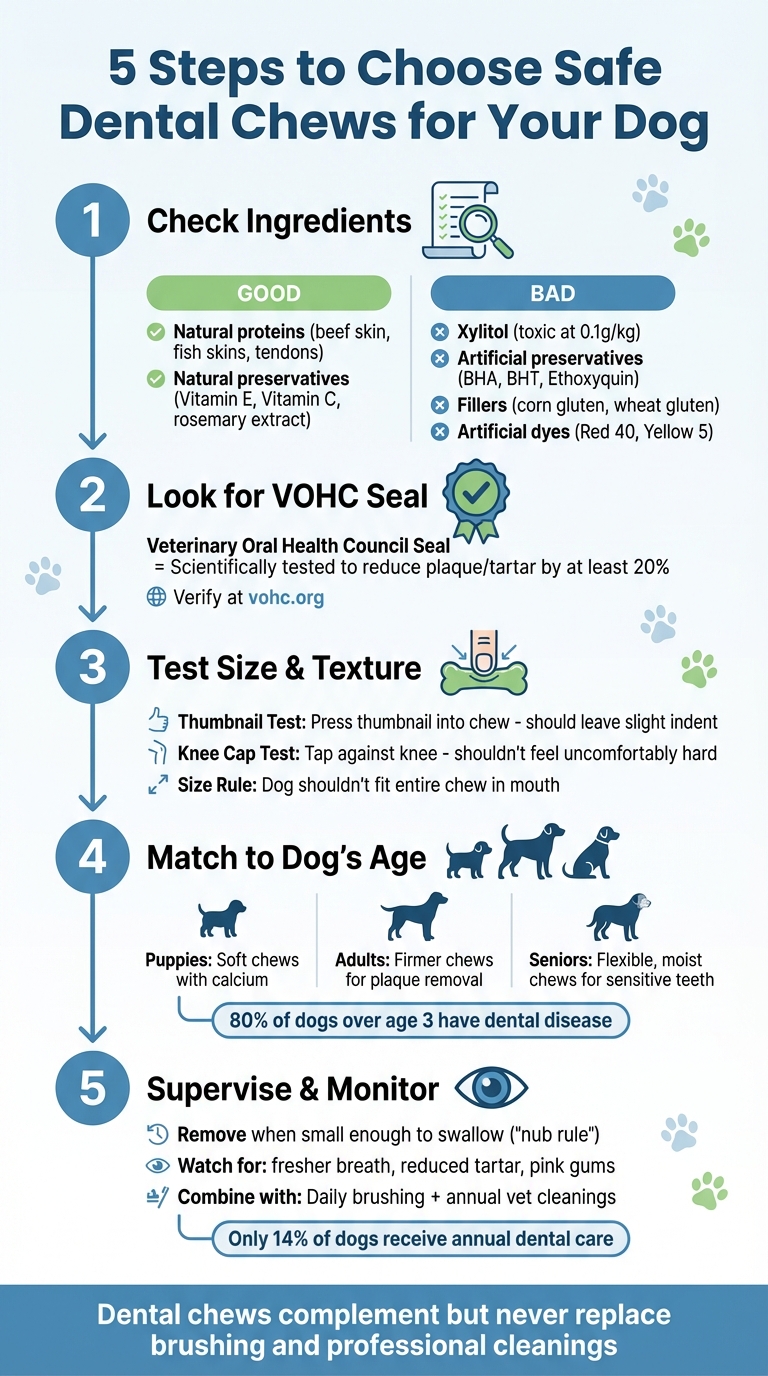
5-Step Guide to Choosing Safe Dental Chews for Dogs
Veterinarian Recommendation Best Dental Treats for Dogs
sbb-itb-6d7d69d
What to Look for in Dental Chew Ingredients
Checking the ingredient list is key to avoiding harmful additives and picking chews that genuinely help with dental care. Here’s a closer look at the essential ingredient categories to consider.
Natural Proteins and Abrasive Materials
Animal-based ingredients like beef skin, tendons, collagen, fish skins, and ostrich bones are great for mechanical cleaning. These proteins soften slightly as your dog chews, which helps scrub away plaque without being too hard on their teeth.
For dogs with protein allergies or sensitivities, plant-based options like sweet potato and oat flour can be a solid alternative. These ingredients offer firm textures that aid in abrasive cleaning while being gentle on your dog’s system.
Breath Fresheners and Enzymatic Additives
Some dental chews include dual-enzyme systems to target plaque and biofilm that regular scraping might miss. For example, glucose oxidase breaks down sugars that fuel bacterial growth, helping to slow the buildup of harmful bacteria in your dog’s mouth. Look for products with the Veterinary Oral Health Council (VOHC) seal, which ensures at least a 20% reduction in plaque or tartar through independent testing.
For natural breath freshening, ingredients like parsley, peppermint, and spearmint can control odors without relying on artificial chemicals. Additionally, green tea extract and zinc chloride can reduce the bacteria responsible for bad breath and gum issues. Another standout is sea kelp (Ascophyllum nodosum), which works through your dog’s saliva to prevent plaque from sticking to teeth. However, it’s important to avoid sea kelp for dogs with hyperthyroidism due to its high iodine content.
Harmful Additives and Fillers to Avoid
Some ingredients can do more harm than good. Xylitol, often labeled as birch sugar, is extremely toxic to dogs. Even small amounts - just 0.1 grams per kilogram of body weight - can cause dangerous hypoglycemia. Higher doses (over 0.5 grams per kilogram) may lead to acute liver failure.
Artificial preservatives like BHA, BHT, and Ethoxyquin are also concerning. While they extend shelf life, they’ve been linked to organ damage and even cancer. The National Institutes of Health has classified BHA as a potential carcinogen based on animal studies. Instead, look for chews preserved with natural antioxidants like mixed tocopherols (Vitamin E), ascorbic acid (Vitamin C), or rosemary extract.
Low-quality fillers, such as corn gluten, wheat gluten, soy, and cereal by-products, add little nutritional value and may trigger allergies. Ambiguous protein sources and artificial dyes like Red 40, Yellow 5, Yellow 6, and Blue 2 are also best avoided, as they’ve been linked to hyperactivity and allergic reactions.
In early 2025, the UK Food Standards Agency issued warnings about certain Barkoo and Chrisco dog chews imported from China. These chews were reportedly associated with "werewolf syndrome", a condition marked by sudden behavioral changes, panic attacks, aggression, and seizures. Tina Potter, Head of Incidents at the Food Standards Agency, stated:
"While there is no confirmed distribution of affected products to the UK, there is the possibility that some consumers may have purchased these online... we are advising dog owners to avoid feeding the affected chews to dogs as a precaution".
Selecting the Right Size and Texture
When it comes to dog chews, size and texture matter just as much as ingredient safety. The right size ensures your dog can chew safely, avoiding choking hazards while promoting effective dental cleaning. Chews are typically categorized by weight (e.g., X-Small for dogs under 11 lbs; Large for dogs over 50 lbs) to match their jaw strength and caloric requirements. A good rule of thumb: your dog shouldn’t be able to fit the entire chew in its mouth. For dogs with powerful jaws, choosing a larger chew can also help extend the cleaning process.
Picking the wrong size can cause real harm. A chew that’s too small increases the risk of choking or intestinal blockages, while one that’s too large can strain your dog’s jaw or digestive system. Over time, this could even lead to chronic issues like osteoarthritis. Dr. Beth Turner emphasizes:
"Giving your dog a toy that's too small could lead to choking or intestinal obstructions, while too large could lead to excessive strain and damage to their jaw and chewing muscles. Over time, this can lead to osteoarthritis".
Size Matters for Safety and Effectiveness
There are simple ways to determine if a chew is suitable for your dog. Try the Thumbnail Test: press your thumbnail into the chew - if it doesn’t leave a slight indent, the chew is too hard. Another method is the Knee Cap Test: tap the chew against your knee - if it feels uncomfortably heavy or firm, it’s likely too hard for your dog. Always remove the chew once it breaks into smaller pieces that could be swallowed, as these can pose choking risks or cause blockages.
A chew that’s too small not only creates safety hazards but also limits cleaning effectiveness. Your dog may finish it too quickly, missing out on the dental benefits.
Textures That Promote Dental Health
The texture of a chew plays a key role in maintaining oral hygiene. Features like ridges, grooves, and nubs help scrub the teeth while gently massaging the gums. Some chews even have innovative shapes, such as a Z-design, to better clean hard-to-reach areas of the teeth. The texture should strike a balance: firm enough to provide resistance for cleaning but soft enough to avoid cracking teeth.
Chewing also stimulates saliva production, which naturally helps rinse away bacteria and food debris. While using high-quality ingredients minimizes harmful additives, the right size and texture ensure your dog gets the maximum dental benefits. Up next, we’ll look at veterinary advice to help you choose the best option for your pet’s unique needs.
Veterinary Recommendations and Approvals
Veterinary endorsements play a crucial role in ensuring the safety and effectiveness of dental chews for dogs. One of the most trusted indicators of quality is the Veterinary Oral Health Council (VOHC) Seal of Acceptance. This seal signifies that a product has undergone rigorous scientific testing. To receive it, manufacturers must conduct two independent 28-day clinical trials proving the chew reduces plaque or tartar by at least 20%. A panel of nine board-certified veterinary dentists and dental scientists carefully reviews all submitted clinical data to ensure it meets strict standards.
Dental health is a significant concern for dogs, with 80% developing some form of dental disease by the age of three. In a market crowded with unverified products, the VOHC Seal stands out as a reliable indicator that a chew is not only effective but also safe. The seal specifies whether the product helps control plaque (the soft bacterial layer), tartar (hardened buildup), or both. Additionally, approved products must use ingredients that are either Generally Regarded As Safe (GRAS) or reviewed by the FDA, and they must not cause harm, such as worsening gingivitis.
"The VOHC Seal of Acceptance is awarded when a product demonstrates dental efficacy." – Veterinary Oral Health Council
This certification highlights the importance of practical testing to ensure a chew’s safety and effectiveness for your dog. Before buying, check the official VOHC list at vohc.org to confirm the product is approved. Also, test the chew’s hardness using the fingernail or thumbnail method - if you can’t leave an indent, the chew is too hard and could damage your dog’s teeth. Even with VOHC-approved chews, supervision is essential to prevent your dog from swallowing large fragments. Lastly, consult your veterinarian to ensure the chew aligns with your dog’s specific needs, including age, breed, and chewing habits.
Matching Dental Chews to Your Dog's Needs
Dogs have different dental care needs depending on their age, size, breed, and chewing habits. To ensure safety and effectiveness, it's important to pick dental chews that match your dog's specific requirements.
Age-Appropriate Options
For puppies 3 months and older, softer chews are ideal. These help soothe sensitive gums during teething without harming their developing teeth. For example, Wellness WHIMZEES Puppy chews are designed with added calcium to support bone and tooth growth. Stay away from hard materials like antlers or natural bones, as these can crack a puppy's fragile teeth.
Adult dogs can handle firmer chews that help scrape away plaque and tartar. With fully developed teeth, they benefit from consistent use of dental chews, which may reduce the risk of periodontal disease by up to 70%. This is especially important since 80% of dogs over age three are affected by some form of dental disease.
Senior dogs often have worn enamel, missing teeth, or jaw issues like arthritis, so they need softer chews with more flexibility to avoid damaging their teeth. Dr. Karen Becker cautions:
"Hard chews like antlers and bones can cause dental fractures, especially in dogs with weaker teeth".
Moist, pliable chews or ones that dissolve easily are better options for older dogs.
In addition to age, consider your dog's size, breed, and chewing behavior when selecting the right dental chew.
Chews for Different Breeds and Sizes
Small breeds (under 11 pounds) need softer, smaller chews that fit their less powerful jaws. Options like Virbac C.E.T. Enzymatic chews in X-Small size are a great choice. Always pick a chew larger than your dog's mouth to prevent them from swallowing it whole.
Large breeds (over 50 pounds) require sturdier chews that can withstand their stronger jaws. OraVet Dental Hygiene Chews are a good example, offering both durability and dental protection.
Chewing style also plays a role. "Power chewers" need dense, durable materials like natural rubber to avoid quick destruction. "Inhalers" or "gulpers" need larger, tougher chews to prevent choking, while "nibblers" can use softer options. Always test the firmness of a chew to ensure it’s safe for your dog.
Breed-specific traits can influence your choice too. Flat-faced breeds like Pugs and Bulldogs benefit from thinner chews that are easier to grip. Breeds prone to weight gain, like Labradors, do better with low-fat, high-protein chews. Dogs with allergies may need grain-free or limited-ingredient options. Dr. Molly Price recommends Virbac C.E.T. VeggieDent for dogs with protein allergies or gluten sensitivities, saying:
"We love these chews for our allergic dogs, so they can have a yummy, safe treat that helps prevent dental disease".
The right size, texture, and formula tailored to your dog's breed and chewing habits can make a big difference in their dental health.
Vet Treat Dental Care Chews
Vet Treat offers dental chews designed to meet a variety of dog needs while using natural and safe ingredients. These chews feature a dual-action system: a hard outer layer for plaque removal and a soft inner layer enriched with nutrients like spirulina, probiotics, and Coenzyme Q10. They’re flavored with hydrolyzed chicken liver, making them suitable for dogs with protein sensitivities.
Each chew contains 27.8% protein, 13% fat, and about 71 calories. For dogs up to 50 pounds, one stick daily is recommended; larger dogs over 50 pounds should have two sticks daily. The formula includes a proprietary probiotic blend with six strains to support oral health, while zinc and cinnamon help freshen breath and strengthen gums. With a 4.5 out of 5-star rating from 74 reviews, 97% of users report improvements in breath and tartar reduction.
For dogs with chicken allergies or lower calorie needs, Vet Treat also offers a dental powder alternative. Since dental chews should account for no more than 10% of a dog's daily calorie intake, make sure to adjust their meals accordingly. Always supervise your dog during their first few chewing sessions to ensure they don’t break off large chunks that could cause choking or blockages.
Safe Usage and Maximizing Results
Supervising Chewing Sessions
Always keep an eye on your dog during chewing sessions to avoid choking hazards or blockages. If the chew becomes small enough to swallow whole, remove it immediately - this is often referred to as the "nub rule". For dogs that tend to chew aggressively, a bully stick holder can be a helpful tool to slow them down and prevent swallowing the last piece.
It's also essential to test the chew's hardness using the fingertip test. Pay attention to any signs of discomfort, like vomiting or diarrhea, especially when introducing a new chew. Additionally, remove any large chunks that break off - this is particularly important with rawhide or yak cheese chews to minimize the risk of blockages.
Signs of Improved Oral Health
Once you've ensured safe chewing practices, start observing your dog's oral health. A good dental chew can lead to fresher breath, reduced tartar, and healthier, pink gums. Since plaque can harden into tartar within 24 to 48 hours if not addressed, using dental chews daily is key. Studies show that dogs given one dental chew per day experience less plaque and tartar buildup. Look for chews with the VOHC seal, as these products are clinically tested to reduce plaque and tartar effectively.
However, remember that dental chews only clean visible surfaces of the teeth. Hardened tartar or plaque beneath the gumline requires professional cleaning, as dental chews can't reach these areas.
Combining Chews with Regular Dental Care
For the best results, use dental chews as part of a broader dental care routine. They work well alongside regular tooth brushing and annual veterinary checkups. Brushing is still the most effective way to remove soft plaque before it hardens. According to the American Veterinary Medical Association:
"Daily brushing is best, but it's not always possible, and brushing several times a week can be effective."
Despite this, only 14% of dogs receive annual dental care, leaving many at risk for periodontal problems. Professional cleanings under anesthesia are the only way to remove tartar and plaque from beneath the gumline, where more severe dental issues can develop. As Dr. Patrick Vall of Animal Dental Care & Oral Surgery points out:
"Dental treats can never take the place of daily at-home dental care in the form of tooth brushing."
Conclusion
Choose dental chews made with safe, natural ingredients and free from harmful additives. Ensure they are the right size and texture (use the fingernail test to check hardness), carry the VOHC Seal for proven effectiveness, and suit your dog's age, breed, and chewing habits. Following these steps helps ensure each chew supports your dog's oral health.
While dental chews are a great addition, they should always complement - not replace - daily brushing and professional veterinary cleanings. The fingernail test is a quick way to confirm that the chew isn't too hard, helping to avoid tooth fractures and costly dental issues.
Vet Treat Dental Care Chews offer a reliable option. Made in the USA with non-GMO, natural ingredients and no artificial flavors, they meet strict veterinary standards, promoting fresher breath and healthier gums.
Always supervise your dog during chewing sessions, and monitor for improvements like fresher breath and reduced tartar buildup. Consult your veterinarian to select the best chews for your dog's specific needs. By following these tips, you can integrate dental chews into your dog's routine, supporting their oral health safely and effectively.
FAQs
How often should my dog have a dental chew?
Giving your dog a dental chew daily can help maintain better oral health by cutting down on plaque buildup. Over time, this can lead to healthier teeth and gums, while also keeping your dog's breath smelling fresher. Be sure to select chews recommended by veterinarians and suited to your dog's size and chewing style.
What’s the safest chew type for dogs that gulp treats?
For dogs that tend to gulp their treats, it's best to stick with softer, digestible chews like bully sticks or collagen chews. These are gentler on their teeth and easier to digest. On the other hand, avoid giving them extremely hard options like antlers, bones, or yak cheese, as these can lead to fractured teeth. Always keep an eye on your dog while they're chewing, and make sure the chew is the right size for them to handle safely.
When should I skip dental chews and call my vet?
If your dog has persistent bad breath, red or bleeding gums, difficulty chewing, or visible plaque and tartar buildup, it’s time to skip the dental chews and contact your vet. These symptoms could point to underlying dental problems that require professional attention. Your vet will be able to diagnose the issue and suggest the most effective treatment to improve your dog’s oral health.