

7 Natural Ways to Calm an Anxious Dog at Home
If your dog struggles with anxiety, there are natural ways to help them relax without relying on medications. From calming chews to aromatherapy, here are seven options to ease your dog's stress:
- Calming Chews: Products like Vet Treat's Dog Calming Anxiety & Stress Relief Chews use hemp oil, valerian root, and melatonin to help dogs relax during stressful situations.
- Chamomile: Offers mild relaxation and supports digestion. Available as tea, supplements, or topical solutions.
- Valerian Root: Known for its fast-acting calming effects, especially during thunderstorms or car rides.
- Massage: Physical touch releases endorphins and reduces cortisol, helping dogs feel more secure.
- Music or White Noise: Reggae, soft rock, or classical music can lower stress. White noise masks sudden disruptive sounds.
- Lavender Aromatherapy: Diluted lavender oil can soothe dogs, but use sparingly and ensure proper ventilation.
- Lick Mats with Frozen Treats: Keeps dogs occupied while promoting calmness through soothing licking behavior.
Each method works best for specific situations, and combining techniques can enhance results. Always consult your vet before introducing new remedies, especially if your dog has medical conditions or is on medication.
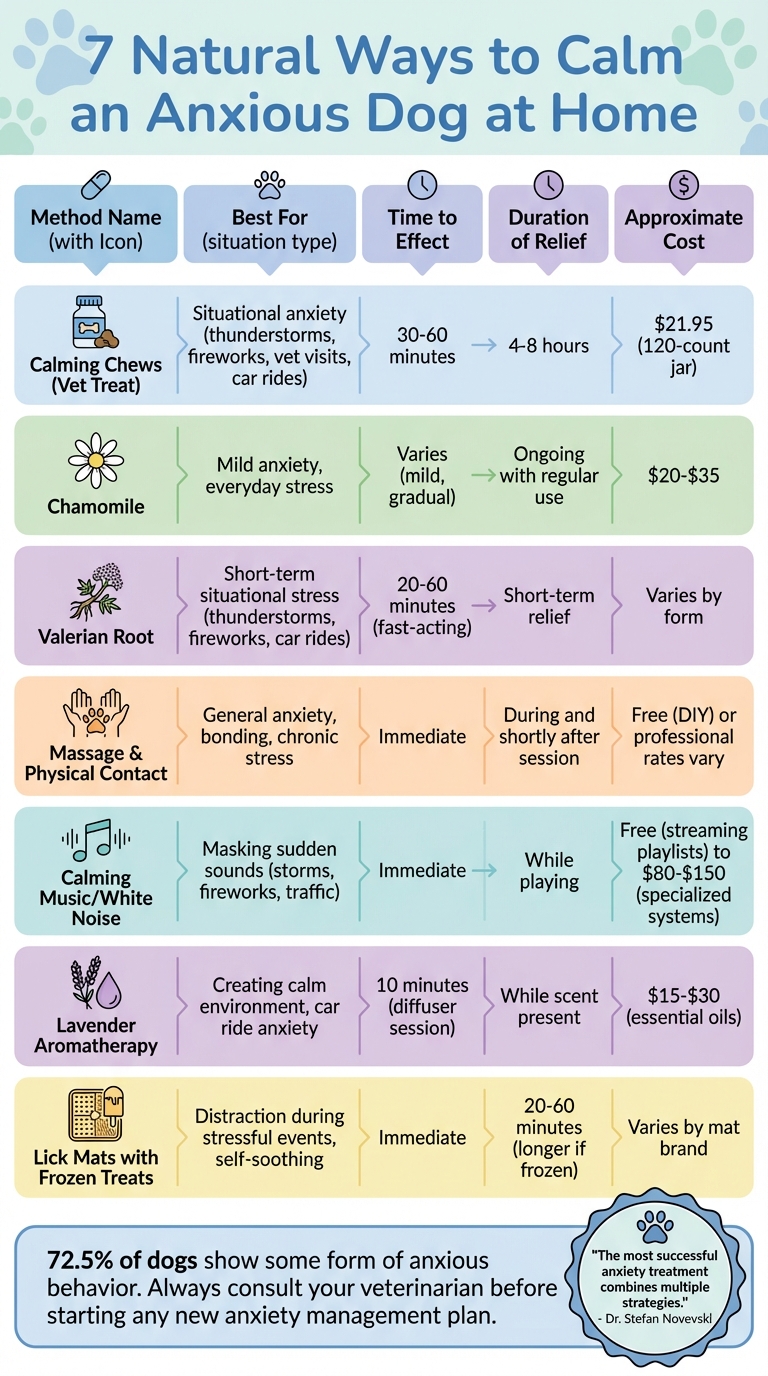
7 Natural Calming Methods for Anxious Dogs: Quick Comparison Guide
1. Vet Treat Calming Chews

Natural Ingredients and Safety for Dogs
Vet Treat's Dog Calming Anxiety & Stress Relief Chews are made with a thoughtful blend of hemp oil, valerian root, and melatonin to help your dog relax naturally. Hemp oil aids in balancing mood, valerian root provides soothing effects, and melatonin supports healthy sleep cycles. Together, these ingredients help calm your dog without causing drowsiness.
Produced in the USA, the chews use natural ingredients and contain no artificial flavors. It's important to follow the recommended dosage based on your dog's weight, as exceeding it could lead to mild stomach upset.
This formula is designed to offer dependable relief, particularly for short-term anxiety triggers.
How Well They Reduce Anxiety
These chews are particularly helpful for situational anxiety caused by events like thunderstorms, fireworks, vet visits, or car rides. Most dogs experience noticeable calming effects within 30 to 60 minutes, with results lasting 4 to 8 hours. For dogs with chronic anxiety, consistent daily use for up to six weeks may provide better outcomes as the active ingredients accumulate in their system.
"There is a growing amount of research that shows that calming treats can help in decreasing anxiety. But not every patient, every dog, will be as easily managed with something as simple as a treat and nothing else."
- Dr. Rebecca Greenstein, Veterinary Medical Advisor
How to Use Them
For best results, give your dog the chew 30–60 minutes before a stressful event. It’s a good idea to test the chew on a calm day to see how your dog responds before using it during a high-stress situation. These treats are safe for daily use or as needed, and you can adjust the dosage based on your dog’s size and level of anxiety.
Cost and Where to Buy
A 120-count jar of Vet Treat's Dog Calming Anxiety & Stress Relief Chews starts at $21.95 and is available for purchase on vettreat.com. The website often offers introductory discounts, making these chews an affordable and effective option for helping your dog manage anxiety.
sbb-itb-6d7d69d
2. Chamomile Tea or Supplements
Natural Ingredients and Safety for Dogs
Chamomile is another natural option worth considering for calming your dog. This herb contains active compounds like terpenoids and apigenin, which act as mild relaxants by binding to GABA receptors, helping to ease anxiety. But that’s not all - chamomile also supports digestion by relaxing stomach muscles and can even be applied topically to soothe itchy skin or irritated eyes.
"Generally, chamomile is safe in dogs when dosed appropriately." - Dr. Trina Hazzah, Veterinarian
That said, you should avoid giving chamomile to pregnant dogs, young puppies, or pets with daisy-family allergies (like ragweed). Always consult your vet before combining it with medications such as Warfarin, NSAIDs, or sedatives. High doses can lead to bleeding issues, and treating chamomile toxicity can cost around $500. When used responsibly, chamomile is an easy and stress-free way to incorporate natural calming support into your pet’s routine.
How Well They Reduce Anxiety
Chamomile is most effective for mild anxiety or everyday stress. For dogs with more pronounced anxiety, it’s often combined with other natural ingredients like valerian root or L-tryptophan in commercial calming chews. Its gentle effects make it a great option for dogs who need a bit of daily stress relief without stronger interventions.
How to Use Them
Chamomile can be given in several forms: chewable treats, powders, liquids, or cooled tea. Stick to pet-specific products, as human teas might contain caffeine or other harmful ingredients. If you’re using tea, brew it lightly, let it cool completely, and offer small amounts to your dog. For skin irritations, apply cooled chamomile tea as a rinse two to three times a day. Start with a small dose to ensure your dog tolerates it well.
Cost and Where to Buy
Chamomile supplements for dogs generally cost between $20 and $35, depending on the brand and quantity. These products are widely available at online pet retailers, pet supply stores, and some veterinary clinics.
3. Valerian Root Remedies
Natural Ingredients and Safety for Dogs
Valerian root, derived from Valeriana officinalis, is a perennial herb often used to help calm dogs during stressful situations. Known for its sedative and anti-anxiety properties, valerian root contains active compounds like valerenic acid, valeranone, and valtrate, which work by increasing GABA levels in the brain. This helps regulate anxiety and encourages relaxation. According to the American Herbal Products Association (AHPA), valerian root is considered safe for dogs when administered in appropriate doses.
"Valerian root can be safe for dogs when used in appropriate doses and under the guidance of a veterinarian." - Dr. Susan Wynn, Veterinary Nutritionist
However, there are some important precautions. Valerian root is not recommended for puppies, pregnant or nursing dogs, or dogs with liver disease. Side effects are generally mild but can include drowsiness or an upset stomach. In rare cases, dogs may exhibit paradoxical hyperactivity. If your dog is currently on sedatives, anti-epileptic drugs, or antidepressants, consulting a veterinarian is a must. Also, it’s advised to stop using valerian root at least two weeks before any scheduled surgery to avoid interactions with anesthesia.
How Well It Reduces Anxiety
Valerian root is particularly effective for short-term, situational stress. Whether it’s a thunderstorm, fireworks, a car ride, or a trip to the vet, this natural remedy is known for its fast-acting results. A study published in the Journal of Veterinary Pharmacology and Therapeutics demonstrated valerian root’s ability to reduce anxiety in dogs during a simulated thunderstorm. Dr. Andrew Jones, DVM, highlights its effectiveness: "I find it pretty quick-acting, with results in as short as 20 minutes". Most dogs show a response within 30 to 60 minutes, making valerian root an excellent option for managing acute stress rather than ongoing anxiety issues.
How to Use It
Valerian root comes in various forms, including tinctures, capsules, powders, and dried root. Here’s a quick guide for dosing:
- Tinctures: 0.25 ml per 10 lbs of body weight
- Capsules/Powder: 4 mg per lb of body weight
- Dried Root: 1/4 to 1 1/2 teaspoons per dose
For best results, administer valerian root about 30 minutes before a stressful event.
Cost and Where to Buy
You can find valerian root supplements for dogs at pet stores, online retailers, and some veterinary clinics. Always opt for products specifically designed for dogs to ensure accurate dosing and safety.
4. Massage and Physical Contact
How It Reduces Anxiety
Massage and physical contact work wonders for calming dogs by triggering the release of feel-good chemicals like endorphins, oxytocin, and serotonin. At the same time, they lower cortisol levels, helping your dog transition from a stressed, fight-or-flight mode to a calm and relaxed state. Beyond just easing anxiety, regular massage sessions can improve blood flow, lower blood pressure, and even strengthen the bond between you and your dog.
A 2021 study involving 65 practitioners and 527 dogs with chronic musculoskeletal pain found that dogs experienced noticeable pain relief after receiving a series of massages.
"Massages can be especially helpful to dogs with soft tissue or muscle strain injuries, arthritis, and limited mobility. They can help relieve tension in the muscles and increase mobility of the joints." - Dr. Kathleen Mottel, Veterinarian, Glen Ellyn Animal Hospital
This natural approach pairs beautifully with other calming methods, offering a well-rounded way to help your dog feel more at ease.
How to Use It
Massage is a gentle, safe option to help soothe your dog's anxiety without the need for medication.
Start in a quiet, comfortable spot with a soft, non-slip surface. Begin by lightly stroking your dog’s back and sides to warm up the muscles. Then, use gentle circular motions with your fingers behind their ears and on the top of their head to relieve tension.
For areas prone to stress, like the neck and shoulders, apply slightly firmer pressure using your thumbs. You can also focus on the base of the tail to encourage flexibility and gently press the paw pads to ease anxiety. Light, clockwise belly rubs may also help with digestion and relaxation.
Pay close attention to your dog’s body language - if they lean in, sigh, or start to doze off, you’re on the right track. If they flinch or move away, stop immediately.
"For a dog to benefit from a massage, they must find it enjoyable. Most dogs can learn to appreciate a good massage if they are introduced to it gently and gradually." - Dr. Jennifer Coates, DVM
Avoid massaging dogs with fevers, skin issues, open wounds, or those recovering from surgery unless your veterinarian gives the green light. Even simple activities like brushing your dog’s coat can release feel-good hormones and reduce stress.
Cost and Where to Buy
The great thing about massage? It’s completely free when you do it yourself at home. For those who prefer professional help, costs vary depending on location. To find certified canine massage therapists, check organizations such as the National Board of Certification for Animal Acupressure and Massage or the International Association of Animal Massage and Bodywork.
If your dog responds well to constant pressure, you might also consider weighted coats, which mimic a comforting “hug” effect. These are available for around $44.99 and can provide additional calming benefits.
5. Calming Music or White Noise
How Well They Reduce Anxiety
Music and white noise can help soothe dogs by masking sudden, unpredictable sounds like thunderstorms, fireworks, or traffic noise. Research has shown these calming sounds can lower dogs' respiratory rates, reduce heart rates, and decrease cortisol levels - the hormone linked to stress.
Interestingly, not all music has the same impact. Studies suggest that reggae and soft rock are particularly effective for reducing stress, while classical music, harp, and piano also have calming effects. A 2012 study from Colorado State University led by Dr. Lori Kogan observed 117 kenneled dogs exposed to different music genres during 45-minute sessions. The results? Classical music helped the dogs relax and bark less, whereas heavy metal increased body shaking.
"Recent studies have shown that playing music reduces stress in dogs at animal shelters, with less barking, lower respiratory rates, and lower levels of the stress hormone cortisol." - Cathy Madson, MA, CBCC-KA, CPDT-KA, Preventive Vet
White noise, on the other hand, provides a consistent background sound that helps block out sudden noises. However, dogs may grow accustomed to the same sound over time - usually within a week - so alternating soundscapes can help maintain its effectiveness.
How to Use Them
Start by keeping the volume low. Dogs' hearing is about four times more sensitive than ours. If you're using music to ease separation anxiety, play it while you're home as well, so your dog doesn't associate the sound exclusively with your absence. For white noise, position the device - like a fan or white noise machine - between your dog and the source of disruptive noises, such as a window or door.
"Your dog's hearing is super sensitive. Keep the music volume low, just barely loud enough for you to hear. That level is more than enough for your dog." - Cathy Madson, MA, CBCC-KA, Preventive Vet
To prevent your dog from becoming desensitized, rotate playlists every few days. Many streaming platforms, including Spotify, Pandora, and YouTube, offer playlists specifically designed for calming dogs. For older dogs experiencing hearing loss, opt for lower-pitched music and avoid high-frequency instruments like flutes, as these can cause discomfort.
With a few simple adjustments, auditory enrichment can become a seamless part of your dog's daily routine.
Cost and Where to Buy
You can find free, dog-specific calming playlists on platforms like Spotify and YouTube. A basic box fan can also work as an inexpensive white noise solution to mask external sounds.
For more specialized options, the SNOOZ White Noise Machine is a good choice, offering adjustable pitch settings to block out nighttime disturbances. If you're looking for audio tailored specifically for dogs, iCalmPet (Through a Dog's Ear) provides portable speaker systems and soundtracks designed for canine hearing, with prices ranging from $80 to $150. Additionally, DogTV offers a subscription-based service that combines calming music with visuals optimized for dogs' vision.
6. Lavender Aromatherapy
Natural Ingredients and Safety for Dogs
Lavender is well-known for its calming properties, offering a natural way to create a relaxing atmosphere for dogs dealing with stress or anxiety. When selecting a lavender product, check for the Latin name Lavandula angustifolia on the label - this ensures you're choosing a pure, safe option for pets.
Safety is critical when using lavender around dogs. Their sense of smell is incredibly sensitive - up to 10,000 times stronger than ours - so even mild scents can be overwhelming. Always dilute lavender essential oil by mixing one drop with 50 drops of a carrier oil like coconut, almond, or jojoba oil. Never apply it undiluted or allow your dog to ingest it, as it can be toxic if swallowed. Additionally, avoid using lavender on puppies younger than 10 weeks, pregnant or nursing dogs, or dogs with a history of seizures.
How Well It Reduces Anxiety
Research suggests lavender can be effective in calming anxious dogs. For instance, a 2006 study observed that dogs with car ride anxiety became noticeably calmer when exposed to lavender - spending more time resting and less time moving or vocalizing. Another study in a shelter setting found that lavender-scented environments encouraged dogs to relax, reducing barking and pacing.
"Lavender is the go-to essential oil for calming anxiety in both humans and animals. Its soothing aroma works wonders on the nervous system." - Lorna Dikoff, Founder, Furry Friends Advisor
Lavender's calming effects stem from its ability to activate the parasympathetic nervous system, which helps slow the heart rate and promote relaxation. With this evidence in mind, incorporating lavender into your dog's routine could be a helpful tool for managing stress.
How to Use Lavender Aromatherapy
There are several practical ways to introduce lavender aromatherapy into your dog's life. One of the easiest methods is using a diffuser. Add a few drops of diluted lavender oil to a water-based ultrasonic diffuser. Run it for about 10 minutes, then take a 30-minute break to avoid overexposure. Make sure the space is well-ventilated, and allow your dog to leave the room if the scent feels too strong.
For a DIY calming spray, combine 1–2 drops of lavender oil with 4 fluid ounces of distilled water or organic witch hazel in a glass spray bottle. Lightly mist your dog's bedding, crate, or collar, being careful to avoid their eyes, nose, and ears.
Another option is a gentle massage. Apply a small amount of diluted lavender oil to areas with less fur, like the belly, inner thighs, or the base of the neck. This not only introduces the calming scent but also strengthens the bond between you and your dog.
"What is a delicate scent for you can become an aggressive assault to their senses. Safely diluting the essential oil is therefore extra important when using lavender with dogs." - Sonoma Lavender
Cost and Where to Buy
Lavender essential oils generally range from $15 to $30, depending on the brand and bottle size. You can find these products at pet specialty stores or online retailers. Organic witch hazel, often used for DIY sprays, is also widely available. For a gentler alternative to concentrated oils, consider lavender-infused dog beds or heatable plush toys containing lavender buds. These items are easy to find online, with some retailers even offering free shipping on orders over $50.
Anxious Dogs? Try These 7 Vet-Approved Tips to Ease Holiday Stress!
7. Lick Mats with Frozen Treats
Lick mats offer a fun and calming way to ease your dog's anxiety while keeping them entertained.
Safe and Natural Ingredients for Dogs
Lick mats are flat pads made of silicone or rubber, designed with grooves and ridges to hold spreadable foods. They provide a safe way to calm your dog while using simple, dog-friendly ingredients. Great options include plain, unsweetened Greek yogurt, 100% pure canned pumpkin, mashed ripe bananas, unsweetened applesauce, and xylitol-free peanut butter. For a protein boost, you can add low-fat cottage cheese or shredded chicken/turkey, both of which contain L-tryptophan, a precursor to serotonin. You can also mix in calming supplements like chamomile, valerian root, or passionflower for added relaxation. Most lick mats only hold about two tablespoons of food, so a little goes a long way.
Make sure to avoid harmful ingredients like xylitol, chocolate, grapes, raisins, onions, or garlic. Always check labels carefully to ensure the safety of your furry friend.
Why Lick Mats Help with Anxiety
Licking is more than just a behavior - it’s a natural way for dogs to self-soothe. It releases endorphins and serotonin, which help regulate anxiety and promote a sense of calm.
"Licking releases endorphins and serotonin, which regulate anxiety and help your dog feel calm and less anxious." - Cathy Madson, Dog Behavior Expert, Preventive Vet
Freezing the lick mat can make the activity last longer - up to 20 to 60 minutes for chilled treats or even more for fully frozen ones. This extended engagement can be especially helpful during stressful moments like thunderstorms, fireworks, or vet visits, as it redirects their focus away from anxiety triggers.
Tips for Using Lick Mats
To get started, spread a thin layer of your chosen food over the mat’s surface. If your dog is new to lick mats, chill the mat (but don’t freeze it) for about 30 minutes to make it easier. Once they’re comfortable, you can freeze the mat for 2–4 hours to create a longer-lasting activity. Offering the mat 30–60 minutes before a stressful event gives your dog time to relax.
If you’re adding supplements, mix powdered forms or crushed chews into the food to ensure your dog gets the full dose. Always supervise your pet during use to make sure they’re licking, not chewing the mat. Afterward, clean the mat with warm, soapy water and a soft brush to get into the grooves. Most silicone mats can also go in the dishwasher (top rack only).
Where to Find Lick Mats and Costs
You can find lick mats at most online pet stores and major retailers. Popular options include the LickiMat Wobble and Awoo Lick Mats. For smaller dogs or puppies, look for mats with shallower grooves, while larger breeds may need sturdier designs made from thicker silicone or even stainless steel. Pair the mat with high-quality calming supplements for an extra soothing experience.
Conclusion
Helping your anxious dog feel at ease doesn’t have to be complicated. The seven natural methods discussed here offer practical ways to reduce stress and promote relaxation at home.
"The most successful anxiety treatment combines multiple strategies." - Dr. Stefan Novevski, Licensed Veterinarian
Combining different approaches - like natural supplements and calming techniques - creates a well-rounded plan for addressing canine anxiety. For instance, natural supplements such as Vet Treat Calming Chews can help reduce your dog’s overall stress levels. This, in turn, makes behavior training and positive reinforcement more effective. Adding environmental adjustments, like soothing music, aromatherapy, or a safe retreat space, further supports your dog’s emotional well-being by preventing anxiety from escalating.
Before starting any new anxiety management plan, consult your veterinarian. Since 72.5% of dogs show some form of anxious behavior, it’s important to tailor the approach to your dog’s specific needs. A vet can rule out health conditions like arthritis or chronic pain that might be contributing to the anxiety. They’ll also ensure supplements don’t interfere with medications and help you determine the correct dosage based on your dog’s size and breed.
When selecting supplements, opt for clinically tested products like Vet Treat Calming Chews. Look for the National Animal Supplement Council (NASC) yellow oval stamp, which guarantees high-quality standards. Start with 2–3 methods, observe your dog’s progress over 2–3 weeks, and make adjustments as needed. With patience and consistency, you’ll notice your dog becoming more relaxed over time.
FAQs
How can I tell if my dog’s anxiety is mild or severe?
To figure out whether your dog’s anxiety is mild or severe, pay close attention to how intense and long-lasting their symptoms are. Mild anxiety might show up as occasional pacing, brief trembling, or light barking when something specific sets them off. These reactions usually fade quickly once the trigger is removed. On the other hand, severe anxiety is marked by ongoing behaviors like constant barking, excessive drooling, self-harming actions, or physical signs like a racing heart. These cases often call for professional help to address properly.
Can I combine calming chews with chamomile, valerian, or lavender?
Yes, combining calming chews with herbs like chamomile, valerian, or lavender is typically safe. These herbs are known for their soothing qualities and can work alongside the calming effects of the chews. That said, keep an eye on how your dog responds, and if you notice anything unusual or have questions, it’s best to check with your veterinarian.
What natural method works fastest during thunderstorms or fireworks?
During thunderstorms or fireworks, one of the quickest natural ways to calm your dog is by using tools like anxiety wraps or pressure garments, such as ThunderShirts. These work by applying gentle, consistent pressure, which can help ease your dog’s anxiety in a safe and natural way.