

Top 5 Supplements for Winter Skin and Paw Health
My first step for winter skin care: check your dog’s diet with your vet before adding supplements. A complete, balanced diet usually covers nutrient needs. And cracked or salt-irritated paws need care - not another chew.
Here’s how I’d sort the five options:
- Omega-3s (EPA and DHA): The first option to discuss for skin support, especially with diagnosed allergies. Compare EPA + DHA amounts - not total oil.
- Omega-6s (linoleic acid): For low intake or a vet-confirmed deficiency.
- Vitamin E: For low intake, not winter dryness alone.
- Zinc: Only for a vet-identified need; too much can be toxic.
- Probiotics: For strain-specific gut support, with possible indirect skin effects - not paw protection.
Quick Comparison
| Supplement | Main role | What I’d check |
|---|---|---|
| Omega-3s | Skin and coat support | EPA + DHA per serving |
| Omega-6s | Skin barrier support | Whether the diet lacks linoleic acid |
| Vitamin E | Antioxidant support | Total intake from food and supplements |
| Zinc | Support when a specific need exists | Vet-approved dose |
| Probiotics | Indirect support through gut health | Named strains and CFU through expiration |
Results aren’t instant: omega-3 coat changes may take 6–12 weeks. I’d review doses, medications, and product testing with your vet, while keeping <u>daily paw care first</u>: rinse and dry paws after walks, use winter protection, and seek care for persistent irritation or trouble walking.
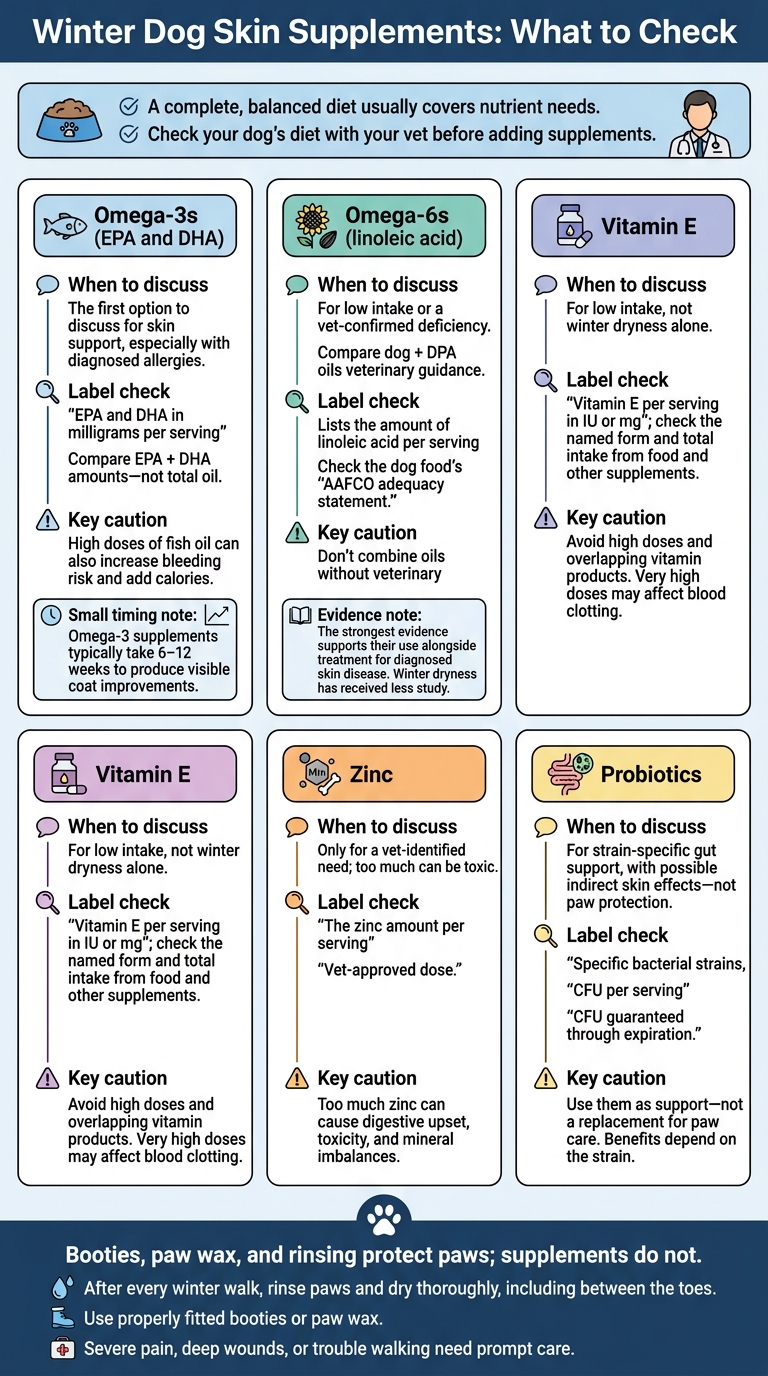
Winter Dog Skin Supplements: What to Check
When Dogs May Need Winter Skin Supplements
A complete, balanced diet usually supplies the nutrients your dog needs. Add supplements only to address a specific gap or health need.
Dogs with lasting itching, seasonal allergies, or sensitivities to their surroundings may need targeted support. Omega-3s are the first supplement to review for these needs. Your vet may recommend EPA and DHA because dogs don’t convert plant-based omega-3s well. Probiotics may also help restore helpful gut bacteria after antibiotics.
Choose one goal before starting. Track itch frequency or coat quality for 2 weeks, then track that same measure during the vet-guided trial. Omega-3 supplements typically take 6–12 weeks to produce visible coat improvements, so don’t judge the results after just a few days.
Too much zinc can be toxic. High doses of fish oil can also increase bleeding risk and add calories.
sbb-itb-6d7d69d
1. Omega-3 Fatty Acids: EPA and DHA
Ingredients and Active Amounts
Look for fish, krill, or algae oil that lists EPA and DHA in milligrams per serving. Add those two amounts together to compare labels. Total oil weight doesn’t tell you the EPA and DHA dose.
Skin Support and Suitable Dogs
EPA and DHA support the skin barrier and coat condition. They’re the omega-3s to look for when winter dryness, a dull coat, or itching are concerns. But the strongest evidence supports their use alongside treatment for diagnosed allergic skin disease. Winter dryness has received less study.
Label Checks and Quality Testing
Choose third-party or batch-tested fish, krill, or algae oil. Follow storage directions closely: fish oil oxidizes quickly. Refrigerate liquid oil as directed, and keep it away from light and air to maintain its quality for skin support. After checking the label, make sure the dose is safe for your dog.
Safety and Use
Work up to the vet-approved amount gradually over 1–2 weeks to reduce loose stools. Tell your vet if your dog has a history of pancreatitis, bleeding disorders, or seafood sensitivity. Ask them to review NSAIDs and any other medications your dog takes. Base the dose on EPA and DHA - not total oil weight.
2. Omega-6 Fatty Acids: Linoleic Acid
Ingredients and Active Amounts
Linoleic acid is an essential omega-6 fat that dogs must get from food. Choose a supplement that lists the amount of linoleic acid per serving.
Skin Support and Suitable Dogs
Omega-3s help with inflammation, while linoleic acid helps maintain the skin barrier so it can hold moisture and support coat condition during winter. Supplement it only when intake is low - for example, with an unbalanced homemade diet or a vet-confirmed deficiency.
Label Checks and Quality Testing
Check your dog food’s AAFCO adequacy statement. Most dogs eating a complete and balanced diet already get enough linoleic acid. Review the supplement’s calories, too, and ask your vet whether you should reduce meal portions to account for the added oil. Total calories and the diet’s fat balance both matter for weight management.
Safety and Use
Before adding oil, review your dog’s full diet and medication list with your vet, including all foods, toppers, supplements, and medications. Don’t combine oils without veterinary guidance. Extra fat adds calories and changes the diet’s balance; it won’t fix cracked paws or dry, salt-irritated skin.
3. Vitamin E: Antioxidant Support
Vitamin E helps protect fatty acids and the skin cells those oils support.
Ingredients and Active Amounts
Look for a label that lists vitamin E per serving in IU or mg and names its form. Mixed tocopherols help limit oxidation in oil blends, but check the label for the actual vitamin E amount.
Skin Support and Suitable Dogs
Vitamin E supports cell membranes and normal skin function. Add it only when intake is low - winter dryness alone isn’t a reason to give extra vitamin E.
It also supports the skin barrier when cold air and indoor heating dry out skin. But it’s a support nutrient, not a treatment for salt burn or cracked pads.
Label Checks and Quality Testing
Check the dose and form against the vitamin E your dog already gets from food and other chews. Skip blends that don’t disclose the vitamin E dose. Look for the NASC Quality Seal or third-party testing that verifies the dose and form.
Safety and Use
Avoid high doses and overlapping vitamin products. Vitamin E builds up in the body, and very high doses may affect blood clotting. If your dog eats a prescription or controlled diet, get your veterinarian’s approval before adding it.
4. Zinc: Supplement Only With Veterinary Guidance
Zinc is a supplement for specific needs - not a routine winter add-on.
Ingredients, Active Amounts, and Quality Testing
Check the zinc amount per serving so your veterinarian can calculate total intake from food and other supplements. Choose products tested by a third party for purity and consistency.
Skin Support and Suitable Dogs
Use zinc only if your veterinarian identifies a need, such as deficiency or malabsorption - not simply because your dog has dry paws. Zinc helps maintain the skin barrier and supports a shiny coat, but dry winter skin alone isn’t a reason to supplement. Most dogs eating complete and balanced diets already get enough zinc.
Safety and Use
Once your veterinarian confirms the dose, review toxicity risks and possible medication concerns. Give only the recommended dose.
Too much zinc can cause digestive upset, toxicity, and mineral imbalances. Before starting, have your veterinarian review every food, chew, and medication your dog takes. Avoid human zinc supplements, which may contain xylitol. Stop giving zinc and call your veterinarian if your dog develops vomiting, diarrhea, lethargy, or weakness.
5. Probiotics: Indirect Skin Support
Ingredients and Active Amounts
Choose a product that names specific bacterial strains, not just species, and lists colony-forming units (CFU) per serving. A probiotic’s effects depend on its strain.
Skin Support and Suitable Dogs
After checking the strain and CFU, set realistic expectations. Probiotics may support skin indirectly through digestion and immune function. They do not treat dry winter paws or irritation caused by cold surfaces, dry indoor air, or ice-melt chemicals. Use them as support - not a replacement for paw care.
Label Checks and Quality Testing
Look for CFU guaranteed through expiration, a clearly listed expiration date, and testing that confirms live CFU counts. Counts measured only at manufacture won’t tell you how many remain when you give your dog the supplement.
Follow the storage instructions. Some formulas need refrigeration; others are shelf-stable. Keep them away from heat and moisture.
Safety and Use
Check the dose and your dog’s tolerance before starting. If your dog takes prescription medication or has allergies, ask your veterinarian first. Introduce probiotics gradually over 1 to 2 weeks, following the label directions. Watch for loose stools, and contact your veterinarian if vomiting, diarrhea, or lethargy develops.
Compare Winter Skin Supplements
Use this quick comparison to match a supplement to your dog’s winter needs. It compares types of support - not treatment strength. Omega-3s and omega-6s support skin directly, while probiotics provide indirect support.
| Supplement Category | Primary Purpose | Ingredients | Key Precautions |
|---|---|---|---|
| Omega-3 fatty acids | Supports the skin barrier and a normal inflammatory response. | EPA and DHA from fish, krill, or algae. | Avoid high doses because of bleeding risk and added calories. |
| Omega-6 fatty acids | Supports moisture retention and skin barrier function. | Linoleic acid from oils and animal fats. | Supplement only when intake is low. |
| Vitamin E | Provides antioxidant support for skin cells. | Alpha-tocopherol. | Review total intake before adding more. |
| Zinc | Supports skin cell production and repair. | Zinc gluconate, sulfate, or chelate. | Use only for a veterinarian-identified need; excess can be toxic. |
| Probiotics | Supports skin indirectly through gut and immune health. | Named bacterial strains. | Check the strain - benefits depend on which strain is used. |
Check the AAFCO statement first. Complete-and-balanced diets often already cover these nutrients. For omega-3s, compare EPA + DHA, not total fish oil.
Once you’ve matched a supplement to your dog’s needs, review the dose, diet, and paw care before starting.
Use Supplements Safely and Protect Paws
Once you’ve chosen a supplement, pair it with safe dosing and daily paw care to support your dog’s skin through winter.
Review Diet, Medications, and Doses With Your Vet
Before adding anything new, review your dog’s full diet, supplements, medications, and doses with your vet. They can check for overlapping nutrients and interactions. Never reduce or stop prescribed medication to make room for a supplement.
Look for products that clearly list active ingredient amounts and expiration dates. Check for quality checks, too, such as the NASC Quality Seal or third-party purity testing.
Rinse Paws and Use Winter Paw Protection
After every winter walk, rinse your dog’s paws and dry them thoroughly, including between the toes. This removes salt and ice-melt residue before your dog can lick it off. Use properly fitted booties or paw wax, and trim long fur between the pads to limit ice buildup. Booties, paw wax, and rinsing protect paws; supplements do not.
Check your indoor humidity. If it’s below 30%, consider a humidifier. Keep outings shorter in harsh weather, especially for small, senior, or thin-coated dogs. Head inside if your dog shivers or repeatedly lifts a paw.
Know When Skin and Paw Problems Need Care
If your dog already has irritation, shift from prevention to veterinary care. Schedule an assessment for persistent redness, cracking, bleeding, swelling, odor, hair loss, scabbing, or severe itching. Severe pain, deep wounds, or trouble walking need prompt care. Fish oil may take 6 to 12 weeks to produce visible benefits, but irritated or infected paws shouldn’t wait.
Conclusion: Match Supplements to Your Dog's Needs
Of the five options, start with omega-3s (EPA and DHA) if your vet identifies a need for skin support. Use omega-6s, vitamin E, zinc, and probiotics only when your dog’s diet, symptoms, or veterinary findings justify them.
Don’t assume an itchy coat is just winter dryness or a nutrient deficiency. It can also point to parasites or thyroid problems.
Before you buy, check the label for named ingredients, active amounts, and weight-based directions. For omega-3s, look for EPA and DHA amounts in milligrams - not just total fish oil. Also check whether the formula adds nutrients your dog already gets.
FAQs
How can I tell winter dryness from allergies?
Winter dryness often starts with low indoor humidity from heating, which can cause flaky skin and more static. Allergies, on the other hand, involve immune system reactions. Common signs include persistent scratching, paw licking, and hot spots.
Vet Treat allergy chews contain omega-3 fish oil, probiotics, and colostrum to help soothe inflamed skin, strengthen the skin barrier, and reduce irritation from both seasonal dryness and allergic reactions.
Can I combine skin supplements safely?
Use caution when combining skin supplements. Omega-3 fatty acids and probiotics are often used together, but avoid doubling up on vitamins and minerals. Too much vitamin A or D can be toxic.
Treat supplements like medication: use them only for a specific, diagnosed need and at a dose your veterinarian has confirmed. Before adding a supplement, give your vet a complete list of everything your dog takes to help prevent dangerous interactions.
Should I stop skin supplements after winter?
Whether your dog should keep taking skin supplements after winter depends on their health needs and your veterinarian’s advice. Supplements work best when they target a diagnosed condition, rather than serve as general wellness insurance. Chronic skin conditions, such as atopic dermatitis, often need lifelong, year-round care.
Talk with your veterinarian before starting or stopping supplements to make sure they still fit your dog’s health plan.