

Best Supplements for Spring Allergy Prevention in Dogs
If your dog gets itchy every spring, supplements may help a bit - but they won’t stop allergies on their own. The article’s main point is simple: omega-3s usually have the strongest support, blends like allergy chews can help with mild symptoms, probiotics may help through the gut, quercetin has weaker support, and multivitamins make more sense for daily support than active itch.
In the U.S., spring allergy season often peaks from March to June, and about 70% of dogs with allergies have atopic dermatitis. That means many dogs deal with scratching, paw licking, and skin flare-ups when pollen goes up. If I were choosing from this list, I’d keep three rules in mind:
- Start early: most supplements need 2 to 6 weeks of daily use
- Match the supplement to the problem: skin barrier, gut support, or broad daily support
- Know when supplements aren’t enough: severe itching, ear infections, hot spots, swelling, breathing trouble, vomiting, or severe diarrhea need a vet
This article compares six options:
- Vet Treat Dog Allergy Chews Itch Relief
- Fish oil omega-3 supplements
- Krill oil omega-3 supplements
- Canine probiotics
- Quercetin-based formulas
- Vet Treat Dog Multivitamin 15 in 1 Daily Supplement
3 New Allergy Remedies for Pets in 2025? You Won’t Believe #1!
sbb-itb-6d7d69d
Quick Comparison
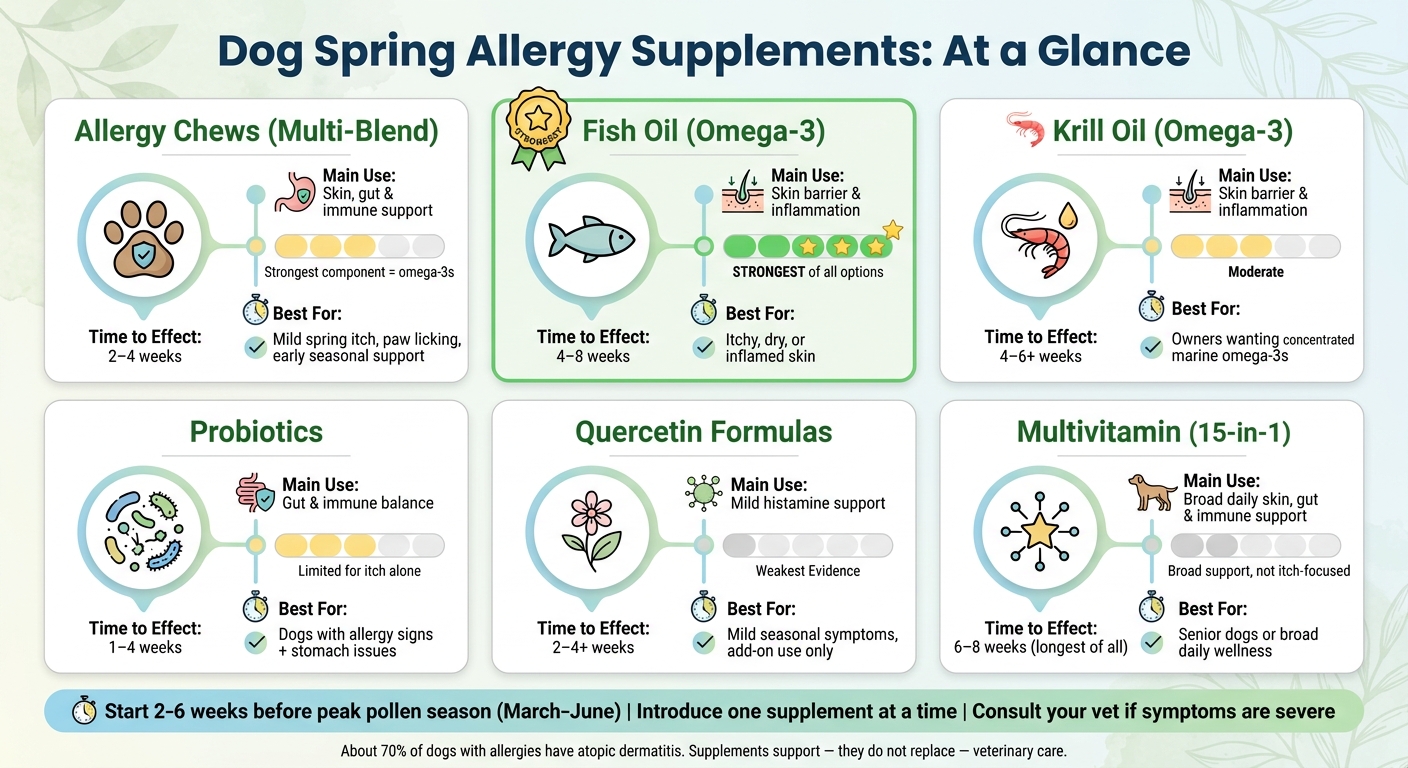
Dog Allergy Supplements Compared: Evidence, Timing & Best Use
| Option | Main use | Evidence level in the article | Time to notice changes | Best fit |
|---|---|---|---|---|
| Vet Treat Allergy Chews | Skin, gut, and immune support in one chew | Mixed; strongest part is the omega-3 content | 2 to 4 weeks | Mild spring itch, paw licking, early seasonal support |
| Fish Oil | Skin barrier and inflammation support | Strongest of the group | 4 to 8 weeks | Dogs with itchy, dry, or inflamed skin |
| Krill Oil | Similar goal as fish oil | Similar role, but less emphasized | About 4 to 6+ weeks | Owners who want a marine omega-3 option in smaller servings |
| Probiotics | Gut and immune support | Limited for itch on their own | 1 to 4 weeks | Dogs with allergy signs plus stomach issues |
| Quercetin Formulas | Mild histamine support | Weak | 2 to 4+ weeks | Mild seasonal symptoms, usually as an add-on |
| 15-in-1 Multivitamin | Broad daily skin, gut, and immune support | Broad support, not itch-focused | 6 to 8 weeks | Older dogs or dogs needing all-around daily support |
Bottom line: if the goal is spring allergy prevention, the article leans toward starting early, using one supplement at a time, and picking based on your dog’s main pattern. For many dogs, that means omega-3 support first, then looking at chews, probiotics, or a multivitamin based on what else is going on.
1. Vet Treat Dog Allergy Chews Itch Relief
Vet Treat Dog Allergy Chews Itch Relief are soft chews made for seasonal allergy support. The formula blends salmon oil with omega-3s, including EPA and DHA, to help support skin barrier health. It also includes quercetin and bromelain for itch support, colostrum with vitamin C for immune support, and a probiotic blend with 300 million CFU for gut-immune function.
That mix makes these chews a better fit for an early spring start than waiting until your dog is already scratching like crazy.
The brand says you may see results in 2 to 4 weeks, with best results after 4 to 6 weeks of daily use.
When you look at the active ingredients, omega-3s have the strongest support as an add-on option. Quercetin and probiotics have weaker support. So this is more of a broad support formula than a replacement for omega-3-only products.
Pricing starts at $21.95 for 120 chews and $23.95 for 170 chews, with the larger bottle giving you the better per-chew deal. If your dog already takes a prescription drug like Apoquel or Cytopoint, talk with your veterinarian before adding supplements. Next, it helps to compare this with single-ingredient omega-3 options.
2. Fish Oil Omega-3 Supplements for Dogs
Fish oil is a more straightforward way to add omega-3s to your dog’s routine. It provides EPA and DHA, two fatty acids that help calm allergy-linked inflammation and support the skin barrier.
It can be especially useful for dogs dealing with itching, paw licking, hot spots, and dry skin. If your dog tends to have seasonal flare-ups, don’t expect an overnight change. With fish oil, steady use matters more than fast results. And if your dog has moderate to severe allergies, fish oil should play a support role rather than act as the only treatment.
Start 4 to 6 weeks before pollen season. Full effect can take up to 8 weeks.
When you shop, ignore the flashy claims and focus on the label. A good fish oil supplement should have:
- Clearly listed EPA and DHA amounts
- Third-party purity testing
- Weight-based dosing instructions
3. Krill Oil Omega-3 Supplements for Dogs
Krill oil gives dogs the same core omega-3 support as fish oil, but it comes from a different marine source. It can support skin barrier function and help calm seasonal inflammation.
That’s why krill oil can be a good fit for dogs that deal with spring itch and irritation. Think of it as extra support during allergy season, not a stand-alone fix.
Krill oil works best as an add-on. It can help support skin health, but it doesn’t replace prescription allergy care in moderate to severe cases. If your dog needs more gut-immune support, probiotics take a different path.
4. Canine Probiotic Supplements
Probiotics help support gut and immune balance. Unlike omega-3s, which go after inflammation more directly, probiotics work through the gut. That can help ease itch-related signs like paw licking and irritated skin.
When you're shopping, check for clear CFU labeling. Some products also include prebiotics, which help feed the good bacteria.
Start probiotics at least 4 to 6 weeks before peak pollen season. Some dogs show early changes within a week, such as less paw licking, while skin and coat changes usually take 2 to 4 weeks.
The research here is still limited, so probiotics are best used as support, not as treatment.
Don't change prescription allergy treatment without veterinary guidance. Severe scratching can also point to a yeast or bacterial infection, and probiotics won't fix that.
Next, compare this with quercetin formulas, which go after itch from a different angle.
5. Quercetin-Based Allergy Support Supplements for Dogs
Gut support can help from the sidelines. Quercetin works closer to the itch response itself. It’s a plant flavonoid with mild antihistamine-like effects that may help regulate the histamine response tied to scratching, paw licking, and irritated skin, especially in dogs with mild seasonal allergies.
Many quercetin products also include bromelain, which may help the body absorb quercetin better. You’ll also often see colostrum for immune support and vitamin C for antioxidant support. That sounds good on the label, but it’s smart to stay cautious because the research behind these formulas is still limited.
The biggest thing to know: the evidence for quercetin is weak, and it’s not a stand-in for Apoquel or Cytopoint when allergies are moderate to severe. Dr. Tiffany Delacruz, DVM, CEO, RexVet, says it clearly:
"Quercetin has weak evidence... [it does not] replace Apoquel/Cytopoint for moderate-to-severe allergies. Honest answer: prescription medication does most of the work."
That’s why quercetin makes more sense as part of a steady routine for dogs with mild seasonal symptoms, not as a fast fix during a flare-up.
Timing matters here. Use quercetin before peak pollen season, not after symptoms spiral. Some dogs may show changes in itching and skin comfort within 2 to 4 weeks. And before you add it to Apoquel, Cytopoint, or any other prescription allergy plan, check with your vet first.
For broader daily support, compare that with a multivitamin next.
6. Vet Treat Dog Multivitamin 15 in 1 Daily Supplement
Vet Treat Dog Multivitamin 15 in 1 Daily Supplement is a broad daily formula, not a product made just for allergies. It supports skin, coat, digestion, and immune health, which makes it a good baseline option before spring pollen season hits. Think of it as prep work. Its job is to support the body ahead of time, not calm itching once a flare is already in full swing.
For spring allergies, the main upside is support for the skin barrier and immune system before pollen levels climb. The ingredients that matter most here are omega-3s, biotin, zinc, and probiotics. It also includes 300 million CFU per serving to help support gut microbiome balance and immune function.
The timing matters most. Vet Treat recommends using it every day for at least 6–8 weeks before you should expect the full effect. That means starting early, well before peak spring pollen exposure, so those nutrients have time to build up. The serving is 2 soft chews per day, adjusted by weight.
Reviews most often point to shinier coats and how easy the chews are to give each day. It has a 4.8/5 rating from 1,320+ reviews. A 120-chew bottle costs $21.95, or $19.75 with a subscription. If your dog already takes prescription meds like Apoquel or Cytopoint, check with your vet before adding this multivitamin to the routine.
Next, it helps to compare these options based on skin-barrier support, gut-immune support, evidence strength, and ease of use.
Side-by-Side Comparison by Key Criteria
Here’s the quick version of what matters most: skin barrier support, gut-immune support, strength of evidence, and day-to-day ease. These are the same points covered above, just in a faster side-by-side format.
Skin Barrier Support and Inflammatory Balance
If skin support is the main goal, fish oil and krill oil stand out first. Both provide EPA and DHA, which can help calm skin inflammation and support the skin barrier before pollen levels start climbing. Among the options here, omega-3s have the strongest evidence for skin barrier support and inflammation control. The catch? Smell. Some fish oil products have a strong odor, and picky dogs may turn away from them.
Vet Treat Dog Allergy Chews take a broader route. They combine omega-3s, colostrum, quercetin, and probiotics, so they go after skin barrier health, histamine response, and gut-linked immune balance at the same time.
Gut and Immune Support
If the bigger issue is immune balance rather than active itching, probiotics and the Vet Treat 15-in-1 Multivitamin make more sense. Probiotics work through the gut-immune axis and may help lower body-wide inflammation, but their effect on itch is more indirect.
The 15-in-1 Multivitamin adds zinc, biotin, and 300 million CFU of probiotics per serving. That makes it more of a steady foundation supplement than a direct allergy-focused tool.
Options with Limited or Emerging Evidence
Quercetin-based products may still have a place, especially inside a blend. But on their own, quercetin formulas have weaker evidence than fish oil or probiotics for documented outcomes in dogs.
Ease of Use, Ingredient Transparency, and Veterinary Review
Soft chews, including both Vet Treat products, are often easier to give every day, especially if your dog is picky. Liquids can get messy fast. The table below pulls the main differences into one easy scan. The pros and cons section right after this digs into the tradeoffs a bit more.
| Supplement Type | Strongest Benefit | Biggest Limitation | Likely Onset | Ingredient Transparency | Vet Review Needed If… |
|---|---|---|---|---|---|
| Vet Treat Allergy Chews | Multi-targeted support for itch, gut, and immune health | Not a replacement for acute, severe flares | 2–4 weeks | High when dose, source, and CFU details are clearly listed | Dog takes prescription allergy medication |
| Fish/Krill Oil | Skin barrier and inflammatory balance | Can be messy and may develop rancidity | 4–6 weeks | Moderate to high, depending on brand | Dog takes prescription allergy medication |
| Probiotics | Gut-focused immune regulation | Limited direct effect on skin itch | 2–4 weeks | High if CFU count is listed clearly | Dog is severely immunocompromised |
| Quercetin-Based | Mild histamine-modulating effect | Canine-specific evidence is limited | 4+ weeks | Moderate; often part of blends | Dog takes prescription allergy medication |
| Vet Treat 15-in-1 Multivitamin | Broad wellness support for skin, gut, and immune health | Lower concentration of anti-itch actives | 6–8 weeks | High when dose, source, and CFU details are clearly listed | Dog takes prescription allergy medication |
Pros and Cons of Each Supplement Type
Use this table for a quick look at the main tradeoffs. It shows the difference between supplements aimed at allergy support and those built for more general daily health.
| Item | Pros | Cons | Best Fit |
|---|---|---|---|
| Vet Treat Allergy Chews | Multi-ingredient formula with colostrum, quercetin, omega-3s, and probiotics; easy-to-give soft chews | Results build over time and may take 2–4 weeks; some users report a strong odor that picky dogs may dislike | Dogs with mild-to-moderate seasonal itching, paw licking, or hotspots; best started before pollen peaks |
| Fish Oil (Omega-3) | Supports skin barrier function and helps reduce skin inflammation; can also support a shinier coat | High doses can cause loose stools or fishy breath; liquid forms can be messy | Dogs with dry, flaky skin and general inflammatory issues; best started before pollen peaks |
| Krill Oil | Provides EPA and DHA in a smaller serving; contains astaxanthin, a natural antioxidant that supports skin health | Usually costs more than fish oil for a similar dose | Owners who want a more concentrated omega-3 option; best started before pollen peaks |
| Canine Probiotics | Supports gut and immune balance; can help with digestive sensitivities linked to allergies; in Vet Treat Allergy Chews, the probiotic blend provides 300 million CFU per serving | Won't stop active itching right away; clinical evidence as a standalone allergy treatment is limited | Dogs with concurrent digestive sensitivities alongside seasonal allergies; best started before pollen peaks |
| Quercetin-Based Supplements | May help with pollen-triggered itching through mild antihistamine-like support | Clinical evidence is weaker than prescription options; best used as a preventative, not an acute treatment | Dogs with mild environmental triggers before peak season |
| Vet Treat 15-in-1 Multivitamin | Broad daily support with biotin, zinc, and probiotics across 15 health areas including skin, gut, and joints | Lower concentration of allergy-specific actives than the dedicated Allergy Chews; onset may take 6–8 weeks | Senior dogs or those needing broad daily wellness support alongside minor seasonal allergies; best started well before pollen peaks |
The main idea is pretty simple: pick the supplement that lines up with your dog's usual spring pattern.
If your dog deals with seasonal itching, paw licking, or hotspots, Vet Treat Allergy Chews make the most sense as a targeted option. If the issue looks more like dry skin or general inflammation, fish oil or krill oil may be a better fit. And if your dog has stomach upset along with allergy flare-ups, probiotics can make more sense than a skin-only product.
On the other hand, if you're looking for broader daily support, Vet Treat 15-in-1 Multivitamin fits dogs that need help across more than one area, especially older dogs. It just isn't as focused on allergy symptoms as the dedicated chew.
That makes the next step easier: turn these tradeoffs into a simple spring prevention pick.
Conclusion
Here’s the simple takeaway: no supplement stops spring allergies by itself. But the right one can make flare-ups less intense.
The comparison comes back to three main priorities: skin barrier support, immune balance, and early daily use. In plain terms, supplements may help support the skin barrier, calm inflammation, and lower flare-up severity when you use them consistently.
The best pick depends on your dog’s main seasonal issue. If the biggest problem is itchy skin or paw licking, targeted allergy chews usually make more sense. If you’re looking for broader daily support, a multivitamin may be a better fit. And if dry or inflamed skin is the main concern, omega-3s like fish oil often help the most.
A smart move is to start supplements 2 to 4 weeks before peak pollen season and introduce only one at a time. And before you begin any new supplement, check with your veterinarian, especially if your dog already takes prescription allergy medicine.
In most cases, the best results come from choosing one targeted supplement and starting it before pollen season hits its peak.
FAQs
Which supplement should I start with for my dog’s spring allergies?
Start with Vet Treat Dog Allergy Chews Itch Relief. For daily spring use, the 170-count offers the best value.
It’s vet-formulated to help calm itchy skin, cut down on paw licking and hot spots, and support skin and immune health with Omega-3 fish oil, probiotics, and colostrum. Many dogs see less scratching within days, though steady use for 2–4 weeks tends to bring the best results.
Can I give more than one allergy supplement at the same time?
Yes - you can safely give your dog more than one Vet Treat supplement at the same time.
These supplements are made to work well together, and many pet owners pair the allergy chews with the 15-in-1 multivitamin.
Just make sure you follow the recommended daily dosage for each product based on your dog’s weight. It’s also smart to check with your veterinarian before making changes to your dog’s overall treatment plan.
How do I know when my dog needs a vet instead of supplements?
See a veterinarian right away if your dog shows signs of anaphylaxis. Watch for trouble breathing, swelling around the face, pale or blue gums, sudden vomiting, diarrhea, or collapse.
You should also get veterinary care if symptoms keep going even with home support. The same goes for hair loss, red or irritated skin, open sores, a bad odor, oozing, or any sign of infection.
Before you start any new supplements, talk to your vet first.