

Best Natural Flea And Tick Aids For Senior Dogs
My advice: use natural flea and tick aids alongside vet-recommended prevention - not instead of it. Start with coat checks after outdoor outings, frequent vacuuming, and weekly bedding washes.
Here’s how I’d sort the options for a senior dog:
- Flea combs, soft brushes, and gentle baths: Help find or remove pests, but offer no lasting protection.
- Natural chews, including Vet Treat: Review ingredients and dosing with your vet; don’t rely on repellent claims to control fleas.
- Home sprays: Use only on labeled surfaces, and follow pet-safety and re-entry directions.
- Yard care: Trim grass and clear damp debris to reduce places where pests hide.
Natural doesn’t mean risk-free. I’d check every product against your dog’s medications, skin sensitivity, and health history. <u>Don’t combine flea products without veterinary approval.</u>
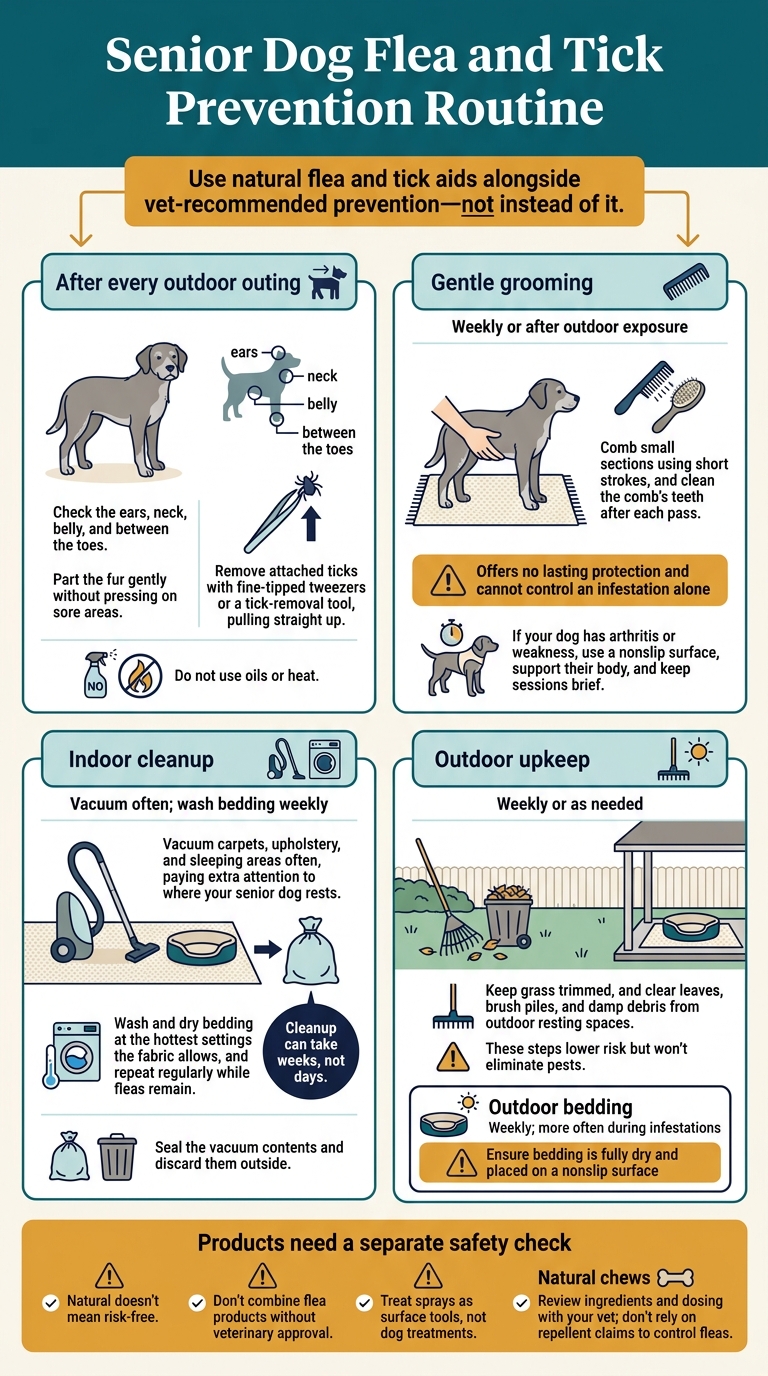
Senior Dog Flea and Tick Prevention Routine
How to prevent fleas and ticks for your pets
sbb-itb-6d7d69d
How to Choose Flea and Tick Aids for Senior Dogs
Choose aids based on what they do and how well they suit your senior dog - not the word natural. Natural chews can support prevention, but they don’t kill fleas quickly.
Use this chart to match each aid to its main job.
| Aid | Primary role | Senior-dog advantage | Main precaution | Routine frequency |
|---|---|---|---|---|
| Natural chews | Supplements with repellent claims | Softer textures may help dogs with dental issues | Not fast-acting; check fat content for pancreatitis risk | Daily |
| Flea combs | Detection and physical removal | No applied ingredients; allows gentle skin checks | Support dogs with arthritis during use | Weekly or after outdoor exposure |
| Household cleaning | Indoor pest control | Reduces chemical exposure in resting areas | Choose fragrance-free options for dogs with respiratory sensitivity | Vacuum often; wash bedding weekly |
| Home sprays | Kill pests on surfaces | Treat bedding and carpets without applying products directly to the dog | Follow re-entry directions; check cat safety | As needed |
| Yard care | Reduces outdoor pest populations | Limits exposure before pests reach the dog | Don’t apply products to dogs unless labeled for that use | Regularly during peak season |
Then check how each option fits your dog’s health history.
Check Health, Ingredients, and Local Parasite Risk
Bring your dog’s current weight and a complete list of medications and supplements to the veterinarian. Also share any allergies or kidney or liver disease.
Look for labels that list ingredient amounts. Vague proprietary blends make safety harder to assess. High-fat ingredients may not suit dogs prone to pancreatitis.
Avoid undiluted essential oils and unverified homemade blends. They can irritate a senior dog’s skin, eyes, or respiratory system. Ask your veterinarian whether local parasite exposure calls for year-round prevention. Follow dog-specific directions and check household sprays for cat safety, especially products containing permethrin.
Keep Handling Gentle and Check the Coat Often
Senior dogs often need shorter, lower-stress grooming sessions. If your dog has arthritis or weakness, use a nonslip surface, support their body, and keep sessions brief. Check the coat after walks, too.
Next, focus on the on-dog tools that are easiest to use consistently.
On-Dog Aids: Chews and Grooming
Vet Treat Flea and Tick Prevention Chews
Vet Treat offers natural chews made with flaxseed, neem, coriander, and B vitamins. Before use, ask your veterinarian to check the ingredients and dose against your senior dog’s medications.
For daily checks, grooming tools offer the most direct way to spot and remove pests.
Flea Combs, Soft Brushes, and Gentle Baths
Comb small sections using short strokes, and clean the comb’s teeth after each pass. Check common hiding spots: behind the ears, the neck, armpits, groin, belly, tail base, and between the toes. A soft brush helps part the coat for inspection, but it does not kill parasites.
| Tool | Main benefit | Limitation | Senior-dog precaution |
|---|---|---|---|
| Flea comb | Physically removes adult fleas and flea dirt | Offers no lasting protection and cannot control an infestation alone | Use gentle pressure on thin or sensitive skin |
| Soft brush | Helps you check the coat and skin for flea dirt or moving parasites | Does not kill parasites or remove attached ticks | Keep sessions short; avoid pressing on sore or bony spots |
| Gentle bath | Can remove fleas and ticks during bathing with a dog-safe shampoo | Offers no lasting protection; may dry the skin or affect topical preventives | Use lukewarm water and a nonslip surface, then dry promptly |
Follow your topical preventive’s bathing directions, and introduce any new shampoo slowly.
Contact your veterinarian promptly if itching or fleas continue. Pale gums, weakness, or lethargy need prompt care - don’t wait. Grooming helps you find and remove pests right away, but it cannot address eggs and larvae left in bedding and carpets.
If you keep finding fleas or ticks during grooming, move next to indoor cleaning and yard control.
Home and Yard Aids: Cleaning, Sprays, and Upkeep
If grooming turns up pests, focus next on your dog’s resting areas and outdoor exposure to help prevent reinfestation.
Vacuuming and Washing Bedding
Vacuum carpets, upholstery, and sleeping areas often, paying extra attention to where your senior dog rests. Seal the vacuum contents and discard them outside. Wash and dry bedding at the hottest settings the fabric allows, and repeat regularly while fleas remain. Cleanup can take weeks, not days. Keep your dog away from wet floors, stairs, and cleaning in progress.
Once physical cleanup is done, use sprays only on approved surfaces.
Choosing and Using Natural-Labeled Home Sprays
Treat sprays as surface tools, not dog treatments. Check the label for target pests, life stages, approved surfaces, and ingredients. Peppermint, clove, and other essential oils can irritate sensitive dogs. Ask your veterinarian before use if your dog has seizures, liver disease, or takes daily medication. Check safety for cats and birds, too.
Test the spray on a small, hidden area of fabric first. Never apply a household spray to your dog unless the label explicitly allows it. Ventilate as directed, and keep pets away until the labeled re-entry time has passed and every other condition is met - not just until the smell fades. Do not apply it more often than the label directs.
Next, reduce the places where fleas and ticks hide outdoors.
Yard Care and Post-Walk Tick Checks
Keep grass trimmed, and clear leaves, brush piles, and damp debris from outdoor resting spaces. Pair yard upkeep with gentle checks after walks. These steps lower risk but won’t eliminate pests. Home and yard care support - not replace - veterinarian-recommended prevention.
| Outdoor measure | Purpose | Frequency | Senior-dog handling consideration |
|---|---|---|---|
| Yard maintenance | Reduces tall grass and damp debris where pests shelter | Weekly or as needed | Keep the dog away from damp work areas |
| Tick inspection | Checks for attached ticks after every outdoor outing | After every outdoor outing | Part the fur gently without pressing on sore areas |
| Outdoor bedding care | Removes developing fleas from resting areas | Weekly; more often during infestations | Ensure bedding is fully dry and placed on a nonslip surface |
Check the ears, neck, belly, and between the toes. Remove attached ticks with fine-tipped tweezers or a tick-removal tool, pulling straight up. Do not use oils or heat. Call your veterinarian if your dog develops lethargy, fever, or new lameness after a tick bite.
Conclusion: Keep a Consistent Prevention Routine
Make coat checks, gentle grooming, home and yard care, and veterinarian-recommended prevention part of one consistent routine. Give supplements only at the labeled serving for your dog’s current weight.
Use Vet Treat Flea & Tick Chews as an aid - not a replacement for veterinarian-recommended prevention. Don’t combine flea products without veterinary approval.
Adjust the routine as your senior dog’s health, medications, weight, or exposure changes. Ask your veterinarian for guidance before starting or switching products.
FAQs
How can I tell flea irritation from aging-related skin issues?
Both can lead to scratching, biting, or fur loss. Flea allergy dermatitis often causes lasting itching and irritation in certain areas. To check for adult fleas or flea feces, part your dog’s fur or use a fine-tooth flea comb.
Senior dogs have specific health needs. Your veterinarian can help determine whether parasites or age-related sensitivities are causing your dog’s skin issues.
What should I ask my vet before starting Vet Treat chews?
Ask your vet if Vet Treat flea and tick chews suit your dog’s health history, age, and lifestyle. Have your vet check the ingredients for possible interactions with any medications or supplements your dog takes and confirm the serving amount for your dog’s weight.
Vet Treat is a supplement, not an approved medication. Talk with your vet before using it to replace your dog’s current veterinarian-recommended flea and tick prevention plan.
How do I know if my flea-control routine is working?
Watch for less scratching, biting, or fur loss. Part your dog’s fur regularly to check for adult fleas, ticks, and flea feces.
Natural aids take time, so stick with the routine. Keep vacuuming carpets and washing bedding to remove flea eggs and larvae. If your dog is still uncomfortable after several weeks, talk to your veterinarian.