

Top 6 Ingredients for Dog Digestive Health
My starting point: match the ingredient to your dog’s symptoms - not its place on a list. Start with a complete, balanced diet, then ask your veterinarian which option fits:
- Probiotics: Certain strains may help with diarrhea.
- Inulin and other prebiotics: Feed helpful gut bacteria, though symptom relief varies.
- Pumpkin: Adds fiber for mild, occasional stool changes; research in dogs is limited.
- Psyllium husk: Helps adjust stool consistency but needs enough water and careful dosing.
- Ginger: May help with nausea, though research in dogs is limited.
- Digestive enzymes: Treat diagnosed exocrine pancreatic insufficiency (EPI); routine use in healthy dogs has little support.
Quick Comparison
| Ingredient | Main use | Key limit or caution |
|---|---|---|
| Probiotics | Diarrhea support | Results depend on the strain |
| Prebiotics | Feed gut bacteria | Can cause gas or loose stools |
| Pumpkin | Mild stool changes | Use plain pumpkin, not pie filling |
| Psyllium husk | Stool consistency | Never give dry |
| Ginger | Nausea | May irritate the stomach or affect clotting |
| Digestive enzymes | Enzyme replacement for EPI | Requires veterinary diagnosis and dosing |
One small study reported improved stools in 90% of 22 working dogs given psyllium for a month - but that doesn’t make it the right choice for every dog.
I’d introduce one ingredient at a time, follow veterinary dosing advice, and track stool, appetite, and energy. <u>Don’t wait 48 hours if warning signs appear.</u> Blood in stool, repeated vomiting, or lethargy needs prompt veterinary attention; a painful, swollen abdomen or trouble urinating needs emergency care.
Before Adding Digestive Supplements
Start with a complete, balanced diet, clean drinking water, parasite prevention, and routine veterinary care. Supplements support these basics - not replace them. Once those needs are covered, choose ingredients based on your dog’s symptoms.
Different digestive problems need different ingredients. Probiotics add helpful microbes, while prebiotics like inulin feed them. Pumpkin and psyllium help with stool consistency and movement through the digestive tract. Ginger supports digestive comfort. Digestive enzymes break down food and are most useful for dogs with diagnosed exocrine pancreatic insufficiency (EPI).
Tell your veterinarian about recent food changes, access to garbage, and how long symptoms have lasted. Vomiting or diarrhea can also point to a swallowed object, toxin exposure, or liver or kidney disease. Straining to urinate can look like constipation and needs urgent care.
Choose the ingredient and dose based on your dog’s weight, age, diet, and health. Bring the supplement label to your veterinarian: human products may contain unsuitable strains, doses, or xylitol. For probiotics, look for named strains and a CFU count guaranteed through the expiration date.
sbb-itb-6d7d69d
1. Probiotics
How They May Help
For dogs with loose stools or diarrhea, probiotics offer the most direct way to support the gut microbiome. These live microbes may support gut health when given in the right amounts, helping with microbial balance and stool quality.
Evidence in Dogs
Results depend on the strain and the condition. Research supports Bifidobacterium animalis AHC7 for shortening acute diarrhea, but that doesn’t mean every strain or blend will ease digestive symptoms. Ask your veterinarian whether the exact strain has evidence for your dog’s needs.
Forms to Use
Dog-specific probiotics commonly come as powders, capsules, and chews. Powders can be mixed into food. Look for strain names and colony-forming unit (CFU) counts on the label, ideally with counts guaranteed through expiration.
Follow the product’s storage directions to help keep the microbes alive. Some need refrigeration; others need a cool, dry place.
Safety and Veterinary Advice
Introduce probiotics gradually over several days. Mild gas or stool changes may occur at first. Contact your veterinarian if these symptoms persist or worsen.
Seriously ill or immunocompromised dogs should receive probiotics only with veterinary guidance, since live microbes can rarely cause bloodstream infection.
If probiotics aren’t the right fit, the next ingredient supports digestion in a different way.
2. Inulin and Other Prebiotics
If probiotics aren’t a good fit for your dog’s symptoms, prebiotics offer another way to support the same gut system.
How They May Help
Prebiotics are fibers that feed helpful gut bacteria and may improve stool quality. Common examples include inulin and fructooligosaccharides (FOS).
Evidence in Dogs
Studies in dogs show increases in helpful bacteria and fecal butyrate. But results vary, and ideal doses are still unclear. That’s why product label details and dosing guidance matter.
Forms to Use
Look for products that list chicory root, inulin, or FOS instead of vague “fiber” blends. Follow your veterinarian’s recommended amount - no single dose fits every dog.
Safety and Veterinary Advice
Introduce prebiotics gradually over 7 to 10 days to reduce gas, discomfort, and loose stools. Watch your dog’s stool consistency and keep clean drinking water available.
Prebiotics may ease symptoms, but they don’t rule out parasites, infections, or other causes. For dogs with chronic gastrointestinal disease, including inflammatory bowel disease (IBD), use only a veterinarian-directed plan.
3. Pumpkin
How It May Help
Pumpkin is a simple fiber option for mild, occasional changes in stool consistency. Its fiber may firm up loose stools or ease mild constipation, helping stool return to a normal texture.
Evidence in Dogs
Pumpkin works mainly through fiber, rather than probiotic or prebiotic support. Direct clinical evidence for its use in dogs is limited compared with psyllium husk.
Forms to Use
Choose plain cooked pumpkin or canned 100% pumpkin, and mix a small amount into your dog’s food. Skip pumpkin pie filling and products with added sugar, spices, or xylitol. Pumpkin should be a small add-in - not a meal replacement.
Safety and Veterinary Advice
Ask your veterinarian how much to serve based on your dog’s weight, diet, and current fiber intake. Too much pumpkin can cause gas or loose stools and reduce nutrient absorption. Extra fiber without enough water may also worsen constipation.
Seek veterinary care if diarrhea or constipation lasts more than 48 hours, or if your dog also has vomiting, lethargy, blood, pain, or trouble urinating.
4. Psyllium Husk
If pumpkin is too mild, psyllium provides a more concentrated fiber option.
How It May Help
Psyllium is a soluble fiber that forms a gel. By adjusting stool water content, it may firm up loose stools or soften hard stool. Whether it helps depends on what's causing the problem.
Evidence in Dogs
Research in dogs is limited, but the results show promise. In one study of 22 police working dogs with chronic large-bowel diarrhea, 90% had improved stools after psyllium was added to their food for one month.
Forms to Use
Choose plain, unflavored psyllium husk with no xylitol or added sweeteners. Mix it into moist food with extra water - never give it dry.
Because psyllium is more concentrated than pumpkin and forms a gel, it requires smaller, carefully measured amounts.
Safety and Veterinary Advice
Let your veterinarian set the amount, then introduce it gradually over several days. Too much too soon can cause gas, bloating, or loose stools. Too little water can worsen constipation or increase the risk of a blockage. Also ask your veterinarian when to give psyllium around medications, since fiber can reduce their absorption.
If your dog hasn't had a bowel movement in 48 hours, or has a swollen or painful abdomen, seek prompt veterinary care instead of giving another dose.
For digestive discomfort linked more to nausea than stool consistency, the next ingredient works differently.
5. Ginger
How It May Help
Unlike pumpkin or psyllium, ginger targets nausea rather than stool consistency. It may ease nausea and digestive discomfort, but research in dogs is limited. The dose and form matter more than the ingredient name.
Forms to Use
Choose a dog-formulated supplement or a measured amount of food containing ginger. Avoid concentrated oils and human products with unsafe additives. Before switching preparations, check the amount with your veterinarian.
Safety and Veterinary Advice
Ginger can irritate your dog’s mouth or stomach, especially in concentrated forms or large amounts. If irritation develops, stop giving it and contact your veterinarian.
Ginger may affect clotting. Talk with your veterinarian before giving it if your dog has a bleeding disorder, oral irritation, vomiting, or diarrhea.
If your dog has trouble breaking down food rather than nausea, digestive enzymes work differently.
6. Digestive Enzymes
How They May Help
Unlike the fiber-based ingredients above, digestive enzymes help dogs break down food into smaller parts for absorption. They don’t support the microbiome or firm stools the way fiber does. They’re most useful when a dog can’t make enough enzymes on its own.
Evidence in Dogs
Healthy dogs usually produce enough digestive enzymes, and evidence for routine supplementation is limited. Dogs with exocrine pancreatic insufficiency (EPI), however, need enzyme supplements under a veterinarian’s care.
Forms to Use
Choose a labeled, dog-specific product. Powders are common in clinical use, though some products come as soft chews. Ask your veterinarian which form and dose to use, along with instructions for feeding.
Safety and Veterinary Advice
Watch for diarrhea, cramping, mouth sores, or allergic reactions. Powders can irritate the mouth, while porcine or plant sources may trigger allergies. Contact your veterinarian if any of these symptoms appear.
For most dogs, choosing an ingredient starts with identifying the problem: digestion, stool form, or nausea.
Digestive Ingredients at a Glance
Use this quick reference to match each ingredient with the digestive issue it may help address.
| Ingredient | Proposed use | Evidence in dogs | Main caution | When veterinary advice is needed |
|---|---|---|---|---|
| Probiotics | Support gut bacteria and help with diarrhea. | Strong for specific strains. | May cause temporary gas or stool changes. | Before use in an immunocompromised dog. |
| Inulin and other prebiotics | Feed helpful bacteria and support short-chain fatty acid production. | Moderate for bacterial support; less consistent for symptom relief. | Introduce gradually. | Before use with chronic digestive disease or a history of small intestinal bacterial overgrowth (SIBO). |
| Pumpkin | Add fiber for mild stool changes. | Limited as a stand-alone ingredient. | Use plain pumpkin only. | For persistent straining, vomiting, or abdominal pain. |
| Psyllium husk | Help with large-bowel diarrhea and constipation. | Strong for large-bowel diarrhea; moderate for constipation. | Needs enough water. | If the dog strains without passing stool. |
| Ginger | Help with nausea. | Limited. | May irritate the digestive tract. | For severe or persistent vomiting, or suspected toxin ingestion. |
| Digestive enzymes | Replace missing enzymes when production is low. | Strong for exocrine pancreatic insufficiency (EPI); limited for routine use. | Follow your veterinarian’s dosing instructions. | Before starting, especially if the dog loses weight despite a strong appetite. |
Evidence depends on the tested strain, formula, and condition - not just the ingredient name.
Before starting any new ingredient, follow the safety steps below.
How to Introduce Ingredients Safely
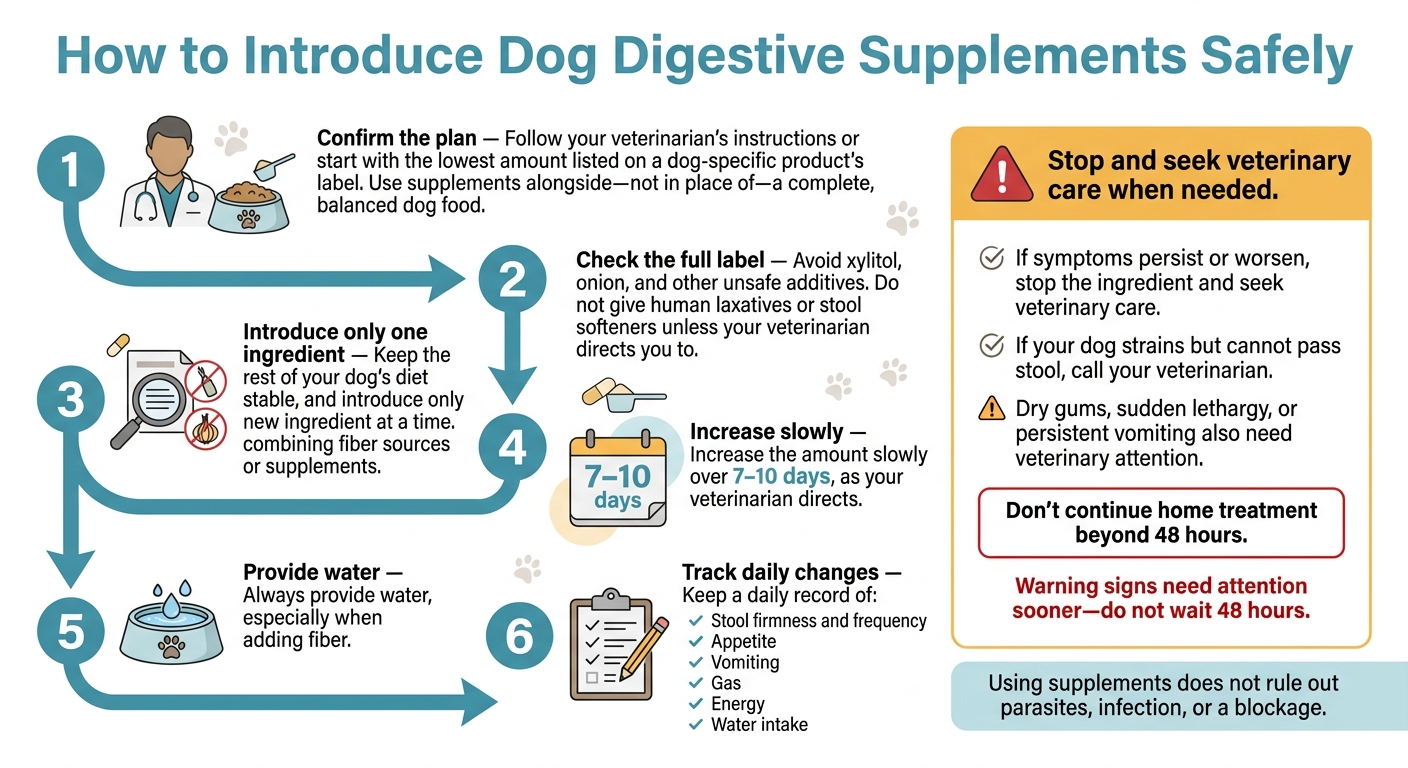
How to Introduce Dog Digestive Supplements Safely
Once you’ve chosen an ingredient, add it carefully and watch for changes. Follow your veterinarian’s instructions or start with the lowest amount listed on a dog-specific product’s label. Increase the amount slowly over 7–10 days, as your veterinarian directs. Keep the rest of your dog’s diet stable, and introduce only one new ingredient at a time. Ask your veterinarian before combining fiber sources or supplements. Mixing them can cause more gas or loose stools and make it harder to tell which ingredient is responsible. Always provide water, especially when adding fiber.
Read the full label before serving. Avoid xylitol, onion, and other unsafe additives. Do not give human laxatives or stool softeners unless your veterinarian directs you to. Use supplements alongside - not in place of - a complete, balanced dog food. Using supplements does not rule out parasites, infection, or a blockage.
Keep a daily record of stool firmness and frequency, appetite, vomiting, gas, energy, and water intake. If your dog strains but cannot pass stool, call your veterinarian. Don’t continue home treatment beyond 48 hours. Dry gums, sudden lethargy, or persistent vomiting also need veterinary attention. If symptoms persist or worsen, stop the ingredient and seek veterinary care.
When to Seek Veterinary Care
Stop home treatment and call your veterinarian if symptoms worsen or warning signs appear. Bloody stool, black and tarry stool, appetite loss, or unexplained weight loss need prompt attention. Persistent diarrhea calls for an exam - and sooner if your dog also has vomiting, lethargy, or dehydration. Some signs require emergency care.
A painful, swollen abdomen or suspected intestinal blockage is an emergency. Tell the clinic if your dog may have swallowed an object. The veterinarian may need abdominal X-rays or an ultrasound to check for a blockage. Fiber won’t treat it.
Urinary blockage is also an emergency. If you can’t tell whether your dog is trying to pee or poop, seek emergency care. A urinary blockage can be life-threatening, especially in male dogs.
Puppies, seniors, and seriously ill or immunocompromised dogs need veterinary guidance before trying any supplement. Puppies dehydrate quickly, and bloody diarrhea or marked lethargy requires emergency care. In senior dogs, new thirst or confusion can point to kidney or endocrine disease.
Conclusion: Choose Support for Your Dog's Needs
No single ingredient is best for every dog. Match the ingredient to the problem: probiotics and prebiotics support the microbiome, fiber helps shape stools, ginger targets nausea, and digestive enzymes help dogs break down food when they don’t produce enough enzymes themselves.
The strongest evidence supports specific probiotic strains and digestive enzymes for diagnosed conditions. Fiber-based ingredients have less support. Choose products with clear labels. For probiotics, look for strain IDs and CFU counts guaranteed through the expiration date.
Follow your veterinarian’s dosing guidance. Introduce one ingredient at a time over 7–10 days, and track your dog’s stool, appetite, energy, and water intake.
A complete, balanced diet comes first. Persistent symptoms or warning signs call for a veterinary diagnosis, not another supplement.
FAQs
How soon should my dog’s digestion improve?
How soon symptoms improve depends on the cause and the ingredient used. Mild digestive upset may ease within a day or two. For chronic issues, daily fiber or probiotics may improve stool consistency and gas within three to four weeks.
Symptoms may sometimes get worse before they improve during the adjustment period. If you don’t see progress within four to six weeks, consult your veterinarian to review your approach.
Can my dog use digestive supplements long-term?
Yes, but digestive supplements should meet a specific need, not serve as a safety net for healthy dogs. Probiotics and fiber may help manage chronic conditions or keep bowel movements regular. They don’t replace a veterinary diagnosis.
Before using a supplement long term, check with your veterinarian to make sure it fits your dog’s health needs. If symptoms persist after an 8- to 12-week trial, seek a veterinary diagnostic workup instead of continuing supplements on your own.
How do I know if my dog needs more fiber?
If your dog has mild constipation - meaning bowel movements are infrequent, difficult, or absent - you may consider adding more fiber. Fiber adds bulk and moisture to stool, helping your dog have regular bowel movements. Firmer, bulkier stools may also help naturally empty the anal sacs in dogs with recurring issues.
Talk to your veterinarian before starting fiber supplements to find the right type and amount for your dog.